
Introduction
An anemometer is an essential portable measuring tool designed to detect wind speed, wind temperature, and airflow volume. It is widely used in daily hobbies, professional maintenance, construction engineering, industrial production, and outdoor activities. Choosing the wrong anemometer will lead to inaccurate measurement data, short service life, or inconvenient operation, which seriously affects your work efficiency and user experience. This comprehensive anemometer buying guide will walk you through all key selection factors, practical application scenarios, standard usage methods, and common pitfalls to help you pick the most suitable anemometer for your needs.
Common Types & Practical Application Scenarios of Anemometers
Different types of anemometers correspond to different usage scenarios. Matching the device to your actual needs is the core of correct selection. We have sorted out the four most mainstream anemometers and their targeted application scenarios for consumers.
Handheld Anemometer
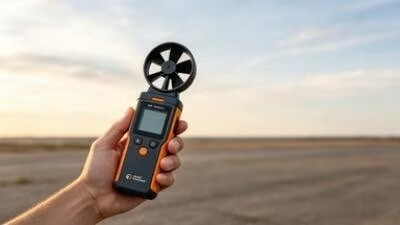
As the most popular and cost-effective type, handheld anemometers feature lightweight design, easy portability, and simple operation. They are ideal for civilian and light professional scenarios, including drone flying wind condition detection, outdoor sports (surfing, paragliding, camping), household ventilation testing, and daily weather monitoring. It is the best choice for individual users and hobbyists.
Cup Anemometer
Cup anemometers adopt three-cup or four-cup sensing structures, with strong wind resistance and stable performance. They are mostly fixed-installation devices, suitable for long-term outdoor real-time monitoring scenarios, such as meteorological stations, farmland wind monitoring, mountain wind resource detection, and port wind condition observation. They are widely used in environmental monitoring and agricultural meteorology fields.
Vane Anemometer
Vane anemometers support high-precision airflow measurement and can adapt to narrow space detection. They are mainly used in professional industrial and maintenance scenarios, such as HVAC system testing, air conditioner and fan air volume detection, factory pipeline airflow measurement, and building ventilation engineering acceptance. It is a necessary tool for HVAC technicians and engineering inspectors.
Wireless Smart Anemometer
Wireless smart anemometers are upgraded intelligent devices that support real-time data transmission, mobile phone data viewing, and automatic data recording. They are suitable for high-precision professional scenarios and long-term data analysis needs, such as industrial environmental monitoring, scientific research experiments, high-precision meteorological collection, and engineering data archiving.
How to Use an Anemometer Correctly (Step-by-Step Guide)
Even if you buy a high-precision anemometer, incorrect operation will cause large measurement errors. The following standard operation steps apply to most handheld and portable anemometers, suitable for novice users.
Step 1: Pre-use inspection. Check the battery power to avoid shutdown during measurement. Confirm that the sensor probe is clean and free of dust, sundries or damage to ensure accurate sensing.
Step 2: Device startup and zero calibration. Turn on the anemometer, wait for the device to self-check and initialize. For models with manual zero calibration, perform zero calibration in a windless and stable environment to eliminate baseline errors.
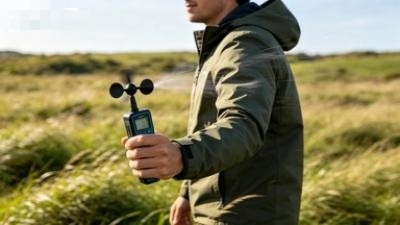
Step 3: Formal measurement. Aim the sensor probe vertically or facing the wind direction (follow the device manual). Keep the device stable and avoid shaking or blocking the air inlet. Hold for 2-5 seconds until the data is stable before recording.
Step 4: Post-use maintenance and storage. Turn off the device to save power, wipe the probe clean, and store it in a dry and dust-proof environment. Long-term unused devices need to take out the battery to prevent liquid leakage and circuit damage.
Core Buying Factors & Professional Selection Criteria
To choose a cost-effective and suitable anemometer, you need to focus on 6 core parameters, and select targeted configurations according to your usage scenarios and budget.
Wind Speed Range & Measurement Accuracy
Wind speed range determines the applicable environment of the device. Civil daily use only needs a range of 0.3–30m/s; industrial and engineering detection requires a high range of 0.1–60m/s or higher. Accuracy is the key to data authenticity: daily hobbies allow an error within ±0.5m/s, while professional testing requires an accuracy error within ±0.2m/s.
Portability & Operation Convenience
For outdoor mobile measurement scenarios such as drone flying and outdoor sports, lightweight and compact handheld anemometers are preferred. For fixed-point industrial monitoring, portability can be ignored, and stability is prioritized. Novice users should choose devices with one-key operation and clear digital display to reduce operation difficulty.
Waterproof & Dustproof Grade
Outdoor all-weather use requires an IP45 or above waterproof and dustproof grade to cope with wind, rain and dust environments. Indoor HVAC and household use can choose ordinary IP30 basic protection grade devices, which are more cost-effective.
Data Recording & Intelligent Function
Professional users who need data sorting and engineering recording must choose anemometers with automatic data recording, data storage and data export functions. Individual hobby users do not need redundant intelligent functions, which can effectively save costs.
Battery Life
Outdoor field work requires a battery life of more than 8 hours to avoid frequent charging. Indoor intermittent use can choose conventional battery-powered models.
Budget Matching
Entry-level budget (under $20): suitable for household use, outdoor hobbies, novice trial use. Mid-range budget ($20–$50): suitable for HVAC maintenance, small engineering detection, daily professional work. High-end budget (above $50): suitable for industrial monitoring, scientific research experiments, high-precision engineering acceptance.
Common Buying Mistakes to Avoid
Many consumers blindly pursue high precision and full functions when buying anemometers, resulting in wasted budget. Others ignore environmental adaptability, leading to inaccurate measurement in actual use. Here are the three most common pitfalls:
- Choosing a high-range professional device for daily civilian use (over-configured and costly).
- Buying low-precision civilian devices for professional engineering testing (unqualified data).
- Ignoring waterproof and dustproof grade for outdoor use (short service life and easy damage).
FAQ (Frequently Asked Questions)
Q1: Is a handheld anemometer worth buying?
A1: Yes. Handheld anemometers are affordable, portable and practical, suitable for 90% of civilian and light professional scenarios, and are the most cost-effective universal choice.
Q2: What anemometer is best for HVAC testing?
A2: Vane anemometers with medium and high accuracy, standard data recording function and IP40 protection grade are the most suitable for HVAC system air volume and wind speed detection.
Q3: Why is my anemometer measurement inaccurate?
A3: Common reasons include uncalibrated device, blocked sensor probe, unstable holding posture, or mismatched device range and usage scenario. Recalibrating and operating in standard steps can effectively improve accuracy.
Conclusion
A suitable anemometer depends on matching device type, parameters and functions to your actual usage scenarios and budget. For ordinary users and outdoor enthusiasts, a lightweight and cost-effective handheld anemometer is the best pick. For professional maintenance and engineering workers, high-precision vane anemometers with complete data functions are more practical. For long-term fixed monitoring, cup anemometers and smart wireless anemometers are recommended. By following this buying guide, you can avoid overspending and wrong selection, and obtain accurate and stable wind speed measurement experience. Whether you need an anemometer for casual outdoor use, daily household ventilation checks, or professional HVAC and industrial testing, prioritizing scenario matching, measurement accuracy, and durable build quality will always help you make a worthwhile investment.