
A pneumatic actuated valve is a core automated fluid control device that uses compressed air to drive valve opening, closing, and switching actions. Unlike manual valves that rely on manual operation and electric valves with strict environmental limitations, pneumatic actuated valves feature safe explosion-proof performance, stable operation, low failure rate, and strong adaptability to harsh working conditions. They are the preferred automation equipment for controlling gas, liquid, and steam pipelines in various industrial systems. For factory equipment administrators, engineering installers, mechanical maintenance personnel, and system integrators, mastering how to use and select a pneumatic actuated valve correctly is critical to ensuring stable pipeline operation, reducing system failure rates, and improving production efficiency. Many users face frequent problems such as valve leakage, slow response, jamming, and short service life due to improper model selection and non-standard installation. This complete guide elaborates on the working principle, typical application scenarios, step-by-step usage and installation methods, professional buying criteria, and common fault solutions of pneumatic actuated valves, helping users select and use industrial pneumatic valves professionally.
1. What Is a Pneumatic Actuated Valve and How Does It Work?
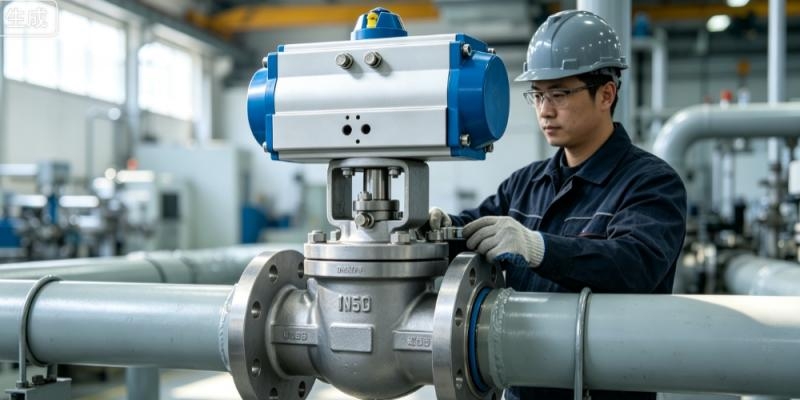
A pneumatic actuated valve is an integrated automatic control component composed of a pneumatic actuator and a valve body. The pneumatic actuator serves as the power source, converting compressed air pressure into mechanical rotation or linear thrust to drive the internal spool of the valve body to move, so as to realize fluid cut-off, circulation, shunting, and pressure regulation. It is widely used to replace manual valve operation and realize remote and automatic pipeline control. According to driving modes, pneumatic actuated valves are divided into two core types: single-acting and double-acting. A single-acting pneumatic valve relies on air pressure to open the valve and uses an internal spring to reset and close automatically, featuring fail-safe performance that can protect the pipeline system when the air source fails. A double-acting pneumatic valve uses air pressure to control both opening and closing, with faster switching speed and stronger bearing capacity, suitable for high-frequency continuous working scenarios. In addition, common valve body types include pneumatic ball valves, butterfly valves, gate valves, and globe valves, adapting to different pipe diameters, fluid media, and pressure environments. The overall working principle is stable and reliable, solving the pain points of labor-intensive manual operation and poor safety of electric valves in flammable and explosive environments.
2. Common Application Scenarios of Pneumatic Actuated Valves
Pneumatic actuated valves are highly versatile industrial control equipment, covering chemical industry, water treatment, manufacturing automation, HVAC, oil and gas, and mechanical equipment supporting fields. Different scenarios have clear differences in valve body material, pressure resistance, temperature resistance, and actuator type requirements. The following classified scenarios help users accurately match suitable pneumatic actuated valves.
2.1 Industrial Automated Production Lines
In factory automated production systems, pneumatic actuated valves are used for automatic switching and flow control of gas circuits and liquid pipelines. They cooperate with sensors and control systems to realize unmanned automatic control of production links, replace tedious manual switching operations, and greatly improve production efficiency. Their fast response and stable switching performance are very suitable for long-term high-frequency cyclic work in assembly lines, processing equipment, and automated supporting systems.
2.2 Water Treatment & HVAC Systems
Water supply and drainage treatment, sewage purification, and central air-conditioning HVAC systems require a large number of pneumatic actuated valves to control water flow, adjust pipeline pressure, and switch water circuits. Conventional stainless steel and cast iron pneumatic valves have good corrosion resistance to water media, realizing stable fluid regulation. They are widely used in municipal water treatment, factory circulating water systems, and building HVAC pipeline supporting projects, with low maintenance cost and long service life.
2.3 Chemical & Petrochemical Industry
The chemical and petrochemical industries involve flammable, explosive, corrosive, and high-temperature fluid media, which put forward extremely high requirements for pipeline valve safety. Pneumatic actuated valves have natural explosion-proof advantages without electric spark risks, which is irreplaceable compared with electric valves. High-end corrosion-resistant pneumatic valves made of stainless steel and fluorine-lined materials can adapt to acid-base corrosive media, realizing safe cut-off and control of chemical raw material pipelines and effectively avoiding safety hazards.
2.4 Oil, Gas & Energy Pipeline Systems
In oil and natural gas transmission pipelines, pneumatic actuated valves undertake important functions of pipeline switching, emergency cut-off, and flow regulation. Single-acting pneumatic valves with self-reset function can automatically close the pipeline when the air source is interrupted, avoiding medium leakage and safety accidents. High-pressure resistant industrial-grade pneumatic valves can adapt to high-pressure energy transmission environments, ensuring the stability and safety of long-distance pipeline operation.
2.5 Mechanical Equipment & Pneumatic System Supporting
Various mechanical equipment, pneumatic tools, and pneumatic control systems need supporting pneumatic actuated valves to control air circuit switching and pressure adjustment. Small portable pneumatic valves are compact and sensitive in response, suitable for equipment supporting, mold pneumatic control, and mechanical action auxiliary control, ensuring the precise operation of mechanical pneumatic systems.
3. Step-by-Step Guide: How to Install and Use a Pneumatic Actuated Valve Correctly
Stable operation of pneumatic actuated valves depends on standardized installation and operation. Most problems such as air leakage, jamming, and unresponsive switching are caused by non-standard construction and improper use, rather than product quality defects. The following universal step-by-step operation process is applicable to all types of single-acting and double-acting pneumatic actuated valves.
3.1 Pre-Installation Inspection & Preparation
Before installation, conduct a comprehensive inspection of the valve and accessories. Check whether the valve body, actuator, sealing parts, and air pipe joints are intact without damage, deformation, or missing parts. Confirm that the valve model, pressure resistance grade, and medium adaptation range match the actual working conditions. Clean the inner wall of the pipeline and the valve body channel to remove welding slag, dust, impurities, and sundries, preventing foreign matters from causing valve jamming and sealing failure. Meanwhile, check the cleanliness and stability of the compressed air source to avoid moisture and oil pollution affecting actuator operation.
3.2 Standard Pipeline Installation & Air SourceConnection
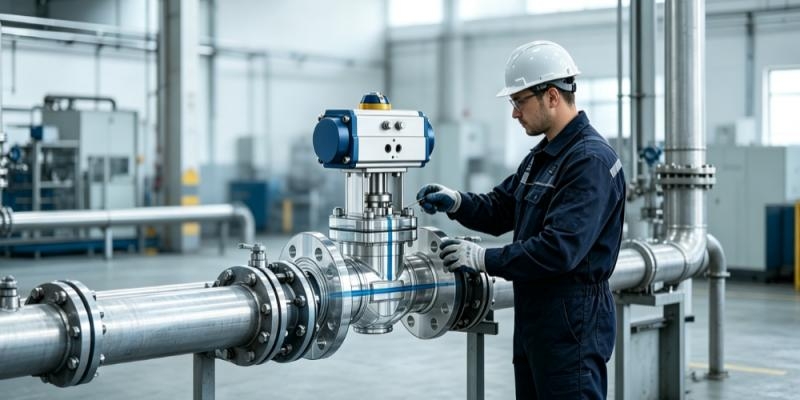
Install the pneumatic valve according to the pipeline flow direction mark, ensuring the installation direction is consistent with the fluid conveying direction. Fix the valve body firmly to avoid vibration and displacement during operation. Connect the air pipe to the actuator air inlet accurately: distinguish the air inlet and air outlet of single-acting and double-acting actuators, and ensure tight and stable air pipe connection without looseness. Do not forcibly twist or bend the air pipe to avoid air source blockage and air leakage.
3.3 Debugging & Functional Testing
After installation, conduct no-load debugging first. Turn on the compressed air source, observe the valve opening and closing action, check whether the switching is smooth, flexible, and without jamming or abnormal noise. For single-acting valves, test the automatic reset and closing function after cutting off the air source to verify the fail-safe performance. After no-load debugging is normal, conduct pipeline pressure test and sealing test to check for medium leakage and air pipe air leakage, and confirm that the valve operates normally under working pressure.
3.4 Daily Operation & Post-Use Maintenance
During daily operation, avoid frequent ultra-high-speed switching and overload pressure operation to reduce actuator and sealing part wear. Regularly check the air source drying and filtering device to prevent water and oil from entering the actuator and affecting the service life. For long-term idle valves, conduct regular switching debugging to avoid internal part rust and jamming. Regularly tighten the joints and fix the valve body to ensure long-term stable operation of the equipment.
4. Practical Pneumatic Actuated Valve Buying Guide for Different Users
There is no universal best pneumatic actuated valve; the most suitable model is determined by working medium, working pressure, temperature environment, and usage frequency. Many users blindly pursue high-spec industrial valves or choose cheap low-quality products, resulting in cost waste or frequent equipment failures. The following scenario-based targeted buying suggestions help users select cost-effective and compliant pneumatic actuated valves.
4.1 Core Parameters to Focus On
Actuator Type: Choose single-acting valves for scenarios requiring fail-safe protection such as chemical pipelines and energy transmission to avoid leakage risks during air source failure. Select double-acting valves for automated production lines and high-frequency switching scenarios for faster response and more stable operation.
Valve Body Material: Cast iron is suitable for conventional water and gas medium with low cost; stainless steel is for corrosion-resistant, high-temperature and high-precision scenarios; fluorine-lined and anti-corrosion materials are specially used for acid-base corrosive chemical media to prevent valve body corrosion and damage.
Pressure & Temperature Rating: Match the valve pressure resistance according to the actual pipeline working pressure, and reserve a certain safety margin. Confirm the valve’s applicable temperature range to avoid sealing aging and valve failure caused by high temperature or low temperature. Valve
Body Type: Pneumatic butterfly valves are suitable for large-diameter water treatment and ventilation pipelines with low cost and light weight; pneumatic ball valves are suitable for high-pressure and high-sealing fluid control scenarios; gate valves and globe valves are used for precise cut-off and flow regulation of industrial pipelines.
Protection Grade & Sealing Performance: Outdoor and dusty workshop environments require high IP protection grade valves with dustproof and waterproof performance. Scenarios requiring zero leakage need high-precision sealing structures to ensure pipeline sealing safety.
4.2 Targeted Selection Suggestions
For Conventional Water Treatment & HVAC Projects: Choose cost-effective cast iron or ordinary stainless steel pneumatic butterfly valves and ball valves. Double-acting models can meet conventional switching needs, with stable performance and low maintenance cost, fully adapting to conventional water medium and normal temperature working environment.
For Factory Automated Production Lines: Select double-acting pneumatic valves with fast response, high switching frequency resistance and stable performance. Prioritize models with good wear resistance and long service life to adapt to long-term cyclic operation of assembly lines and ensure continuous and stable production.
For Chemical, Petrochemical & High-Risk Scenarios: Prioritize single-acting explosion-proof pneumatic actuated valves with corrosion-resistant materials. Equip with fail-safe reset function to ensure automatic pipeline cut-off in case of failure, matching high-risk, corrosive and flammable working conditions to guarantee production safety.
For Mechanical & Small Pneumatic Supporting Systems: Choose compact, lightweight small pneumatic ball valves with sensitive action. The model is simple to install and low in cost, meeting the daily switching and control needs of mechanical pneumatic systems.
5. Common Pneumatic Actuated Valve Usage Mistakes & Solutions
Most pipeline failures and valve damage are caused by improper selection and non-standard operation, not product quality problems. The following summarizes the most common user mistakes and targeted solutions to help users avoid usage pitfalls and extend valve service life.
Mistake 1: Mismatched model selection for working conditions Using ordinary non-corrosion-resistant valves for chemical corrosive media or low-pressure valves for high-pressure pipelines leads to rapid valve damage and leakage.
Solution: Confirm medium type, pressure and temperature parameters before purchase, and select targeted valve material and pressure grade.
Mistake 2: Unclean pipeline before installation Residual welding slag and impurities in the pipeline enter the valve body, causing spool jamming, incomplete closing and medium leakage.
Solution: Thoroughly clean the pipeline before installation and conduct no-load debugging before formal use. Mistake 3: Unreasonable air source configuration Unstable air pressure, impure air source with moisture and oil lead to slow actuator response and increased part wear.
Solution: Equip with air source drying and filtering devices to ensure stable and clean compressed air supply.
Mistake 4: Over-frequency switching and overload operation Long-term high-intensity frequent switching and over-pressure operation accelerate aging of sealing parts and actuator damage.
Solution: Control switching frequency within the rated range and avoid overload working state for a long time.
Mistake 5: Lack of daily maintenance Long-term no inspection and maintenance lead to joint air leakage, rust and jamming of internal parts.
Solution: Regularly check air tightness, fastening degree and valve flexibility, and conduct regular cleaning and debugging.
6. Conclusion
Pneumatic actuated valves are indispensable core automation control equipment in modern industrial production, water treatment, chemical engineering, and mechanical supporting fields, with outstanding advantages of safety, explosion-proof, stable operation and low failure rate. Mastering standardized pre-installation inspection, scientific installation and debugging methods, and daily maintenance rules is the key to ensuring long-term stable operation of the valve system. Meanwhile, selecting a matched pneumatic actuated valve according to actual working conditions, medium characteristics and usage frequency can effectively avoid purchasing pitfalls, reduce equipment failure rate and maintenance cost. Whether for small mechanical supporting use or large industrial pipeline engineering projects, correct model selection and standardized operation can maximize valve performance, ensure pipeline operation safety, and improve overall industrial automation efficiency.