
Every woodworker, whether a complete beginner or a seasoned professional, eventually faces the same critical question: should I use an electric planer or a hand planer for my project? Both tools are staples in woodworking shops worldwide, yet they serve vastly different purposes in terms of speed, precision, finish quality, and workflow efficiency. Choosing the wrong planer can lead to ruined lumber, uneven surfaces, unsightly tear-out, wasted hours of work, and unnecessary frustration. Many new woodworkers mistakenly believe one tool can fully replace the other, which limits their project quality and workflow flexibility.
Tagged with 'difference between'
Every woodworking build, furniture refresh, or home renovation stands or falls on good sanding work. A clean, blemish‑free finish can make amateur work look shop‑quality. Bad sanding, on the other hand, leaves behind scratches, swirl marks, uneven spots, and plenty of wasted hours. In this practical buyer’s guide, we cover how each sander operates, real‑world pros and cons, critical comparisons, and actual‑project use cases. You will walk away knowing exactly which tool to reach for on your next sanding job.
When it comes to preparing metal edges, two tools are commonly used: a dedicated chamfering machine and an angle grinder. Both can remove sharp edges, create bevels, and prepare metal for welding, but they are designed for very different workflows. So, which is better—a chamfering machine or an angle grinder? The answer depends on how often you chamfer metal, how consistent the results need to be, and how much material you need to process. An angle grinder is a versatile and affordable choice for occasional jobs and general workshop tasks. A dedicated chamfering machine, on the other hand, is built for faster, more consistent, and repeatable edge preparation.
Many DIYers, contractors, and construction professionals often struggle to understand the difference between a rotary hammer and a demolition hammer. Although these two tools look similar and are both used for concrete and masonry work, they are designed for completely different purposes. Choosing the wrong tool can lead to slower progress, unnecessary tool wear, poor results, and increased operator fatigue. A rotary hammer is designed for precision drilling and light-to-medium chiseling, while a demolition hammer focuses on maximum impact force for breaking and removing hard materials.
26 Aug 2021
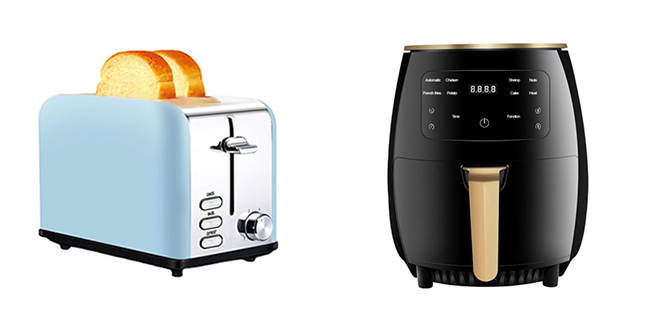
Difference Between Air Fryer and Toaster
Toaster is a commonly used kitchen appliance, mainly used to toast slices of bread. The toaster usually includes a multi-function oven, an insulated stove top, and a special lifting device. The more advanced ones also include a detachable bread crumb chassis.
An air fryer is a machine that can use air to "fry". It mainly uses air to replace the hot oil in the original frying pan to make the food cooked. At the same time, the hot air also blows away the moisture on the surface of the food, so that the food is almost fried.
23 Aug 2021
Classify of Air Wrench
Nowadays, air wrenches are mainly used in various assembly operations and several major parts, such as air motors, whacking devices or reduction devices. Due to its high speed, high efficiency and low temperature rise, it has become an indispensable tool for the assembly industry. There are different shapes, designs and styles of air wrenches in the market, so it is better to know its classification before buying.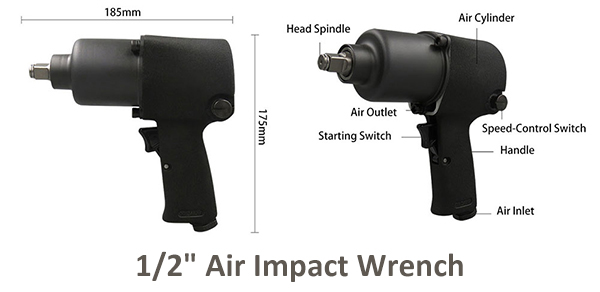
Flower pot is a kind of vessel for planting flowers, which is widely used in landscaping and plant landscape engineering. They are in various forms and sizes. We can choose the suitable flower pots according to the characteristics and needs of the flowers. Plastic flowerpot is a kind of flowerpot made of plastic. Compared with traditional porcelain flowerpot, watering times are less. The price is relatively cheap and durable.

The most obvious difference between a laser engraving machine and a CNC engraving machine is that the laser engraving machine performs engraving by laser melting or burning. CNC engraving machine uses digital technology to control the cutting tool, bit or laser head, ultrasonic head for engraving. The laser engraving machine can be a CNC engraving machine, and the CNC engraving machine can also be equipped with a laser head for laser engraving. Therefore, the two have a cross and intersection relationship. Although both the laser engraving machine and the CNC engraving machine adopt a numerical control system, they have different working principles and different mechanical structures. In comparison, the CNC engraving machine has a simpler structure. Through the control of computer numerical control system, the engraving machine can automatically select the appropriate engraving tool to engrave on the X, Y, and Z axes of the machine tool. The biggest difference in structure between laser engraving machine and CNC engraving machine is that the cutter of laser engraving machine is a complete set of optical components, while the cutter of CNC engraving machine is a variety of entity engraving cutters.
Laser distance measurement and radio detection radars follow the same operating principle: Emit the laser towards the target object, measure the time for the laser to travel back and forth, and calculate the distance by multiplying the recorded time and the velocity of light. The laser is characterized by such merits as high directivity, monochromaticity, and power, which play critical roles in measuring a long distance, judging the target object's direction, raising the reception system's SNR, and guaranteeing the measurement accuracy. With these features, laser distance meters receive growing attention. Laser radars, which have been developed based on laser distance meters, measure not only distances but also the target object's direction, movement velocity, and acceleration.
Blog search
Blog archive

Buy tools on Tool.com, an online store with all kinds of tools at wholesale price, large selection of hand tools, power tools, garden tools etc for sale, shop now.
Payment options


