
Every woodworking build, furniture refresh, or home renovation stands or falls on good sanding work. A clean, blemish‑free finish can make amateur work look shop‑quality. Bad sanding, on the other hand, leaves behind scratches, swirl marks, uneven spots, and plenty of wasted hours. For DIY hobbyists and pro woodworkers alike, two tools rule most sanding jobs: belt sanders and orbital sanders (random‑orbital included).
Both power tools abrade and smooth wood, metal, and painted surfaces — but they are built for completely separate jobs. Picking the wrong sander is a top beginner pitfall: you will either grind away hours of work at a snail’s pace, or accidentally gouge and ruin your workpiece by removing too much material.
In this practical buyer’s guide, we cover how each sander operates, real‑world pros and cons, critical comparisons, and actual‑project use cases. You will walk away knowing exactly which tool to reach for on your next sanding job.
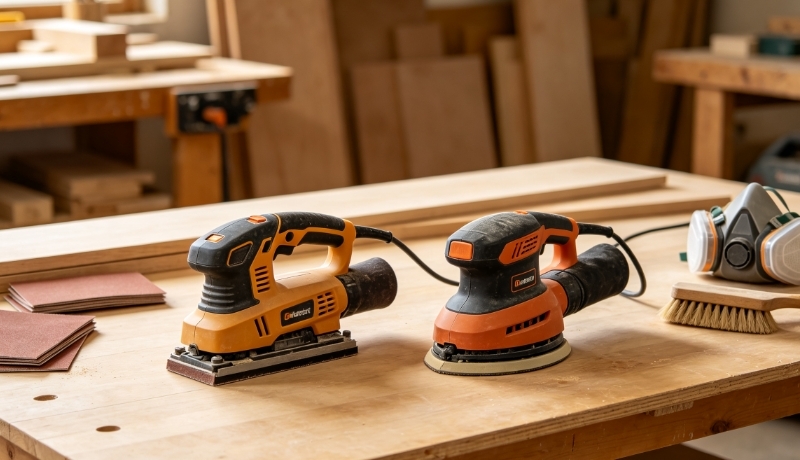
1. Core Overview: Belt Sander vs. Orbital Sander
Quick takeaway: Belt sanders excel at fast, heavy stock removal. Orbital sanders focus on precision and clean final finishing.
Think of a belt sander as an aggressive power grinder made for wood. A continuous loop sanding belt travels in one straight line, delivering serious cutting force for leveling warped surfaces, stripping old finishes, and shaping rough lumber. Orbital sanders use circular or randomized elliptical movement to wear material away gently, fixing flaws without leaving obvious tool scratches.
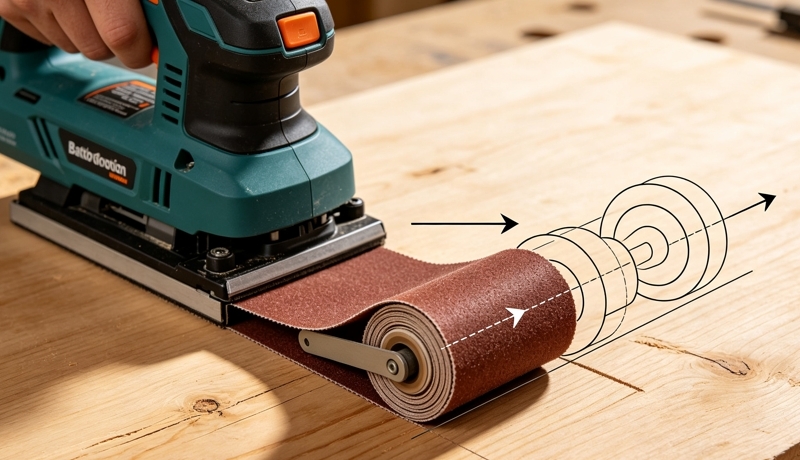
How Does a Belt Sander Work?
A looped abrasive sanding belt sits tensioned over two rotating drums, powered by a high‑torque electric motor. The belt runs in a straight line, cutting material mostly along the wood grain. You can find these sanders in hand‑held portable or stationary benchtop formats. Both deliver forceful, consistent cutting for rough‑in and intermediate sanding steps.
Most professional‑grade handheld belt sanders run 8‑11 amps. They can remove stock 3‑5 times quicker than typical orbital sanders. That said, their straight‑line motion leaves visible grain‑following scratches. You need steady hands to prevent accidental gouging into your workpiece.
How Does an Orbital Sander Work?
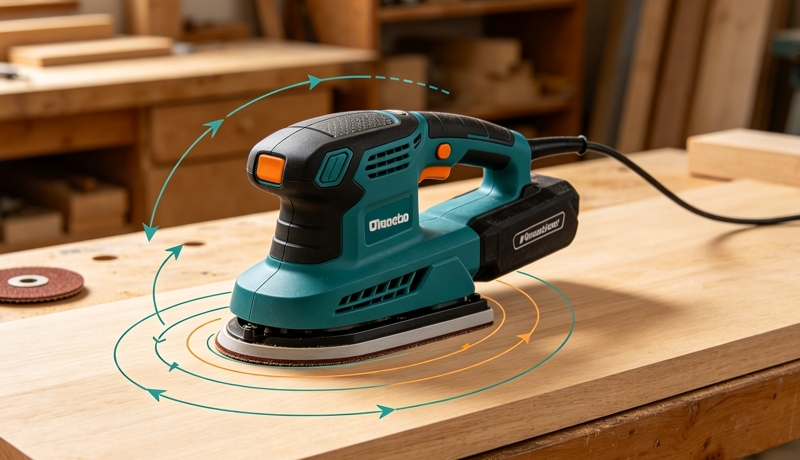
There are two common orbital‑style sanders you will shop for: standard orbital sanders and random‑orbital sanders (ROS). Neither uses sanding belts; both rely on flat abrasive pads, but their movement makes all the difference.
Basic orbital sanders move their pad in fixed small circles. On softwood, this predictable motion can leave faint swirl marks behind. Random‑orbital sanders combine pad oscillation with independent disc rotation. This dual‑action system creates completely randomized sanding paths. No single abrasive grit particle travels over the exact same spot twice — this design virtually wipes out swirl marks for a mirror‑ready smooth surface.
Consumer and pro orbital sanders typically run 2‑5 amps, with variable speed settings between 6,000–12,000 OPM (orbits per minute). They sacrifice fast stock removal for accuracy, so they are your best bet for final‑pass finish sanding.
2. Side-by-Side Comparison Chart
This detailed table covers all critical factors to help you quickly compare and select the right sander for your job:
| Comparison Factor | Belt Sander | Orbital / Random Orbital Sander |
| Primary Purpose | Heavy stock removal, surface leveling, stripping thick coatings | Fine finishing, surface smoothing, detail sanding, pre-finish prep |
| Motion Type | Linear straight belt movement (single direction) | Fixed circular orbit or random elliptical dual motion |
| Power Level | High (8–11 amps), high torque output | Moderate (2–5 amps), controlled power output |
| Material Removal Speed | Very fast (3–5x faster than orbital sanders) | Slow and controlled |
| Finish Quality | Leaves linear grain scratches; requires follow-up fine sanding | Smooth, swirl-free, finish-ready surface (ROS models) |
| Best Surface Types | Large, flat, rough surfaces (floors, decks, wide boards) | Small panels, curved edges, corners, detailed furniture |
| Learning Curve | Steep; easy to gouge or over-sand wood | Gentle; beginner-friendly with low error risk |
| Dust Production | Heavy dust output; requires dedicated dust collection | Moderate dust; most models have built-in dust bags/ports |
| Weight & Maneuverability | Heavier, bulkier; poor for tight spaces | Lightweight, compact; easy for long-duration handheld use |
| Abrasive Type | Cloth-backed sanding belts (durable, heat-resistant) | Hook-and-loop sanding discs/paper sheets (easy replacement) |
3. Belt Sander: Pros, Cons & Exact Use Cases
Belt sanders are the workhorses of heavy-duty sanding. They are not designed for perfect finishes but for tackling tough, labor-intensive sanding tasks that no handheld fine sander can handle efficiently.
Key Advantages
- Rapid stock removal: Flattens warped boards, removes thick paint, varnish, and rust in minutes instead of hours.
- Superior flat surface leveling: Ideal for fixing uneven hardwood floors, weathered decking, and glued-up panel seams.
- Works on tough materials: Effective on hardwood, rough lumber, and light metal grinding.
- Dual functionality: Stationary models deliver precision leveling; handheld models offer flexible on-site shaping.
Main Limitations
- Easily removes excess material with slight pressure or stationary dwell time.
- Leaves visible linear scratches that require follow-up fine sanding.
- Bulky and heavy, unsuitable for curved surfaces, corners, and delicate furniture.
- High skill requirement for consistent, damage-free results.
When You Should Use a Belt Sander
Choose a belt sander if your project requiresaggressive material removal or surface leveling:
- Refinishing large hardwood floors and exterior decking.
- Stripping thick, peeling paint or old varnish from flat wood surfaces.
- Leveling warped, uneven lumber and glued tabletops.
- Shaping rough-cut reclaimed wood and trimming board edges.
- Light metal surface grinding and weld spatter cleanup.
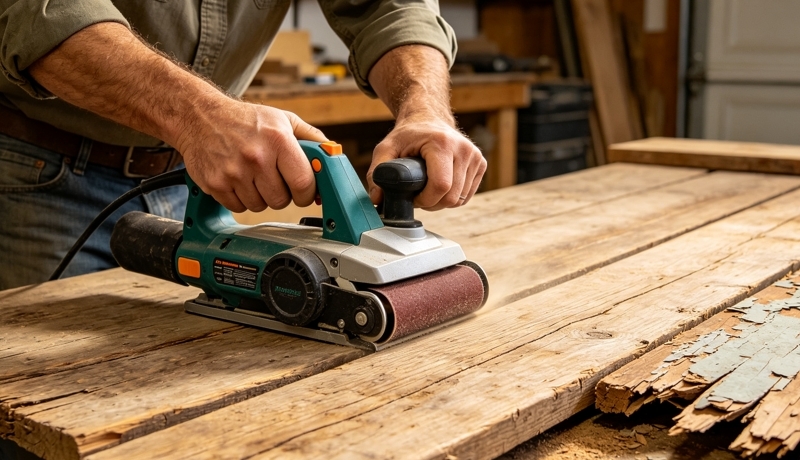
4. Orbital Sander: Pros, Cons & Exact Use Cases
Orbital sanders (especially random orbital models) are the finishing specialists of woodworking tools. They prioritize uniformity and precision, making them the top choice for DIYers and professionals for final surface preparation.
Key Advantages
Flawless finishing performance: Random orbital motion eliminates swirl marks for stain-ready, paint-ready surfaces
Beginner-friendly operation: Lightweight, low-risk design prevents over-sanding and gouging
Versatile surface compatibility: Works on flat panels, curved edges, contours, and tight corners
Excellent inter-coat sanding: Smooths paint, stain, and polyurethane layers without cutting through coatings
Convenient maintenance: Tool-free hook-and-loop disc changes and reliable dust collection systems
Main Limitations
- Slow material removal speed; inefficient for heavy stripping or large rough surfaces
- Standard orbital models may leave faint swirl marks with worn abrasives or improper technique
- Cannot fix severely uneven or warped wood surfaces
When You Should Use an Orbital Sander
Choose an orbital sander for all fine sanding, detailing, and final finishing tasks:
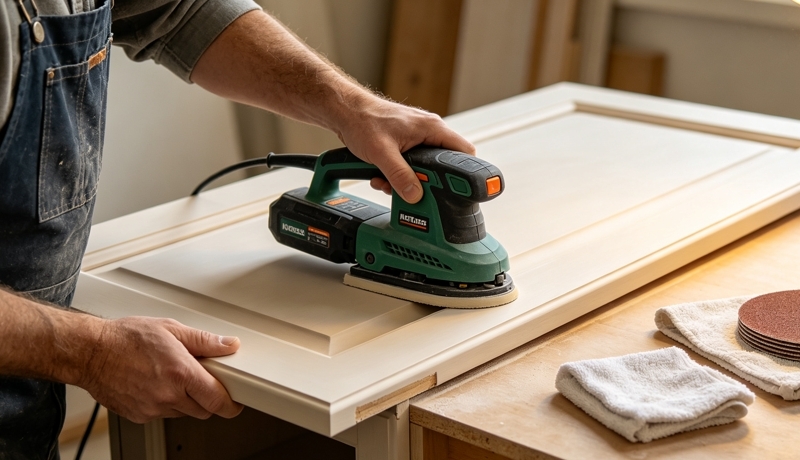
- Furniture and cabinet refinishing (tabletops, drawer fronts, cabinet frames)
- Inter-coat sanding between paint, stain, and clear finish layers
- Smoothing minor scratches, tool marks, and glue squeeze-out seams
- Rounding sharp edges and shaping curved wood profiles
- Prepping surfaces for premium, smooth topcoat adhesion
5. Pro Tips: How to Use Both Sanders for Perfect Results
Professional woodworkers rarely pick just one tool — the best sanding results come from combining belt sander rough work and orbital sander finishing work.
Sanding Workflow Formula
Belt Sander (Coarse Stage) → Orbital Sander (Fine Stage)
Start with a belt sander (60–80 grit cloth-backed belts) to level surfaces, strip old coatings, and eliminate major flaws. Once the surface is flat and uniform, switch to a random orbital sander with progressive grits (120 → 180 → 220) to remove belt scratch marks and achieve a mirror-smooth finish.
Critical Safety & Technique Rules
- Never apply extra pressure: Let the tool’s own weight do the sanding. Pushing down causes over-sanding, burn marks, and swirls.
- Keep the tool moving: Pausing in one spot will create dents and uneven patches.
- Match abrasives to tasks: Use cloth-backed belts for heavy removal and standard hook-and-loop discs for fine finishing.
- Always use dust collection: Connect shop vacs or dedicated dust extractors to avoid harmful fine wood dust buildup.
6. Final Verdict: Which Sander Should You Buy?
Choose a Belt Sander If:
- You regularly work on large flat surfaces (floors, decks, wide lumber)
- Your projects require stripping thick finishes or heavy material leveling
- You prioritize speed and heavy-duty processing power
Choose an Orbital Sander If:
- You focus on furniture building, cabinetry, and detailed woodworking
- You need smooth, finish-ready surfaces for staining and painting
- You are a beginner and want an easy-to-control, low-risk sanding tool
- You work on curved, intricate, or small-surface projects
Best Tool Setup For Most Hobbyists
For 90% of DIYers and hobby woodworkers, a random orbital sander is the must-have primary tool. If you frequently tackle large renovation or heavy lumber projects, adding a compact handheld belt sander to your toolkit will cover every possible sanding scenario.
Wrapping Up
Belt sanders and orbital sanders are not competitors — they are complementary tools designed for opposite ends of the sanding spectrum. Belt sanders deliver brute strength for fast material removal and leveling, while orbital sanders deliver precise, clean finishes for professional-quality results.
By understanding their unique strengths and limitations, you can eliminate sanding mistakes, cut down project time, and consistently produce smooth, flawless wood surfaces for every build or refinishing job.