
When setting up or upgrading an electrical panel, picking the wrong DIN rail energy meter can create costly headaches for residential, commercial, and industrial projects. Many electricians and project buyers select meters without checking load limits, phase compatibility, or certification. A mismatched DIN rail energy meter brings inaccurate power readings, unstable system performance, failed inspections, and expensive rework. To help you select a fully compatible, long-lasting, and project-qualified meter, this guide breaks down every core specification, installation requirement, and common purchasing pitfall for DIN rail energy meter selection.
1. DIN Rail Energy Meter Working Principles & Installation
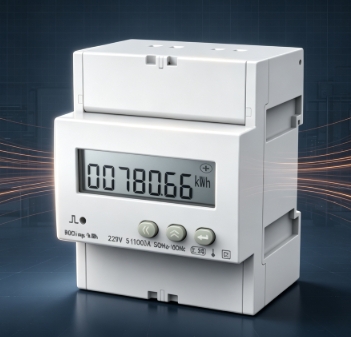
A DIN rail energy meter is a professional power measurement device that clips onto standard 35mm DIN rails, the universal mounting standard for electrical control panels. It tracks and records power consumption for circuits inside electrical cabinets, widely used for sub-metering and energy monitoring.
How It Works
- Built-in high-sensitivity current and voltage sensors continuously collect circuit data: real-time voltage, load current, power factor, and active power.
- The internal microprocessor calculates and converts raw signals into kWh energy consumption values.
- Readings are shown on the LCD display and saved to internal memory for long-term data review.
- Most modern models support bidirectional metering, ideal for solar PV systems to measure power drawn from the grid and excess power exported back.
- Compared with traditional wall-mounted meters, DIN rail meters are designed for panel sub-metering. They can monitor power for separate equipment, floors, or independent zones.
Step-by-Step Installation Guide
Installation must be completed by qualified electricians and follow local electrical codes.
- Cut off the main circuit power supply fully to prevent electric shock and short-circuit hazards.
- Verify the meter model matches your circuit phase and rated voltage. Snap the meter firmly onto the DIN rail to avoid shaking.
- Wire the device strictly following the official wiring diagram. Separate incoming and outgoing voltage and current lines to prevent wrong wiring or loose connections.
- Double-check all wiring connections. Restore power and check the LCD screen. Confirm real-time data updates are normal for stable operation.
2. How to Match DIN Rail Energy Meter Load Capacity to Your Circuit?
Load capacity matching is critical for your DIN rail energy meter. It defines the maximum continuous rated current your DIN rail energy meter can safely handle. Choosing the wrong load rating leads to poor measurement accuracy, overheating, burnt components, and serious electrical safety risks.
Core Matching Rules
- The rated current of your DIN rail energy meter should be slightly higher than your circuit’s peak operating current.
- Low-power circuits (apartments, small offices, retail shops): Use single-phase DIN rail energy meters with low current ratings.
- Heavy-load circuits (factory production lines, large commercial buildings, central AC): Pick three-phase high-current DIN rail energy meters.
- If your peak current exceeds the meter’s direct measuring range, pair the DIN rail energy meter with a current transformer for safe indirect metering.
Two Critical Mistakes to Avoid
Under-rated DIN rail energy meter
When the meter’s maximum rated current is less than your circuit peak load, continuous overload will burn internal parts and destroy the DIN rail energy meter.
Overrated DIN rail energy meter
If you select a DIN rail energy meter with a rating far larger than your real working current, measurement error increases. You will get unreliable kWh data, messing up energy tracking and cost allocation.
Before ordering your DIN rail energy meter, measure both the normal operating current and the peak current of your circuit. This simple step helps you pick the correct load specification for stable, precise power monitoring.
3. Top Common Applications & Use Cases of DIN Rail Energy Meters
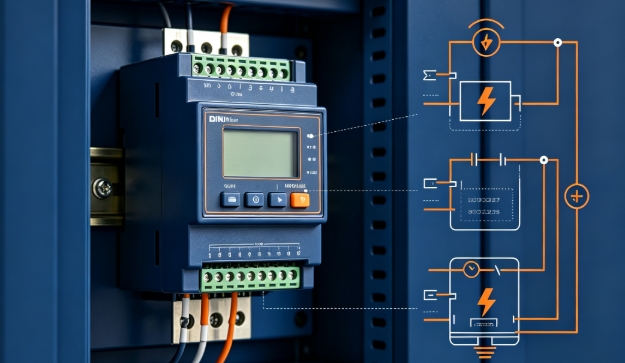
Thanks to their compact structure, easy expansion, and strong compatibility, DIN rail energy meters cover almost all scenarios that require refined power monitoring and sub-metering, becoming the preferred metering device for engineering and commercial projects.
DIN rail energy meters fit neatly inside standard electrical panels. They allow installers and panel builders to add power monitoring without bulky custom equipment. Whether you need simple sub-metering or smart energy data collection, DIN rail energy meters deliver flexible, space-saving power monitoring solutions.
| Application Field | Main Purpose | Recommended Meter Feature |
| Residential & Rental Properties | Sub-meter for apartments, villas, and shared offices; split shared electricity costs for separate units | Single-phase DIN rail energy meter (SKU: T-DEM-1P) |
| Commercial Buildings | Track power consumption by floors, departments, or equipment; cut unnecessary energy waste | Single- or three-phase DIN rail energy meter |
| Solar & Renewable Energy Systems | Measure power generation, self-use, and grid export for PV and energy storage systems | Bidirectional DIN rail energy meter |
| Industrial Factories | Monitor power use of production lines and heavy machinery; identify high-energy loads | Three-phase DIN rail energy meter (SKU: T-DEM-4P |
| Smart Power Infrastructure | Power monitoring for EV chargers, distribution cabinets, and smart community systems | DIN rail energy meter with data communication |
4. Key Specs to Check Before Buying a DIN Rail Energy Meter
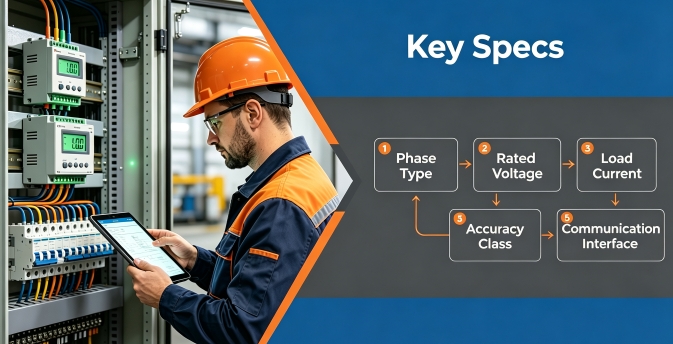
Many buyers focus only on price when shopping for a DIN rail energy meter and overlook critical parameters. This often causes mismatched equipment and costly replacements later. Review these key specifications one by one to pick a meter that fits your project requirements.
Phase type
Single-phase DIN rail energy meters work for 220V low-power circuits, such as homes and small retail stores. Three-phase DIN rail energy meters are designed for 380V high-power industrial and commercial circuits. Mismatched phase types will cause meter failure and even hardware damage.
Rated voltage and rated current
Match these values closely with your circuit load parameters. Correct voltage and current ratings guarantee safe, steady operation of your DIN rail energy meter.
Accuracy class
This determines measurement precision. Class 0.5S and Class 1 are high-precision options, ideal for commercial billing and official energy settlement. Class 2 offers basic accuracy, perfect for internal factory energy monitoring.
Communication interface
DIN rail energy meters equipped with Modbus RTU, M-Bus, or RS485 support remote data transmission. They connect to smart energy management systems for automatic logging and remote monitoring. Simple display-only meters are a fit only if you do not need remote data access.
Pulse output & data storage
These features support external data connection and long-term data storage. They simplify energy audits and data lookup for your project.
Industry certifications
Always confirm the DIN rail energy meter carries standard industry certifications to meet local project acceptance rules and electrical safety requirements.
5. Five Common DIN Rail Energy Meter Buying Mistakes to Avoid
Engineering buyers and installers frequently make simple errors during procurement. These mistakes lead to project delays and extra expenses. Learn these common pitfalls to reduce risks and avoid unnecessary losses.
Mistake 1: Choosing a meter only by price
Low-cost meters usually have unstable accuracy and poor anti-interference performance. They may work for simple testing but fail in long-term billing and formal project use.
Solution: Prioritize certified meters with clear accuracy grades instead of ultra-low-cost options for commercial and industrial projects.
Mistake 2: Ignoring phase matching
Many buyers randomly select single-phase or 3-phase meters without checking their actual circuit structure. Mismatched phase types cause unreadable data or meter damage.
Solution: Confirm your local power supply type: single-phase for households, three-phase for factories and heavy-load equipment.
Mistake 3: Confusing direct-connected and CT-type meters
Using a direct-connected meter on high-current circuits will lead to overload risks and measurement failure.
Solution: Choose direct-connected meters for circuits under 100A, and CT-operated meters for high-current industrial systems.
Mistake 4: Overlooking communication functions
Some basic meters only record data locally and cannot support remote monitoring or system integration.
Solution: Select Modbus RS485 or pulse output meters if you need data transmission, smart monitoring, and device linkage.
Mistake 5: Neglecting industry certification
Uncertified meters cannot be used for official billing and often fail overseas project inspections.
Solution: Pick MID- or UL-certified meters for commercial export projects and billing scenarios.
6. FAQs About Selecting DIN Rail Energy Meters for Electrical Panels
Q1: What is the main difference between a DIN rail energy meter and a traditional energy meter?
A: DIN rail meters are compact, easy to install in electrical panels, and support refined sub-metering and intelligent remote data transmission, while traditional meters are large, fixed-installation, and only suitable for overall circuit metering. DIN rail meters are more suitable for industrial and commercial refined power management.
Q2: Can DIN rail energy meters be used for official billing?
A: Yes. High-precision models with formal industry certifications (Class 0.5S/Class 1 accuracy) can be used for commercial billing and energy cost settlement, while ordinary low-precision meters are only for internal energy monitoring.
Q3: Do all DIN rail meters support remote reading?
A: No. Only meters equipped with RS485, Modbus, or M-Bus communication interfaces support remote data reading and system linkage. Basic display models only support on-site manual reading.
Q4: Is professional installation required for DIN rail energy meters?
A: Yes. The installation involves high-voltage circuit wiring. To ensure safety and metering accuracy, it must be operated by a qualified professional electrician in accordance with electrical specifications.
Q5: How to choose between single-phase and three-phase DIN rail meters?
A: It depends on your circuit power supply standard. Single-phase 220V circuits for homes and small businesses use single-phase meters; three-phase 380V circuits for factories, large equipment, and commercial buildings require three-phase meters.
Q6: What is a CT-operated DIN rail energy meter?
A: A CT-operated energy meter works with external current transformers to measure high electric loads. Unlike direct-connected meters that only support low-current circuits, CT-type meters are designed for industrial panels, commercial buildings, and high-power equipment above 100A. They ensure safe, isolated current detection and avoid overloading the meter’s internal circuit.
Q7: What is MID certification for energy meters?
A: MID certification is a mandatory European measurement standard for billing-grade energy meters. MID-approved meters provide traceable, accurate, and legally valid power consumption readings. For commercial bidding, overseas project delivery, and official electricity billing, MID-certified DIN rail meters are required to pass local inspection and compliance checks.
Quick Tip: Always double-check local electrical standards and certifications before buying power tools. If you are uncertain about circuit parameters or product specs, consult your electrician or supplier for technical advice. Safety and correct matching come first to avoid unnecessary replacement and metering errors.