
When you plan to monitor power consumption for your property or equipment, choosing the right energy meter is important. Both single-phase and three-phase energy meters track total electricity use, yet they are designed for different power systems, load sizes, and projects. Many buyers struggle to choose between these two types. Picking the wrong model can cause inaccurate readings, installation failures, and potential safety risks. In this buying guide, we analyze their differences and compare some product options to help you buy the right energy meter. Continue reading to find your ideal energy meter.
What are Single-Phase and Three-Phase Energy Meters?
An energy meter (also known as a kWh meter) records the total amount of electrical energy consumed over time. It calculates power usage in kilowatt-hours (kWh), which is the standard unit for electricity billing and energy monitoring.
Single-phase Energy Meter
Single-phase energy meters work with a single alternating current line plus a neutral wire. They are designed for low-power electrical loads. Single-phase DIN rail digital energy meters are mounted on standard 35mm DIN rails, making them easy to install inside electrical cabinets. Most models come with LCD, Modbus RS485 communication, and pulse output options. They support direct connection currents up to 40A or 100A, with Class 1 accuracy for active energy measurement.
Three-Phase Energy Meter
Three-phase energy meters operate on three live power lines. They handle heavy, high-power industrial and commercial loads. Three-phase DIN rail digital energy meters are also DIN rail mountable. These models can monitor voltage, current, active power, and total energy consumption at the same time. The high-precision design keeps measurement errors small even under continuous heavy load, ideal for factories, large workshops, and commercial buildings.
Differences between Single-phase and Three-phase Energy Meter
The core difference between single-phase and three-phase energy meters lies in their power supply and load capacity. Single-phase meters use one live wire plus a neutral wire for low-power loads. Three-phase meters work with three live lines to support heavy industrial and commercial loads. Both can be DIN rail mounted, but three-phase meters track more electrical data at once for high-power systems.
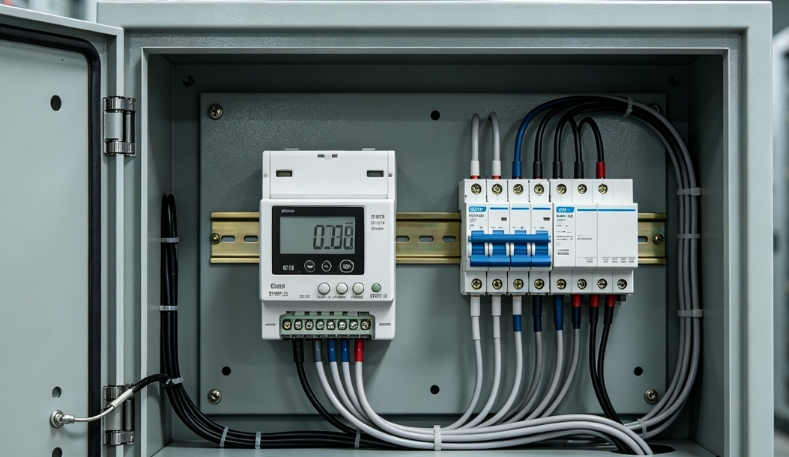
Single-phase VS Three-phase Energy Meter: Pros and Cons
Single-phase energy meters are simple and cost-effective for light power needs. Their small size makes installation fast, and the wiring setup is straightforward. They are easy to maintain and fit most residential properties, small offices, and tiny retail spaces with low electricity demand. For users who only need to track basic power consumption without heavy machinery, these meters are a practical choice. However, they cannot support large, high-power equipment. If your electrical system draws heavy continuous power, a single-phase meter will not work properly.
Three-phase energy meters are designed for heavy-duty power environments. They can monitor multiple electrical metrics at the same time and stay stable under constant high loads. This makes them ideal for factories, large workshops, and commercial buildings running big machinery. The downside is their more complicated wiring work. They usually need a qualified electrician to complete installation, and they cost more than single-phase options.
| Pros/cons | Single-phase Energy Meter | Three-phase Energy Meter |
| Pros | Compact, easy installation, low cost | Handles heavy loads, multi-data monitoring |
| Cons | Not for high-power systems | Complex wiring, higher cost |
Which One Should You Choose?
When to Choose a Single-phase Energy Meter
Single-phase energy meters fit low-power electricity monitoring scenarios. Common applications include:
- Residential homes and apartments
- Small cafes, retail stores, and small offices
- Small DIY workshops with only light electrical equipment
- Solar monitoring for small home solar systems
When to Choose a Three-phase Energy Meter
Three-phase energy meters are designed for high-power electrical systems. Typical use cases are listed below:
- Manufacturing factories and production workshops
- Large warehouses, shopping malls, and big commercial buildings
- Construction sites with heavy motors and industrial machines
- Large solar power generation systems
When selecting an energy meter, start by confirming your power system type and total load demand. Check whether your project is small residential power monitoring or heavy-duty industrial energy tracking, then pick the DIN rail energy meter that matches your power monitoring requirements.
Examples For Reference
| Meter Model | Power Supply | Load Capacity | Scenarios |
| T-DDS1946-1P | 230V, 50/60Hz | 13.8 kW | Railways, smart switch cabinets, smart buildings, smart factories, and energy management systems |
| T-DDS1946-2P | 230V, 50/60Hz | 23 kW | Small office, retail shop, tiny restaurant, low-load commercial use |
| T-DTS1946-4P | 3×230/400V, 50/60Hz | 69.3 kW | Factory, production workshop, heavy machinery |
| T-DTS1946 | 3×230/400V, 50/60Hz | 69.3 kW | Large commercial building, shopping mall, commercial solar & energy storage |
Three Common Mistakes When Buying an Energy Meter
Many shoppers overlook basic details and end up buying an energy meter that does not fit their electrical setup. These simple mistakes lead to wasted money, incorrect readings, and extra installation trouble.
Match Power System Correctly
Buyers often pick a meter without checking whether their power system is single-phase or three-phase. A single-phase meter cannot work with a three-phase power supply, and vice versa. Even if the meter looks well-made, mismatched power types will stop it from working properly.
Check Maximum Load Capacity
Some people ignore the maximum load capacity of the meter. If your equipment draws more current than the meter supports, the device may fail and create safety hazards. Always confirm your peak power load before you decide on a model.
Do Not Skip Function Checks
Many forget to check required extra functions. If you need remote power data collection, make sure your selected meter supports communication features like Modbus RS485. Skipping this check means you cannot collect data the way your project requires. Take time to verify these key points before purchase. A quick check helps you avoid unnecessary problems and get accurate power readings for your site.
FAQs for Single-phase and Three-phase Energy Meter
Q: What is the main difference between single-phase and three-phase energy meters?
A: The main difference is their compatible power supply and load capacity. Single-phase meters work on 230V single-phase systems for low-power loads. Three-phase meters are made for 3×230/400V power systems and can handle heavy industrial and commercial power demand.
Q: Can I install a three-phase energy meter on a single-phase power system?
A: No. A three-phase meter will not work correctly on a single-phase power supply. You must match the meter type to your existing electrical system to get accurate readings.
Q: Do DIN rail energy meters need professional installation?
A: It is recommended to hire a licensed electrician for installation. Wrong wiring may cause inaccurate data or potential electrical safety risks.
Q: Can digital energy meters work with solar power systems?
A: Yes. Both single-phase and three-phase DIN rail energy meters can monitor power consumption for solar systems. You just need to select the correct meter type to match your solar setup.
Q: What does Modbus RS485 communication do on an energy meter?
A: Modbus RS485 allows the energy meter to send power data to remote monitoring systems. It helps users track real-time electricity usage automatically.
Q: Can single-phase energy meters handle heavy industrial machines?
A: No. Single-phase energy meters are designed for light loads. Heavy industrial equipment requires a three-phase energy meter to operate and measure power safely.
Q: Are DIN rail energy meters easy to replace?
A: Yes. DIN rail-mounted meters clip onto standard 35mm rails. Once power is safely disconnected, swapping out a compatible meter is straightforward for electricians.
Q: How do I know which power system I have at my site?
A: You can check your electrical panel or consult a local electrician. Your power bill may also show whether your supply is single-phase or three-phase.
Conclusion
Choosing between a single-phase and three-phase energy meter starts with understanding your power supply type and electrical load. Single-phase options are ideal for homes, small shops, and light-load projects, while three-phase meters are built for factories, large buildings, and heavy machinery.
Take time to check your site’s power system, peak load, and required monitoring features before making your purchase. A well-selected DIN rail energy meter will deliver stable, accurate power readings for your project. You can browse Tools Wholesale to find a suitable model for your power monitoring needs.