
Drilling clean holes in concrete is tricky for both DIY weekend projects and professional work. Standard drills and basic hammer drills are not designed for dense concrete, often leading to slow drilling, slipping bits, overheating, and early tool wear. A rotary hammer fixes these common problems with its dedicated piston impact system, built for tough concrete and masonry work.
Whether you are installing concrete anchors, drilling plumbing holes, or working on reinforced concrete structures, choosing the wrong rotary hammer can waste time and damage your bits. Picking the best rotary hammer for concrete drilling depends on several factors, including impact energy, SDS system, drilling size, and power source. These tools differ widely in exactly these areas, making it hard to find the perfect match for your concrete drilling tasks. This buying guide simplifies all key features, compares real‑world performance, and offers job‑based recommendations, helping you avoid overspending or picking an underpowered tool.
Rotary Hammer vs Hammer Drill: Which Tool Is Better for Concrete?
Many DIYers and tradespeople mix up rotary hammers and standard hammer drills, since both combine rotation and hammer action. Yet their power output and concrete‑drilling performance are very different, and choosing incorrectly leads to slow progress, worn bits and unnecessary tool stress.
A rotary hammer uses a pneumatic piston system to deliver powerful, high‑energy blows directly to the drill bit as it spins. Most impact force transfers into the concrete, not back to your hands. This makes quick work of dense material, even for deep or large-sized holes. A regular hammer drill relies on simple mechanical cam vibration inside the chuck to create tapping force. It produces far lower impact energy. It can manage light masonry jobs but is not built for heavy concrete work.
Quick comparison snapshot:
- Hammer drill: Great for soft brick and occasional small holes. Poor choice for regular concrete drilling.
- Rotary hammer: Purpose‑built for repeated concrete drilling, deep holes and heavy‑duty use.
On real‑world concrete jobs, the performance gap is clear. A high-quality rotary hammer smoothly through dense concrete, rebar‑reinforced concrete and thick masonry, holding steady speed through multiple back‑to‑back holes. Hammer drills struggle on solid concrete: progress is slow, bits wear fast, and you have to push hard just to get results. They perform well only on soft brick and lightweight blocks.
Rotary hammers also win on accuracy and durability. They secure bits firmly to reduce slippage and wandering holes and hold up much better under long, continuous drilling. Hammer drills under concrete stress tend to overheat faster and wear internal parts quickly. For serious concrete‑drilling tasks, whether you are a DIY renovator or a professional, the rotary hammer is the better option. Save the hammer drill for only light, occasional masonry work.
How to Choose the Best Rotary Hammer for Concrete Drilling?
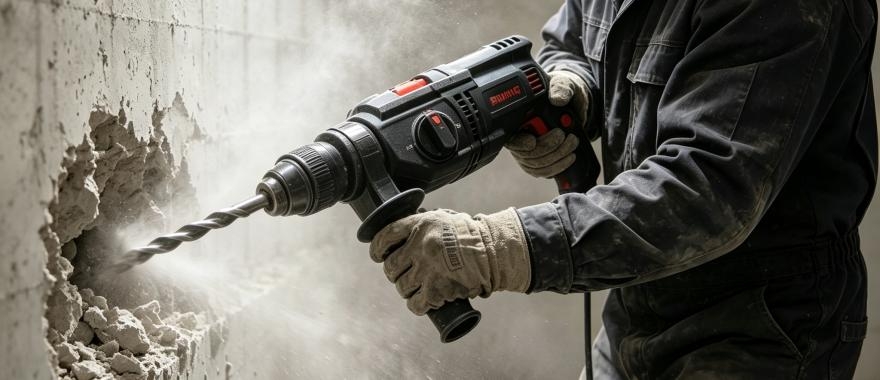
Drilling concrete is a tough job for both DIY homeowners and professional tradespeople. Standard drills fall short on hard concrete, making a quality rotary hammer essential. With countless models featuring different specs and bit systems, choosing the right one can be confusing. This guide breaks down the key considerations, helping you pick a suitable rotary hammer without overspending or settling for underpowered performance.
Impact Energy (Joules): The Most Important Specification
Impact energy, measured in Joules (J), is one of the most important specifications when choosing a rotary hammer. It represents how much striking force the tool delivers with each impact. Higher impact energy allows the rotary hammer to break through harder concrete faster. Many buyers focus only on motor wattage, but motor power does not always represent real drilling performance. Impact energy provides a better indication of how effectively the tool can handle concrete applications.
Recommended Impact Energy Guide
| Impact Energy | Recommended Applications |
| 1.5-3J | DIY projects, concrete anchors, small holes, home renovation |
| 3-5J | General construction, residential concrete drilling, regular contractor work |
| 5J+ | Reinforced concrete, large holes, heavy-duty professional applications |
Professional Tip: For contractors installing concrete anchors regularly, a rotary hammer with at least 3J impact energy and SDS-Plus compatibility provides a good balance between drilling speed, control, and portability. However, higher impact energy also increases tool size and weight. A more powerful rotary hammer is not always the best choice if your daily tasks involve only small holes.
BPM & RPM (Blows Per Minute & Rotations Per Minute)
When evaluating different rotary hammer models, BPM and RPM are two critical performance specifications you will frequently encounter. These two metrics work together to define real‑world drilling speed and handling, so it is important to understand what each one means.
BPM (Blows Per Minute)
BPM indicates the strike frequency of the rotary hammer’s internal hammer mechanism, measuring how many times it hits the drill bit every minute. All else being equal, a higher BPM delivers more frequent impacts, which accelerate material fragmentation and speed up drilling through hard, dense concrete and heavy masonry. Keep in mind BPM works alongside impact energy; a high BPM with weak impact power will still deliver underwhelming results on tough concrete.
RPM (Rotations Per Minute)
RPM represents the rotational speed of the drill bit. Higher RPM can boost overall drilling efficiency and chip removal inside the hole. However, excessive rotational speed at the very beginning of drilling compromises control. On smooth concrete surfaces, fast‑spinning bits tend to skate or wander off your marked spot before the hole is formed.
Premium rotary hammers feature variable‑speed controls to solve this trade‑off. Operators can start at low speed to lock the bit into position, minimize bit slippage, and get perfectly aligned holes. After the bit bites firmly into concrete and the hole is properly set, you can turn up the speed for faster progress. For professional‑level concrete drilling tasks, raw high‑RPM figures alone do not guarantee good performance. The balanced pairing of solid impact force and flexible speed adjustment delivers far more reliable real‑world results.
SDS Bit System: SDS-Plus vs SDS-Max
The SDS system determines what drill bits you can use, the maximum drilling capacity, and the type of work the electric hammer tool can handle. SDS stands for Slotted Drive System, which allows drill bits to move slightly inside the chuck while maintaining strong impact transfer. The SDS system of the rotary hammer are two major systems:
SDS-Plus: Compact and lightweight. Ideal for holes 1 inch or smaller. This is the best choice for DIY users and light commercial work, as it’s easy to control with one hand.
| Advantages | Typical applications |
| Lightweight design | Installing wall anchors |
| Easy handling | Mounting brackets |
| Wide availability of accessories | Small-to-medium concrete holes |
| Excellent for anchor holes and general concrete drilling | Residential renovation |
SDS-Max: Heavy-duty build for holes larger than 1 inch. It runs smoothly for hours at a time, making it the go-to option for professional concrete drilling and chiseling tasks.
| Advantages | Typical application |
| Handles larger hole diameters | Large anchor holes |
| Better for continuous heavy-duty operation | Structural concrete work |
| Drilling heavily rebar‑infused concrete | Long-duration jobsite use |
Do not choose SDS-Max simply because it is more powerful. Larger SDS-Max tools are heavier, more expensive, and unnecessary for small drilling tasks.
Power Source: Corded vs Cordless
The power source is another important factor when choosing the best rotary hammer for concrete drilling. Both corded and cordless models have advantages, and the right choice depends on your working environment, drilling frequency, and project requirements.
Corded Rotary Hammer: A corded rotary hammer provides continuous power directly from an electrical outlet, making it a popular choice for professional contractors and long-duration construction projects.
| Advantages | Typical applications |
| Consistent drilling power without battery limitations | Reinforced concrete drilling |
| Suitable for continuous operation | Large anchor installation |
| Higher power output for demanding applications | Structural construction projects |
Most corded rotary hammers range from approximately 800W to 1500W, providing enough power for demanding concrete applications. For professionals who spend several hours drilling concrete every day, a corded rotary hammer remains one of the most reliable choices.
Cordless Brushless Rotary Hammer: Modern cordless brushless rotary hammers have become increasingly popular because of improvements in battery technology and motor efficiency.
| Advantages | Typical applications |
| Easy transportation | Outdoor projects |
| No extension cables required | Areas without power access |
| Faster setup on job sites | Maintenance work |
| Excellent mobility | Small and medium concrete drilling tasks |
However, battery capacity limits continuous heavy-duty drilling. For example, drilling several small anchor holes may be easy with a cordless rotary hammer, but all-day drilling into reinforced concrete may require multiple batteries or a corded solution. Choose cordless when mobility matters most. Choose corded when maximum power and unlimited runtime are the priority.
How to choose the rotary hammer that perfectly matches your work requirements?
Shopping for a rotary hammer becomes much simpler once you align the tool’s capabilities with your real‑world jobs. Impact energy, SDS bit type, and power source all play key roles in whether a unit will perform well for your concrete‑drilling tasks. Instead of just picking the most powerful model available, focus on finding one suited to the kinds of projects you complete most often.
To achieve the best cost-effectiveness and performance, please directly match the specifications of the rotary hammer to the type of concrete work you are undertaking. Use this quick reference table to help you find the most suitable tool.
| Concrete Drilling Job Scenario | Recommended Impact Energy | SDS Type | Power Source |
| DIY home anchoring & small wall holes | 1.5–3J | SDS-Plus | Power Source |
| General residential concrete renovation | 3–5J | SDS-Plus | Corded / Cordless |
| Reinforced concrete & large-diameter holes | 5J+ | SDS-Max | Corded |
Even with this reference table, keep in mind that these figures serve as general guidelines rather than rigid rules. Factors like concrete age, hardness, hole depth, and how often you use the tool can shift your actual requirements. Match your rotary hammer not only to raw technical specs, but also to your typical workload, so you avoid buying an under‑powered tool or over‑spending on heavy‑duty features you will never use.
Common Mistakes When Buying a Rotary Hammer
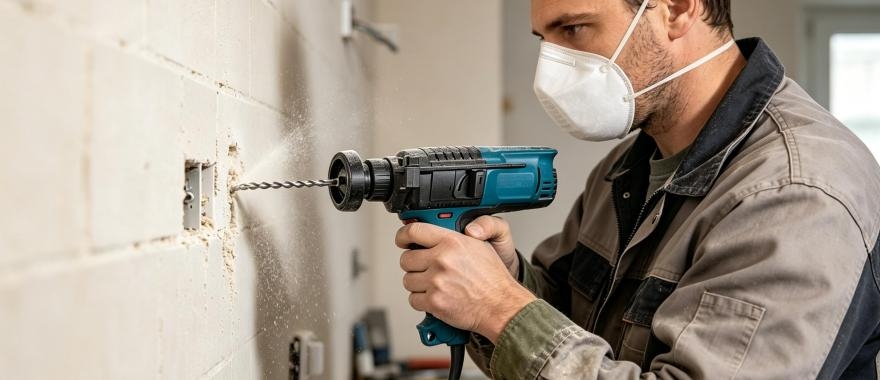
Many users choose a rotary hammer based only on price or maximum power. However, this can lead to buying a tool that does not match their actual needs. Avoid these common mistakes:
Mistake 1: Choosing Too Much Power
A larger rotary hammer is not always better. A 10J SDS-Max machine may be excellent for heavy construction, but unnecessary for installing small concrete anchors. A smaller SDS-Plus model may provide: Better control, Lower weight, and Easier operation for everyday tasks.
Mistake 2: Ignoring Drill Bit Compatibility
The rotary hammer and drill bit system must match your application. Before purchasing, check: SDS type, Maximum drilling diameter, Available accessories. The right drill bit is just as important as the right rotary hammer. Using high-quality carbide-tipped concrete bits improves drilling speed and hole accuracy.
Mistake 3: Focusing Only on Motor Wattage
A higher-wattage motor does not always mean better concrete performance. The actual drilling ability depends on: Impact energy, Impact frequency, Mechanical efficiency, and Bit quality. Impact energy and SDS compatibility usually provide more useful information than wattage alone.
How to properly use a rotary hammer to drill into concrete?
- Always use tungsten carbide bits for hard concrete and reinforced concrete for clean, fast results.
- Start drilling at a low speed to position the bit firmly and avoid slipping across the concrete surface.
- Take short breaks during continuous drilling to keep your rotary hammer from overheating.
- Clear dust and debris off drill bits regularly to maintain steady drilling speed and precise holes.
Conclusion: Choosing the Right Rotary Hammer for Concrete Drilling
Choosing the best rotary hammer for concrete drilling is about matching the tool’s specifications with your actual working needs. Before purchasing, focus on the key factors: Impact energy, SDS system, Power source, Working modes, Weight and vibration control, Drilling frequency.
- For DIY users, a lightweight SDS-Plus rotary hammer with moderate impact energy usually provides the best combination of control and performance.
- For professional contractors, investing in a durable high-impact rotary hammer with vibration reduction, reliable accessories, and long-term operating capability can significantly improve productivity. The right tools from Tool.com will not only make your work faster and easier but also reduce tool wear, improve accuracy, and deliver better results on every project.
Frequently Asked Questions
Q: What is the best impact energy for concrete drilling?
A: Stick to 1.5–3J for light DIY anchoring and small concrete holes. 3–5J works for standard residential drilling, while tough reinforced concrete and large professional holes require 5J+ models.
Q: Are cordless rotary hammers effective for concrete?
A: Modern brushless cordless rotary hammers handle light and medium concrete drilling very well. For all-day, heavy-duty concrete work, corded models still offer unlimited, reliable power.
Q: Is SDS-Plus or SDS-Max better for concrete drilling?
A: SDS-Plus is ideal for DIY and small-to-medium concrete holes under 1 inch. SDS-Max is built for large holes and heavy, non-stop professional concrete and chiseling work.
Q: Do I need a rotary hammer or a hammer drill for concrete?
A: You need a dedicated rotary hammer for dense, thick, or reinforced concrete. Basic hammer drills only handle soft masonry and cannot drill hard concrete efficiently.