
Many DIYers, contractors, and construction professionals often struggle to understand the difference between a rotary hammer and a demolition hammer. Although these two tools look similar and are both used for concrete and masonry work, they are designed for completely different purposes. Choosing the wrong tool can lead to slower progress, unnecessary tool wear, poor results, and increased operator fatigue. A rotary hammer is designed for precision drilling and light-to-medium chiseling, while a demolition hammer focuses on maximum impact force for breaking and removing hard materials.
In this guide, we will compare rotary hammer vs demolition hammer, including their working mechanisms, applications, power levels, advantages, disadvantages, and which tool is the better choice for different projects. By the end of this article, you will clearly understand whether you need a rotary hammer or a demolition hammer for your next concrete, renovation, or construction project.
Basic Knowledge Exposition: What Are They?
Rotary hammers and demolition hammers look quite similar, so many people confuse the two. Before jumping into comparisons and buying advice, let’s cover the basics of each tool. Below, we explain what they are and how they fundamentally work.
What Is a Rotary Hammer?
A rotary hammer is a powerful masonry tool that combines rotational drilling and pneumatic hammering action to work on hard materials such as concrete, brick, stone, and masonry. Unlike a standard hammer drill, a rotary hammer uses an electro-pneumatic impact mechanism, where an internal piston generates powerful hammer blows while the drill bit rotates. This allows the tool to create clean and efficient holes in hard materials. The main advantage of a rotary hammer is versatility. It can drill holes, install anchors, and perform light chiseling work with different operating modes.
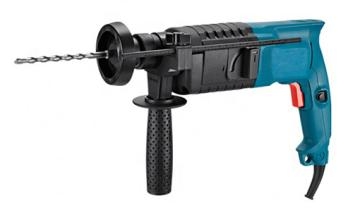
Most rotary hammers include three working modes:
- Rotation Only: Used for drilling softer materials such as wood or metal (depending on the model)
- Hammer + Rotation: Used for drilling concrete, brick, and stone
- Hammer Only (Chiseling Mode): Used for light demolition, tile removal, and surface preparation
Modern rotary hammers commonly use SDS-Plus or SDS-Max chuck systems, which allow quick bit changes and transfer impact energy more efficiently than traditional drill chucks.
Common Applications of Rotary Hammers:
- Drilling anchor holes in concrete
- Installing bolts and fasteners
- Drilling through brick and stone
- Removing tiles and loose mortar
- Performing light renovation work
- Creating holes for electrical and plumbing installations
A rotary hammer is the ideal choice when your project requires both drilling accuracy and moderate breaking capability.
What Is a Demolition Hammer?
A demolition hammer is a robust, heavy‑duty power tool built exclusively for breaking, chipping away, and tearing out hard, stubborn building materials. Unlike a rotary hammer, this tool does not feature any rotating drilling function at all. Instead, it relies on a chisel accessory to unleash forceful, rapid‑fire impact strikes. These repeated pounding blows smash and clear away concrete, asphalt, natural stone, and many other dense, hard‑wearing construction materials with great efficiency.
The core job of a demolition hammer is straightforward: to output the highest possible impact energy for all kinds of destruction‑focused jobs. Since all of its motor power is fully dedicated to producing striking force instead of spinning drill bits, demolition hammers can produce far more powerful blows compared to standard rotary hammers.
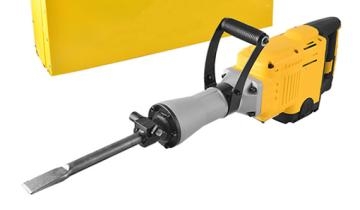
Common Applications of Demolition Hammers:
- Breaking up thick concrete slabs on floors and ground surfaces
- Tearing out outdated, unused building foundations
- Knocking down brick walls and masonry structures
- Shattering asphalt and hard outdoor pavement
- Stripping off heavy‑set thick tiles and old floor coverings
- Carrying out large‑scale, heavy‑duty construction demolition work
Simply put, demolition hammers are engineered for projects centered on breaking down materials. They are not the right pick if your work requires drilling holes.
Rotary Hammer vs Demolition Hammer: How Do They Work?
Understanding how these tools create power is the key to choosing the right one.
How a Rotary Hammer Works
A rotary hammer uses a combination of an electric motor, a pneumatic piston system, a rotating chuck, and Specialized drill bits. The motor drives a piston that compresses air inside the tool. This compressed air pushes a striker forward, creating repeated impact blows against the drill bit. At the same time, the chuck rotates, allowing the bit to cut through concrete while the impact force breaks the material apart. This combination of rotation and impact makes rotary hammers extremely effective for drilling precise holes in concrete.
How a Demolition Hammer Works
A demolition hammer uses a larger impact mechanism designed only for forward striking force. Instead of rotating a drill bit, the tool repeatedly pushes a chisel forward with high impact energy. The main energy goes directly into breaking concrete, cracking stone, removing materials, and creating demolition openings. Because there is no rotational movement, demolition hammers deliver stronger individual impacts compared with rotary hammers.
Rotary Hammer vs Demolition Hammer: Side-by-Side Comparison
To help you quickly and clearly tell these two tools apart, we’ve compiled their core features, performance, and practical differences in the side-by-side table below. This direct comparison makes it easy to see their unique strengths, limitations, and ideal use cases at a single glance.
| Feature | Rotary Hammer | Demolition Hammer |
| Main Function | Drilling + light chiseling | Heavy breaking and demolition |
| Working Mechanism | Rotation + pneumatic hammering | Pure impact hammering |
| Chiseling Capability | Light to medium work | Heavy-duty demolition |
| Precision | High – suitable for accurate holes | Low – designed for destructive work |
| Weight | Lightweight to medium | Heavy-duty and powerful |
| Portability | Easy to move and control | Usually requires stronger handling |
| Best Users | DIY users, installers, contractors | Professional demolition workers |
The simplest way to remember the difference:
- Rotary hammer = Make holes + light breaking
- Demolition hammer = Break materials as fast as possible
Rotary Hammer vs Demolition Hammer: Which One Do You Need?
Whether it's a rotary hammer or a demolition hammer, both are electric hammers. So which one should you choose? The main decision depends on one question: Do you need to drill holes or remove materials? When a project requires high-precision drilling, flexibility, and occasional light demolition, a rotary hammer is a better choice. But when your main goal is to remove a large amount of concrete, brick, stone, or other hard materials as quickly as possible, a demolition hammer is the appropriate choice.
Choose a Rotary Hammer If You Need To:
- Drill Accurate Holes in Concrete
If you need to install Anchor bolts, Concrete screws, Expansion fasteners, Electrical conduit, or plumbing pipes. A rotary hammer is usually the best option. However, it is only applicable to light to moderate demolition operations. Excessive and continuous force can reduce efficiency and increase tool wear. - Complete Renovation and Installation Work
A rotary hammer is ideal for Bathroom renovations, Kitchen remodeling, installing HVAC systems, mounting heavy equipment, and repairing masonry structures. Because it can switch between drilling and chiseling modes, it provides excellent versatility for contractors and DIY users. - Remove Tiles and Perform Light Chiseling
- With a chisel attachment, a rotary hammer can handle: Tile removal, removing old mortar, Surface preparation, and small concrete repairs. However, it should only be used for light-to-medium demolition tasks. Continuous heavy braking will reduce efficiency and increase tool wear.
Choose a Demolition Hammer If You Need To:
- Break Thick Concrete and Hard Materials
A demolition hammer is designed for jobs such as breaking concrete slabs, removing foundations, demolishing brick walls, breaking asphalt surfaces, and cutting channels in concrete floors. When the main task is material removal rather than drilling, a demolition hammer delivers much higher productivity. - Handle Large-Scale Construction Projects
Professional contractors often use demolition hammers for commercial renovation, structural demolition, road repair projects, and industrial construction work. The higher impact energy allows operators to remove large amounts of material faster. - Work Continuously on Heavy-Duty Jobs
Because demolition hammers are built specifically for impact work, they are designed for long operating periods, High-load applications, and tough construction environments. For professional demolition projects, using a rotary hammer instead of a demolition hammer can significantly slow down productivity.
Rotary Hammer vs Demolition Hammer: Pros and Cons
Each power tool comes with its own distinct set of strengths and drawbacks, and neither rotary hammers nor demolition hammers work perfectly for every project. Understanding their respective advantages and limitations will help you quickly figure out which tool aligns with your work requirements. Below, we break down the key pros and cons for both tools side‑by‑side.
Rotary Hammer Pros:
- Versatile Functionality: Rotary hammers pack multiple working modes into a single‑tool unit. They can handle standard drilling, hammer‑drilling into hard masonry materials, as well as light‑duty chiseling work. Thanks to this multi‑mode design, they fit a wide range of common construction, home renovation, and repair projects, so you do not need to switch between several separate power tools for different small‑to‑medium tasks.
- Better Precision and Control: Built primarily with drilling performance in mind, rotary hammers give operators much greater handling accuracy. When you are creating holes, you can easily manage hole depth, keep your drilling position steady, and achieve clean, accurate results. This level of control is very helpful for jobs that require careful positioning rather than brute breaking force.
- More Portable: Most rotary hammer models weigh considerably less than full‑size demolition hammers. Their lighter build makes them far more manageable to maneuver in awkward working angles. You can comfortably work on side walls, tight spaces, and even overhead installations without getting fatigued too quickly during long work sessions.
Rotary Hammer Cons:
- Limited Demolition Power: While rotary hammers deliver solid hammering force for light jobs, their impact output simply cannot compete with the raw striking power of a purpose‑built demolition hammer. They lack the heavy‑duty force required for tough, large‑scale breaking work.
- Not Designed for Heavy Breaking: Rotary hammers are not engineered to run non‑stop on intensive demolition assignments. If you repeatedly use this tool for extensive breaking tasks, internal components will suffer excess friction and heavy wear. Over time, this abusive use will shorten the overall service life of the power tool and may even lead to premature mechanical failure.
Demolition Hammer Pros:
- Maximum Breaking Performance: Demolition hammers are purpose‑built to deliver massive impact energy focused purely on breaking work. They generate powerful, high‑force blows that easily smash through tough materials including thick concrete, brickwork, natural stone, and other rigid building surfaces that stand up well against lighter power tools.
- Faster Material Removal: When you are tackling big‑scale demolition projects, these heavy‑duty tools greatly speed up your workflow. Compared to compact rotary hammers and other smaller power tools, they clear away broken material far more efficiently and can cut down total working hours substantially on large job sites.
- Built for Professional Use: Most full‑size demolition hammer units are engineered with heavy‑duty internal parts and rugged outer housings. They can hold up well under long hours of continuous use and endure the harsh conditions typical of busy construction sites, making them a reliable pick for frequent professional jobs.
Demolition Hammer Cons:
- No Drilling Capability: Unlike rotary hammers, demolition hammers do not come with a rotating drive mechanism. This means they can only deliver chipping and breaking strikes, and they are completely unable to drill holes into walls, concrete, or any other workpiece. You will need a separate drill tool if hole‑making work is part of your project.
- Heavy and Less Flexible: Demolition hammers tend to be bulky and carry substantial weight. Their heavy build makes them tiring to hold over extended periods, and they are poorly suited for fine, detail‑oriented tasks. It is tricky to maintain steady positioning for precision‑focused work, especially in tight corners or overhead spots.
- Higher Cost: Professional‑grade demolition hammers come with robust internal hardware to sustain heavy impact loads. As a result, they generally demand a bigger financial investment. When you compare price points, these units typically cost noticeably more than standard rotary hammer models for both purchase and rental options.
Can a Rotary Hammer Replace a Demolition Hammer?
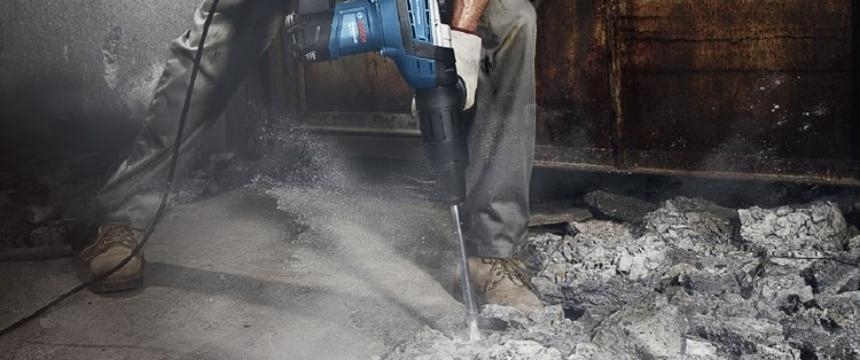
This is one of the most common questions users ask. The short answer is: Sometimes, but not always. A rotary hammer can replace a demolition hammer for small jobs such as removing tiles, breaking thin concrete sections, chipping loose mortar, and minor surface repairs. However, it cannot efficiently replace a demolition hammer for thick concrete slabs, reinforced concrete structures, Large wall demolition, and heavy asphalt breaking. The reason is impact energy. A demolition hammer concentrates all its power into stronger impact blows, while a rotary hammer must divide energy between rotation and hammering.
How to Choose the Right Hammer: Buying Guide
Knowing the core differences between rotary hammers and demolition hammers is only half the battle. With countless models available on the market, picking the correct unit for your needs can feel overwhelming. Whether you are a DIY homeowner or a tradesperson working on job sites, several key factors should shape your purchasing decision. Before purchasing, consider these factors.
Consider Your Main Application
Ask yourself: “Will I spend more time drilling or breaking?”
- Choose a rotary hammer if 70% of your work involves drilling, installing anchors or fasteners, or performing general renovation work.
- Choose a demolition hammer if 80% of your work involves breaking, you remove concrete regularly, and you work on professional demolition projects.
Check Impact Energy (Joules)
Impact energy is one of the most important specifications to look at for demolition and rotary hammers. It measures how much striking force the tool produces with every single blow. Higher impact energy generally means the tool can break through hard materials more effectively. This spec gives you a clear idea of the tool’s real‑world chipping and breaking power. Be sure to compare this value when evaluating different tool models.
General guideline:
| Impact Energy | Suitable Work |
| 2-5 Joules | Light drilling and small renovation |
| 5-10 Joules | Heavy concrete drilling and medium chiseling |
| 15-30 Joules | Professional demolition |
Higher Joule ratings usually mean stronger braking performance, but also greater tool weight and vibration.
Consider Weight and Operator Comfort
A lighter rotary hammer is easier for wall drilling, Overhead installation, and Long periods of controlled work. A heavier demolition hammer is better for floor breaking, Large-scale demolition, and high-impact applications. The best tool is not always the most powerful one — it is the tool that matches your actual workload.
Frequently Asked Questions (FAQ)
Q: Is a rotary hammer the same as a demolition hammer?
A: No. A rotary hammer combines rotation and impact to drill holes and perform light chiseling. A demolition hammer only delivers powerful impact blows for breaking materials. The main difference is that rotary hammers are designed for drilling, while demolition hammers are designed for destruction.
Q: Can I use a rotary hammer for demolition work?
A: Yes, but only for light demolition tasks. A rotary hammer works well for tile removal, Small concrete repairs, and light chiseling. For thick concrete or large demolition projects, a demolition hammer is the better choice.
Q: Can a demolition hammer drill holes?
A: No. A demolition hammer does not have a rotating chuck, so it cannot drill holes. It is designed only for breaking, Chipping, and removing materials.
Q: Which is better for concrete?
A: It depends on the job. For drilling holes in concrete, choose a rotary hammer. For breaking concrete slabs, choose a demolition hammer.
Q: Is a demolition hammer worth buying for DIY projects?
A: Usually, no. For most homeowners, a demolition hammer is too powerful, heavy, and expensive. A rotary hammer provides more versatility for Home repairs, renovations, and occasional concrete work.
Q: Can a rotary hammer break concrete?
A: Yes, but only limited amounts. It can handle Thin concrete, Small sections, and surface chiseling; for thick reinforced concrete or large demolition projects, a dedicated demolition hammer is much more efficient.
Q: Which tool lasts longer?
A: Both tools can last many years when properly maintained. However, using a rotary hammer for heavy demolition can shorten its lifespan. Using a demolition hammer for unsuitable tasks can reduce efficiency. Choosing the correct tool for the application is the best way to maximize tool life.
Conclusion
Rotary hammers and demolition hammers are both robust, high‑performance power tools, but they are engineered with completely different core purposes in mind. A rotary hammer shines for concrete drilling, anchor installation, general home and site renovations, as well as light‑duty chiseling tasks. On the other hand, a demolition hammer is your go‑to option for breaking apart concrete slabs, heavy tear‑down work, and demanding large‑scale construction demolition projects. You can use this straightforward rule of thumb to easily tell them apart:
- Rotary Hammer = Drill + Light Breaking
- Demolition Hammer = Break + Remove
Using the wrong tool can lead to slow progress, unnecessary tool wear, and even safety risks. Selecting the proper tool from Tool.com for your specific job brings many practical benefits. It improves overall work efficiency, lessens operator physical fatigue, and helps you wrap up your project both safely and with great results.