
An inclinometer, also known as a tilt meter or slope meter, is an essential precision measuring tool for detecting tilt angles, slopes, elevation differences, and horizontal deviations. Unlike traditional bubble levels that only judge flatness roughly, a professional inclinometer provides accurate digital angle data, allowing users to complete leveling, calibration, and slope measurement with higher efficiency and precision. Whether you are a construction worker, woodworking enthusiast, mechanical maintenance engineer, or home renovation DIYer, mastering how to use an inclinometer correctly is the key to avoiding installation errors, ensuring project quality, and improving work efficiency. Many users struggle with inaccurate measurement results, improper tool selection, and confusing operation steps due to a lack of systematic usage knowledge. This complete guide will elaborate on inclinometer working scenarios, standard operating methods, core buying criteria, and common usage mistakes, helping you use and select an inclinometer like a professional.
1. What Is an Inclinometer and How Does It Work?
An inclinometer is a portable precision measuring instrument designed to measure the tilt angle, slope gradient, and horizontal and vertical deviation of surfaces. It mainly divides into two mainstream types: analog bubble inclinometers and digital electronic inclinometers. Analog models rely on bubble balance to judge flatness, which is cost-effective but low in accuracy and unable to provide specific angle values. Digital inclinometers adopt high-sensitivity sensor chips, which can instantly display accurate angle data, support zero calibration, and feature anti-interference and shockproof performance, meeting both daily DIY and industrial high-precision measurement needs. The core working principle of an inclinometer is to capture the horizontal and vertical reference changes of the measured surface through built-in sensors. When the measured object tilts, the sensor converts the physical tilt change into visual numerical data, helping users intuitively judge whether the surface is horizontal, vertical, or at a standard slope angle. It solves the problem of ambiguous judgment and large error of traditional leveling tools and is widely used in various precision calibration scenarios.

2. Common Application Scenarios of Inclinometers
Inclinometers are versatile tools that cover civilian DIY, home renovation, industrial installation, engineering construction, and automobile maintenance. Different scenarios have distinct requirements for inclinometer accuracy and functions. The following are the most common practical usage scenarios for users’ reference.
2.1 Home Renovation & Daily DIY
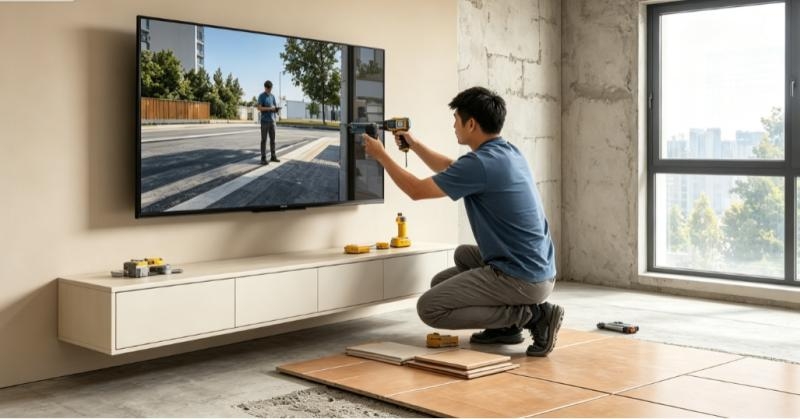
For ordinary families and DIY enthusiasts, an inclinometer is an essential tool for indoor renovation. It can be used for wall tiling leveling, ceiling installation calibration, furniture assembly correction, stair slope measurement, and window and door verticality detection. It ensures that all installation works are flat and vertical, avoiding uneven tile gaps, tilted cabinets, and deformed doors and windows, greatly improving the overall decoration effect.
2.2 Woodworking Production
Woodworking projects require strict angle control. An inclinometer helps woodworkers calibrate the tilt angle of saw blades, planer tables, and cutting benches, standardize the bevel cutting angle of wood materials, and ensure the consistency of handmade furniture and wooden crafts. It effectively avoids defective products caused by angle deviation and improves woodworking precision and yield.
2.3 Construction & Civil Engineering
In the construction industry, inclinometers are indispensable for engineering quality inspection. Construction workers use them to detect building wall verticality, floor flatness, foundation slope, and bridge and road gradient. High-precision inclinometers can accurately capture tiny tilt deviations, ensuring the structural stability and construction compliance of buildings, roads, and bridges, and eliminating potential safety hazards caused by unqualified slopes.
2.4 Mechanical Equipment Installation & Maintenance
Mechanical equipment operation requires strict horizontal and angle calibration. Inclinometers are widely used for the leveling of machine tools, conveyor equipment, production line fixtures, and mechanical bases. Accurate angle calibration ensures the stable operation of mechanical equipment, reduces equipment vibration and wear caused by tilt deviation, and extends the service life of industrial equipment.
2.5 Automobile Modification & Maintenance
In auto maintenance and modification, inclinometers are commonly used for vehicle body tilt detection, wheel camber and inclination calibration, and chassis leveling inspection. Standard angle data ensures stable vehicle driving, uniform tire wear, and accurate modification parameters, avoiding driving safety risks caused by unbalanced vehicle angles.
3. Step-by-Step Guide: How to Use an Inclinometer Correctly
Whether using a digital or analog inclinometer, standardized operation is the premise of accurate measurement. Most measurement errors are caused by irregular operation rather than tool quality problems. Here is the universal standard usage process for all inclinometers.
3.1 Pre-Use Inspection and Preparation
Before measurement, clean the probe and the measured surface thoroughly to remove dust, sawdust, oil stains and sundries. Foreign matter will cause uneven contact between the inclinometer and the surface, resulting in deviation data. Meanwhile, check the tool appearance and power supply: ensure the digital inclinometer has sufficient battery power and no sensor failure, and confirm the analog inclinometer has no bubble leakage or shell deformation.
3.2 Zero Calibration (Core Step)
Zero calibration is the most critical step to ensure accurate data. Place the inclinometer on a confirmed standard horizontal plane, press the zero-set button of the digital inclinometer to reset the data to zero; for analog inclinometers, adjust the position until the bubble is completely centered. Re-calibration is required after each position replacement and long-term use to eliminate cumulative errors.
3.3 Formal Measurement and Reading
Stably place the calibrated inclinometer on the target measuring surface, keep the tool fitting closely with the surface without shaking, tilting or floating. For horizontal and vertical detection, wait for the data or bubble to stabilize, then record the angle value and flatness state. For slope measurement, keep the tool parallel to the slope direction to obtain accurate gradient data. During operation, avoid touching the tool or applying external force to prevent data fluctuation.
3.4 Post-Use Maintenance and Storage
After use, wipe the tool surface clean, turn off the power of the digital inclinometer to save power, and place it in a dry, shockproof and dustproof storage environment. Avoid long-term exposure to high temperature, humidity and strong vibration environments, which will affect the sensor sensitivity and measurement accuracy of the inclinometer and shorten its service life.
4. Practical Inclinometer Buying Guide for Different Users
There is no universal best inclinometer, only the most suitable one for your scenarios. Many users blindly pursue high precision or low price, resulting in tool performance surplus or insufficient accuracy. The following targeted buying suggestions help you select a cost-effective inclinometer according to actual demands.
4.1 Core Parameters to Focus On
Measurement Accuracy: Accuracy is the core indicator of an inclinometer. Daily DIY and home renovation scenarios are suitable for tools with an accuracy of ±0.1°. Industrial calibration, construction inspection and precision woodworking require high-precision models with ±0.05° accuracy to meet strict engineering standards.
Measurement Range: Most conventional inclinometers support 0-90° or 0-360° full-range measurement. Users engaged in multi-angle mechanical calibration and special slope detection must choose 360° full-range models to avoid measurement dead angles.
Tool Type: Analog inclinometers are cheap and suitable for low-precision daily leveling; digital inclinometers feature intuitive data reading, high accuracy and zero calibration function, which are suitable for most professional scenarios and are the mainstream choice for current users.
Stability & Durability: Prioritize inclinometers with shockproof, dustproof and waterproof functions. Tools with metal shell and anti-slip design are more adaptable to complex construction and woodworking environments, not easy to damage, and have longer service life.
4.2 Targeted Selection Suggestions
For Home DIY & Decoration Users: Choose a lightweight, portable basic digital inclinometer with ±0.1° accuracy. It is cost-effective, easy to operate, and fully meets daily leveling and installation needs.
For Woodworking & Small Workshop Users: Select a high-precision digital inclinometer with 360° full range and stable sensor performance, which can adapt to frequent angle calibration and ensure processing consistency.
For Construction & Industrial Users: Prioritize industrial-grade waterproof and shockproof inclinometers with ±0.05° high precision, strong anti-interference ability, and stable data output in complex construction environments.
5. Common Inclinometer Usage Mistakes & Solutions
Most measurement inaccuracies come from improper operation rather than tool quality. Summarized below are the most frequent user mistakes and targeted solutions to help you avoid measurement errors.
Mistake 1: Skipping zero calibration
Many users use the inclinometer directly after long-term placement, resulting in baseline deviation. Solution: Perform zero calibration on a standard horizontal plane before each use.
Mistake 2: Unclean measuring surface or unstable placement
Dust and gaps cause the tool to tilt slightly, leading to wrong data. Solution: Clean the contact surface and keep the tool fully fitted and stationary during measurement.
Mistake 3: Forcing measurement beyond the angle range
Exceeding the tool’s measuring range will cause sensor failure and data disorder. Solution: Confirm the tool parameter range and select a full-range model for multi-angle measurement.
Mistake 4: Ignoring daily maintenance
Long-term dust and moisture erosion reduce sensor sensitivity. Solution: Keep the tool clean and dry, and store it in a sealed and shockproof box.
6. Conclusion
An inclinometer is a practical and essential precision measuring tool covering home DIY, woodworking, construction engineering, and industrial maintenance. Mastering standard usage steps including pre-inspection, zero calibration, stable measurement and daily maintenance is the key to obtaining accurate and repeatable angle data. Meanwhile, selecting a matched inclinometer according to personal usage scenarios and accuracy demands can effectively avoid purchasing pitfalls and cost waste. Whether you are a beginner or a professional practitioner, standardized operation and reasonable tool selection can maximize the performance of the inclinometer, ensure construction and installation quality, and improve overall work efficiency.