
Choosing between an air screwdriver and an electric screwdriver is one of the most common confusions for factory purchasers, workshop technicians, field maintenance workers, and DIY enthusiasts. Both tools perform screw tightening and loosening tasks, but they differ greatly in working principle, operational limits, applicable scenarios, and long-term using costs. Picking the wrong tool often results in unstable fastening quality, low working efficiency, frequent tool damage, and unnecessary budget waste. This buying guide sorts out application scenarios, standard usage methods, pros and cons, and targeted purchasing advice for air screwdrivers and electric screwdrivers, helping you make a cost-effective decision according to your actual working needs.
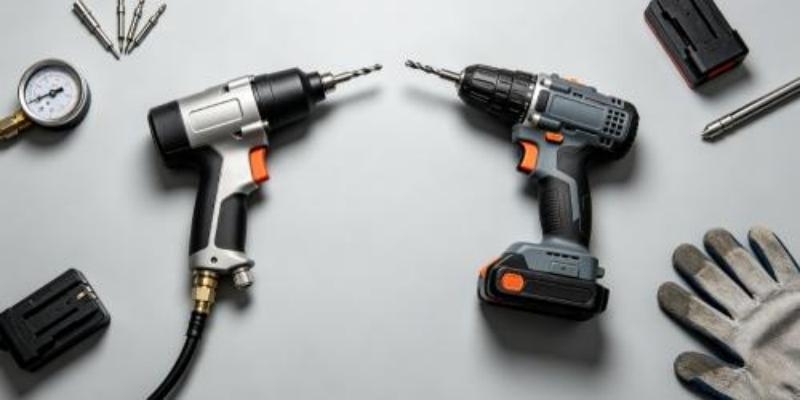
1. Air Screwdriver (Pneumatic Screwdriver): Overview & Application Scenarios
An air screwdriver, also known as a pneumatic screwdriver, is an industrial-grade fastening tool driven by compressed air. It requires a complete air supply system, including an air compressor, air hose, air filter, and oiler, to work stably. Core advantages: Ultra-stable torque output, no heat generation, and no power attenuation during long continuous operation. It maintains highly consistent fastening precision throughout full-shift repetitive work.
Best application scenarios:
- Factory mass production assembly lines
- High-repeatability precision fastening tasks
- Electronic and hardware batch manufacturing
- Long-shift non-stop industrial operation
For standardized factories, pneumatic screwdrivers ensure unified screw depth and consistent fastening tension for every finished product, greatly improving product qualification rates.
2. Standard Usage Methods & Limitations of Air Screwdrivers
Air screwdrivers follow strict industrial operating specifications to ensure safety and working accuracy.
Correct operation steps:
- Pre-work inspection: Check air compressor pressure and air pipe tightness to avoid air leakage and insufficient power
- Tool setup: Install matched screwdriver bits according to screw sizes, and adjust the torque knob to standard production values
- Working operation: Hold the tool vertically with steady and even pressure; avoid shaking or over-pressing to prevent thread slipping
- Daily maintenance: Drain water from the air filter and lubricate the tool regularly to reduce internal wear Main limitations:
- Dependent on air compressor equipment and pipeline layout - Limited moving range due to air hoses
- Relatively loud exhaust noise during operation
- Not applicable for outdoor or mobile casual work
Overall, air screwdrivers deliver precise and stable fastening performance only under standardized operation and fixed industrial environments. Their strict operating requirements and scenario limitations determine that they are more suitable for fixed assembly lines rather than flexible mobile work. Mastering standard usage and avoiding inappropriate application scenarios can give full play to the industrial advantages of pneumatic screwdrivers and ensure long-term stable production output.
3. Electric Screwdriver: Overview & Application Scenarios
An electric screwdriver is a portable, flexible fastening tool powered by AC power or rechargeable lithium-ion batteries. It requires no auxiliary equipment and supports plug-and-play use, which is friendly for various flexible working scenarios.
Core advantages: High mobility, low working noise, simple operation, and low initial setup cost. Cordless electric screwdrivers completely get rid of cable restrictions.
Best application scenarios:
- Field maintenance and after-sales engineering repair
- Outdoor and high-altitude installation work
- Small-batch and irregular workshop assembly
- Household furniture installation and daily DIY projects
- Narrow-space operation without stable power or air supply
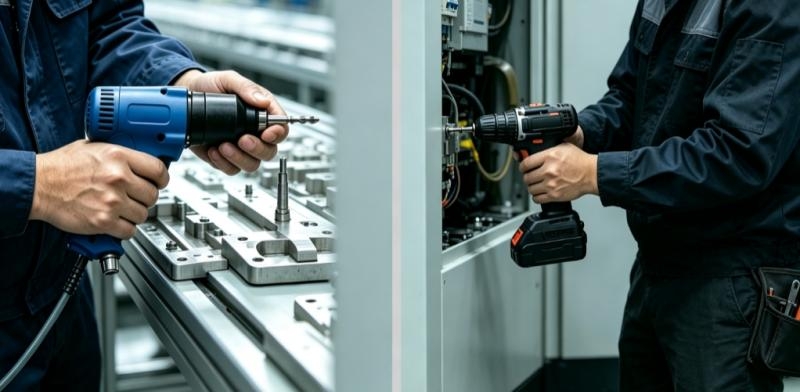
4. Standard Usage Methods & Limitations of Electric Screwdrivers
Electric screwdrivers are beginner-friendly with simple operating steps, but they have obvious working limits under heavy loads.
Correct operation steps:
- Pre-work preparation: Fully charge the battery or connect the AC power cord
- Parameter adjustment: Match suitable bits, adjust forward/reverse rotation and torque gears according to screw specifications
- Fastening operation: Keep the tool vertical and apply even force to avoid skewed fastening
- Heat protection: Arrange intermittent heat dissipation during continuous high-torque work
Main limitations:
- Long-term high-load operation causes motor overheating and power attenuation
- Internal components wear faster under repetitive heavy-duty work
- Torque stability and consistency are weaker than pneumatic screwdrivers
- Battery aging reduces overall performance after long-term use
5. Core Pros & Cons Comparison Air Screwdriver (Pneumatic)
Each tool carries distinct strengths and inherent drawbacks. Understanding their pros and cons helps you quickly filter unsuitable options and avoid costly purchasing mistakes before making your final decision. Below is a detailed breakdown of the advantages and disadvantages of air screwdrivers and electric screwdrivers.
Pros:
- Extremely stable torque for standardized batch production
- No heat generation, supporting non-stop full-shift work
- High durability and low failure rate for long-term industrial use
- Unified fastening quality to improve product consistency
Cons:
- Requires complete air compression system and regular maintenance
- Limited flexibility and movable working range Higher working noise
- Higher initial workshop configuration cost
While pneumatic screwdrivers dominate standardized industrial assembly scenarios with stable performance, electric screwdrivers focus on flexible, lightweight, and low-threshold usage scenarios. It targets decentralized, mobile, and small-batch operation demands, perfectly complementing the limitations of air screwdrivers. The following section analyzes the core advantages and inherent shortcomings of electric screwdrivers for your intuitive comparison.
Electric Screwdriver
Pros:
- High portability and flexibility for mobile work
- Low noise and simple operation
- No extra auxiliary equipment required
- Low initial purchase and setup cost
Cons:
- Easy to overheat under continuous heavy-duty work
- Limited continuous working time
- Slightly unstable torque under high load
- Battery aging affects long-term service performance
6. Targeted Buying Advice for Different Users
After comparing performance, advantages and disadvantages, the final purchase decision should be based on your actual work scenarios and identity. Different working groups have completely different priority demands for fastening tools. Check the following reference to find out which screwdriver fits your job best.
Choose an Air Screwdriver if you are:
- Factory owner or purchaser for mass production lines
- Worker engaged in high-volume repetitive assembly work
- User requiring high-precision and unified fastening standards
- Looking for long-term stable industrial tool with low failure rate
Choose an Electric Screwdriver if you are:
- Field maintenance worker or after-sales engineer
- Small workshop operator with irregular and small-batch tasks
- Home user or DIY enthusiast for daily installation and repair
- Worker who needs high flexibility and mobile operation
Ultimately, the core of screwdriver selection lies in matching tool performance with your actual working scenarios. Industrial batch production prioritizes stability and consistency, making pneumatic screwdrivers the optimal solution. In contrast, scattered maintenance, household DIY and flexible mobile work focus more on portability and convenience, where electric screwdrivers deliver higher cost performance. By matching tool functions with your job demands, you can avoid overinvestment or performance insufficiency and achieve efficient and cost-effective tool configuration.
7. Final Conclusion
There is no absolutely better option between an air screwdriver and an electric screwdriver. The best fastening tool depends entirely on your working environment, operation frequency, and load demands. Air screwdrivers are the most reliable solution for non-stop, high-standard industrial batch fastening. Electric screwdrivers provide higher cost performance and flexibility for mobile, scattered, and light-duty daily work. Matching the right tool with your actual job can avoid wrong purchases, greatly improve working efficiency, and optimize long-term using costs.