
Every woodworker, whether a complete beginner or a seasoned professional, eventually faces the same critical question: should I use an electric planer or a hand planer for my project? Both tools are staples in woodworking shops worldwide, yet they serve vastly different purposes in terms of speed, precision, finish quality, and workflow efficiency. Choosing the wrong planer can lead to ruined lumber, uneven surfaces, unsightly tear-out, wasted hours of work, and unnecessary frustration. Many new woodworkers mistakenly believe one tool can fully replace the other, which limits their project quality and workflow flexibility.
In this in-depth guide, electric planer” refers to a handheld power planer, not a benchtop thickness planer. We will break down the core differences between electric planers and hand planers, comparing their pros and cons, ideal use cases, difficulty levels, long-term costs, and finishing performance. By the end, you will clearly understand which tool fits your woodworking style, project type, and skill level — and whether you need both for optimal results.
Basic Knowledge: What Are They?
Before diving into our electric planer vs. hand planer comparison, let’s cover the basics of these two classic woodworking tools. Both shave away excess wood to level and smooth surfaces, but they work in very different ways. Understanding their core traits will help you pick the right tool for your projects. Below, we explain each one in detail.
Electric Planer
An electric planer (also known as a power hand planer) is a portable motorized woodworking tool designed for fast material removal and bulk lumber shaping. It features a rotating cutter head with sharp blades, an adjustable depth gauge, and a flat base sole that glides across wood surfaces for consistent cutting thickness.
Electric planers are engineered for efficiency first. They eliminate the physical labor of manual planing and deliver uniform cuts across large surface areas. Most modern electric planers support adjustable cutting depths, chamfering capabilities, and dust port connections to minimize workshop mess.
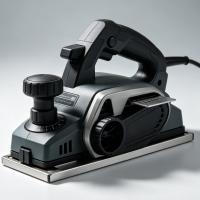
Core electric planer functions include:
- Fast rough planing of rough-sawn and unprocessed lumber
- Leveling uneven wooden boards and reducing overall thickness
- Trimming door edges, window frames, and cabinet panels on-site
- Creating clean chamfers and beveled edges for furniture detailing
- Speeding up prep work for large-scale renovation and build projects
Thanks to their simple operation and time-saving design, electric planers are extremely popular among DIY enthusiasts, hobby woodworkers, and construction professionals who prioritize speed and consistency over ultra-fine detail work.
Hand Planer
A hand planer is a traditional manual woodworking tool that relies on human control rather than electricity to slice thin, precise layers of wood. Built with a rigid metal or wooden body, adjustable blade, chip breaker, and fine-tuning mechanisms, hand planers deliver unmatched control over every cut.
Unlike power tools that prioritize speed, hand planers are built for quality. Experienced woodworkers can make micro-adjustments to blade depth, producing paper-thin shavings that leave glass-smooth surfaces with zero machine marks. Hand planers excel at working against tricky wood grain and eliminating tear-out that commonly plagues electric planer work.
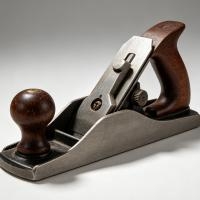
Core hand planer functions include:
- Fine surface finishing for high-end furniture and craft projects
- Correcting minor unevenness and subtle surface imperfections
- Smoothing difficult grain patterns without wood tear-out
- Tightening joint gaps for seamless wood connections
- Producing mirror-smooth surfaces ready for staining and finishing
Hand planers require practice to master, but they remain irreplaceable in professional fine woodworking. No power tool can replicate the tactile precision and flawless finish of a well-executed hand planer pass.
Head-to-Head Comparison: Electric Planer vs Hand Planer
This side-by-side comparison covers every critical factor woodworkers care about, helping you quickly evaluate which planer suits your needs.
| Comparison Factor | Electric Planer | Hand Planer |
| Working Speed & Efficiency | Extremely fast. Removes large amounts of wood in seconds, ideal for bulk stock preparation and large boards. Cuts project prep time drastically. | Slow and labor-intensive. Each pass removes minimal material. Best for small, targeted areas rather than full-board processing. |
| Precision & Finish Quality | Good for rough and semi-finish work. Often leaves slight machine lines, minor unevenness, and occasional tear-out on irregular grain. | Exceptional precision. Produces silky, mark-free surfaces with full grain control. Eliminates tear-out for premium furniture-grade results. |
| Skill Requirement | Beginner-friendly. Minimal learning curve. Basic steady-hand technique is enough for clean functional results. | Moderate to advanced skill needed. Requires practice for consistent pressure, flat passes, and precise blade tuning. |
| Portability & Usability | Highly portable but requires a power source. Great for job sites, renovations, and on-location trimming work. | Ultra-portable and completely cordless. Usable anywhere with no noise or power restrictions. |
| Cost & Maintenance | Higher upfront cost. Requires regular blade replacements, motor care, and dust system maintenance. | Low one-time purchase cost. Extremely durable. Only requires occasional sharpening for lifelong use. |
| Noise & Dust | Very loud and produces heavy wood dust. Requires ear protection and dust collection systems. | Virtually silent with zero dust. Creates clean, thin wood shavings with no workshop mess. |
| Service Life | Limited lifespan. Motors and internal components wear out over years of heavy use. | Nearly lifelong. A quality hand planer can serve multiple generations with proper sharpening and care. |
Electric Planer: Pros & Cons
Pros of an Electric Planer
- Incredible time savings: Cuts down hours of manual planing into minutes, perfect for busy hobbyists and professionals.
- Low physical effort: Eliminates the fatigue of repetitive hand-planing motions on large projects.
- Consistent bulk cuts: Delivers uniform depth across wide boards far faster than manual work.
- Excellent for on-site work: Ideal for fitting doors, trimming frames, and adjusting finished structures.
- Easy for beginners: New woodworkers can achieve usable results with minimal training.
Cons of an Electric Planer
- Lower finish quality: Machine marks and minor unevenness often require follow-up sanding or hand planing.
- Noisy and messy: Disruptive for home workshops and requires dust extraction gear.
- Power-dependent: Cannot work in remote or powerless workshop locations.
- Risk of over-cutting: Small mistakes can remove too much material and ruin lumber quickly.
Hand Planer: Pros & Cons
Pros of a Hand Planer
- Unmatched finishing quality: Produces furniture-grade smoothness that power tools cannot replicate.
- Full grain control: Easily handles figured wood, curly grain, and tricky surfaces without tear-out.
- Quiet and clean: Perfect for home workshops, early or late work sessions, and indoor craft spaces.
- Extreme durability: A single high-quality hand planer lasts decades with simple sharpening maintenance.
- Ultimate precision: Allows micro-adjustments for perfect joints, flush surfaces, and tight fits.
Cons of a Hand Planer
- Slow workflow: Bulk stock preparation becomes extremely time-consuming and labor-heavy.
- Learning curve: New users often struggle with uneven cuts, digging, and inconsistent pressure.
- Physically demanding: Extended planing sessions cause arm, shoulder, and wrist fatigue.
- Inefficient for large stock: Not practical for thick, wide boards requiring heavy material removal.
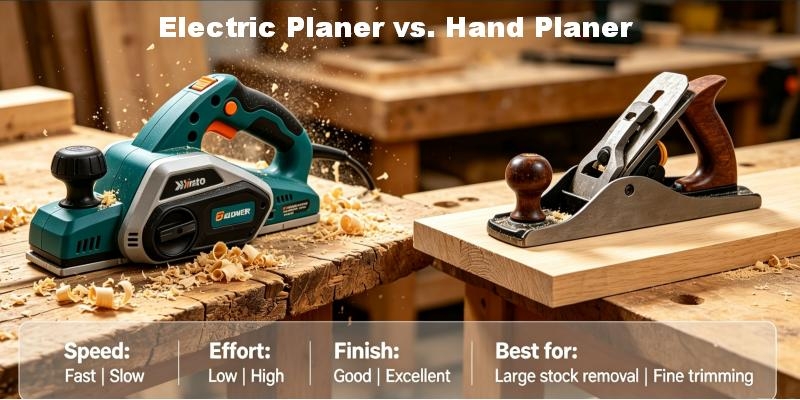
Electric Planer vs Thickness Planer vs Hand Planer
Woodworkers often mix up these three tools, largely because the term “planer” covers several distinct pieces of woodworking equipment.
- A handheld electric planer is guided by hand and moved over your workpiece. It works great for trimming edges, removing wood in targeted spots, cutting chamfers, and getting boards ready for finer finishing work.
- A thickness planer is a stationary benchtop machine. You feed your board between powered rollers, and an internal cutterhead shaves off material to create uniform thickness across the whole board. It’s the go-to tool when you need to bring multiple boards to the exact same, repeatable dimension.
- A hand planer is operated purely by hand. You push it across the wood surface, keeping full direct control over every cut. It shines for precision fitting tasks, fine edge work, and smoothing surfaces to a high-quality finish.
It’s important to note that if you need to flatten and size many boards to a consistent thickness, a thickness planer serves a completely different purpose compared to a handheld electric planer.
When to Use an Electric Planer?
An electric planer is your top pick for jobs that demand speed and aggressive material removal. It excels at stripping away larger amounts of wood quickly, saving you hours of manual labor. Consider reaching for an electric planer in these common scenarios:
- Efficiently leveling large wooden panels, tabletops, and wide boards
- Quick thickness reduction ahead of your final sanding and finishing stages
- Batch processing multiple boards for furniture builds, decking, or shelving projects
- Beginner DIY woodworking projects where ease of use and speed are prioritized over a flawless finish
- Rough planing raw, rough-sawn lumber to strip bark, straighten uneven edges, and shave down excess stock
- On-site construction woodworking tasks, such as trimming doors, fitting windows, and making cabinet adjustments
When to Use a Hand Planer?
A hand planer shines for precision-driven, fine-finish woodworking jobs that demand careful control over every cut. Grab your hand planer in these situations:
- Final finishing work on premium furniture pieces, hardwood crafts, and intricate custom joinery
- Fine-tuning joint gaps to create tight, seamless fits for cabinetry, tabletops, and wooden frame assemblies
- Producing ultra-smooth surfaces that are ready for staining, varnishing, or oil-based finishing treatments
- Working in quiet spaces or compact home workshops where loud power tools are impractical or disruptive
- Cleaning up minor uneven spots, high points, and small misalignments after you have finished power planing
- Smoothing figured wood such as curly maple and oak, or any wood with tricky irregular grain that easily suffers tear-out when machined
Which Is Better for You?
If You Are a Beginner or Casual DIYer:
An electric planer is the better primary tool. It delivers fast, usable results with minimal skill, saves physical energy, and handles 90% of common wood prep tasks. It is the most cost-effective way to speed up your workflow while learning basic woodworking fundamentals.
If You Are a Professional or Fine Woodworker:
A hand planer is non-negotiable for high-quality finishes. While you will still use an electric planer for rough stock removal, only a hand planer can deliver the flawless surface quality required for premium furniture, custom woodcraft, and high-end joinery work.
The Pro Woodworking Hybrid Workflow:
Professional woodworkers do not choose one over the other — they combine both tools for perfect results. The standard industry workflow is simple and effective: Use an electric planer for fast rough stock removal and leveling, then use a hand planer for final precision trimming and finishing. This method eliminates the slowness of pure hand planing while removing machine marks and imperfections left by electric planers, balancing maximum efficiency and premium finish quality.
Can You Use an Electric Planer and Hand Planer Together?
Yes. In many workshops, using both tools makes sense because they perform different stages of the same job.
For example, an electric planer can quickly remove excess material from a rough board or trim a component close to its required size. A hand planer can then make the final adjustment and refine the surface or joint. This hybrid workflow combines the productivity of a power tool with the control of a hand tool. It also reduces the amount of heavy manual work without giving up the precision needed for final fitting.
Which One Should a Beginner Buy?
There is no single answer for every beginner. If you mainly work on home repairs, doors, rough timber, or construction-style projects, a handheld electric planer may be more useful because it handles material removal quickly. If your goal is furniture making, joinery, edge fitting, or learning traditional woodworking techniques, a hand planer may provide more useful long-term skills.
Before buying either tool, consider what you actually need to accomplish. A tool that matches your typical projects will usually be more useful than one chosen simply because it is faster or more traditional.
FAQs About Electric Planers and Hand Planers
Q: Is an electric planer worth buying for beginners?
A: Yes, electric planers are absolutely worth it for beginners. They drastically reduce project time, require little experience to operate safely, and eliminate the physical exhaustion of manual planing. They are one of the best value power tools for new woodworkers.
Q: Can a hand planer fully replace an electric planer?
A: No. While a hand planer produces better finishes, it cannot handle large-scale rough lumber processing efficiently. Relying only on a hand planer for bulk stock prep will drastically slow down your workflow and cause unnecessary fatigue.
Q: Do professional woodworkers use electric planers?
A: Yes, nearly all professional woodworkers use electric planers for initial stock preparation. They reserve hand planing only for final finishing, precision corrections, and high-detail work to maximize workshop efficiency.
Q: Which planer is more durable long-term?
A: Hand planers are far more durable. A quality hand planer can last 30–50 years or longer with regular sharpening. Electric planers have wearable motors, bearings, and electrical components that degrade over time with heavy use.
Q: Do I need both tools for a complete woodworking shop?
A: For serious woodworking, yes. The electric planer handles speed and bulk work, while the hand planer handles precision and finish work. Together, they cover every stage of wood preparation from rough lumber to final polished surfaces.
Conclusion
When comparing an electric planer vs. a hand planer, there is no universal “better” tool — only a better tool for the job. Electric planers excel at fast, efficient bulk material removal, making them ideal for project prep, renovation work, and beginner-friendly woodworking. Hand planers dominate precision finishing, grain control, and premium furniture work that demands immaculate, mark-free surfaces.
If you are building a functional beginner workshop, start with a reliable electric planer to speed up your projects. If you want to elevate your woodworking quality and craft professional-level furniture, add a quality hand plane to your toolkit. You can explore our curated range of tools on Tool.com to find the perfect fit for your shop. For maximum versatility and professional results, combining both tools creates the most efficient, highest-quality woodworking workflow possible.