
Picking the best electric planer isn't all about grabbing the highest-power model you can find. The right tool depends on what wood you'll plane, how often you use it, whether you work on-site or in a workshop, and how much material you need to remove. A handheld electric planer quickly trims sticking doors, smooths rough lumber, and fixes uneven edges. However, if you need to make dozens of boards the same thickness, a benchtop thickness planer will serve you far better. In this guide, "electric planer" refers to a handheld electric planer. We will break down everything you need to know to pick an electric planer: cutting width, cutting depth, motor power, blade types, weight, depth adjustment, portability, and all the key features that impact real-world use.
What Is an Electric Planer?
An electric planer is a power tool that uses a rotating cutter head to remove thin layers of wood. Unlike a traditional hand plane, it uses a motor to drive the blades, allowing you to remove material quickly with far less physical effort. Electric planers are commonly used for trimming doors and frames, smoothing rough timber, adjusting furniture edges, chamfering corners, and correcting small amounts of uneven material.
What Can an Electric Planer Do?
A handheld electric planer excels at quickly shaving off thin layers of wood. It handles many common workshop and on-site jobs effortlessly. You can use it to trim swollen doors that stick and won’t close smoothly, level protruding cabinet edges, and rough-sawn timber to get a cleaner surface before sanding, staining or painting. Beyond material removal, it is perfect for creating neat chamfered edges. Most electric planers feature built-in chamfer grooves on the base plate. These guides help you produce steady, even-angled edges along wood boards without extra hand tools, ideal for decorative finishes or removing sharp corners.
Who Should Buy an Electric Planer?
An electric planer greatly speeds up wood trimming, edge smoothing, and door fitting work, making it a practical upgrade for most woodworking enthusiasts and tradespeople. However, it is not necessary for everyone. The following guide helps you quickly confirm whether an electric planer suits your daily work and project needs.
| User | Typical work | What to prioritize |
| DIY beginner | Repairs, doors, small projects | Low weight, simple controls |
| Woodworker | Furniture and edge fitting | Precision and depth adjustment |
| Contractor | Renovation and jobsite work | Portability and durability |
| Professional carpenter | Frequent daily use | Power, ergonomics, and reliability |
The electric planer is a worthwhile tool for DIYers, renovators, and carpenters who regularly need fast, precise wood trimming. If your work focuses on edge fitting, door planing, and on-site adjustments, this tool will significantly improve your efficiency. For large-scale bulk board thicknessing, a benchtop thickness planer remains the better choice.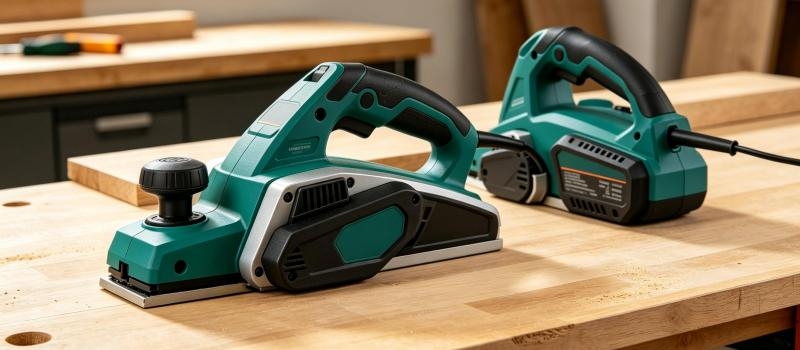
Handheld Electric Planer vs. Thickness Planer
One of the most troublesome mistakes that carpenters make during operation is choosing the wrong type of planer for different tasks. Handheld electric planers and thickness planers are completely different in their uses and are each specifically designed for certain jobs. Understanding the core differences between them can help you choose the tools that truly fit your workflow.
Handheld Electric Planer: A handheld electric planer is a portable, maneuverable tool that you move freely across wood surfaces. Its compact, lightweight build makes it perfect for on-site repairs, door trimming, edge fitting, and clean chamfering work. It offers unmatched flexibility, letting you control every cutting pass with precise direction and placement. This advantage shines brightest when working with installed fixtures, oversized lumber, or fixed workpieces that cannot be moved to a workshop bench.
Benchtop Thickness Planer: A benchtop thickness planer is a stationary workshop tool. Instead of moving the tool over the wood, you feed lumber through the machine to achieve uniform, consistent thickness across the entire board surface. It excels at batch processing and standardized stock preparation. For anyone who regularly planes multiple boards or needs perfectly even thickness for furniture and cabinetry projects, a thickness planer is far more efficient than a handheld model.
Use this quick task guide below to pick the right planer for your project:
| If you need to... | Choose |
| Trim a sticking door | Handheld planer |
| Adjust a cabinet edge | Handheld planer |
| Chamfer a board edge | Handheld planer |
| Process multiple boards | Thickness planer |
| Reduce board thickness consistently | Thickness planer |
Prioritizing the correct planer type ensures you avoid purchasing overpowered yet mismatched tools, saving you time, money, and unnecessary workflow frustration.
Corded vs. Cordless Electric Planer: Which Should You Choose?
The choice between a corded and cordless electric planer mainly comes down to portability versus continuous power. Both styles get the same core woodworking jobs done, but each has clear strengths and drawbacks that fit different work scenarios. Picking the right version depends on where you work, how often you use the planer, and the type of wood projects you tackle most.
Corded Electric Planer
A corded electric planer provides power directly from an outlet, so you do not need to stop and recharge a battery. This makes it a practical choice for workshops and longer jobs. Corded models can also be attractive for buyers who want a straightforward tool without investing in a battery platform. Their main disadvantage is the power cord, which can restrict movement around a jobsite.
Cordless Electric Planer
A cordless electric planer is easier to carry around a jobsite and does not have a cable that can interfere with your work. It is especially useful for door installation, renovation, and other mobile tasks. If you already own cordless tools from the same battery platform, a bare-tool planer can also reduce the need to buy another battery and charger. The trade-off is runtime. For long, continuous planing, a corded model eliminates battery limitations.
Which One Is Better for You?
Choose a corded planer if most of your work takes place in a fixed workshop or you regularly run long wood-planing sessions. Corded models deliver consistent power without slowdowns, so they handle heavy stock removal and continuous trimming without worrying about drained batteries.
Go with a cordless planer if portability, fast setup, and on-site flexibility are your top priorities. It works great for renovation jobs or remote locations where power outlets are hard to access. Just keep in mind that battery runtime is limited, so it suits shorter, intermittent tasks rather than all-day heavy work.
Common Electric Planer Problems & Quick Fixes
Most entry-level and mid-range electric planer issues are not caused by broken tools — they come from incorrect setup, wrong blade choice, or improper operation. Understanding these common problems helps you avoid poor cutting results, extend tool life, and get clean planing every time. Use this reference table to quickly diagnose and fix typical planer issues.
| Common Problem | Main Causes | Quick Fix & Solution |
| Tear-out, rough wood surface | Dull blades, planing against wood grain, overly deep single pass | Replace sharp blades; follow wood grain direction; use shallow multiple passes |
| Uneven cutting & wavy edges | Uncalibrated depth adjustment, unbalanced base plate, loose fence | Readjust and lock depth settings; clean the base plate; tighten edge guide |
| Tool bogging down & slow cutting | Overload depth setting, blunt blades, working on dense hardwood | Reduce cutting depth per pass; upgrade to carbide blades for hardwood |
| Chips clogging the tool | Blocked chip ejection port, improper dust bag installation | Clear chip outlets regularly; switch to vacuum extraction for long work |
| Vibration & unstable operation | Loose blade screws, worn motor parts, uneven hand pressure | Reinstall and lock blades firmly; maintain steady, flat tool pressure |
| Burning wood marks | Excessive feed speed, dull blades, repeated over-planing | Slow down your moving speed; replace worn blades immediately |
Many users mistakenly blame low-quality tools for bad results. In fact, correct operation and daily maintenance make a far bigger difference than minor power differences. Mastering these simple fixes can make your ordinary electric planer perform like a professional model, while also reducing tool wear and long-term maintenance costs.
Key Features to Consider Before Buying an Electric Planer
Once you choose the right type, compare the features that directly affect cutting performance and everyday handling.
Motor Power and Cutting Performance
Motor power affects how effectively a planer removes material, particularly when working with harder wood or taking repeated passes. However, do not choose a planer based only on its amp or watt rating. Actual cutting performance also depends on cutting depth, blade condition, cutterhead design, and how aggressively you feed the tool.
For occasional DIY work, a compact planer can be sufficient. If you frequently work with hardwood or need to remove more material, prioritize a model designed for heavier workloads. The same principle applies to RPM and cuts per minute. These specifications describe speed, but a higher number alone does not guarantee a better finish. Blade sharpness, feed speed, depth of cut, and grain direction also matter.
Cutting Width
Cutting width determines how much material the planer can remove in a single pass. For most handheld woodworking applications, around 3-1/4 inches is a practical general-purpose size. It is wide enough for many doors, framing lumber, furniture parts, and common woodworking tasks without making the tool unnecessarily bulky.
A narrower planer is easier to control for small edge work. A wider model reduces the number of passes on broader stock, but it usually adds weight and size. Choose the width based on the material you actually work with, rather than simply grabbing the widest model available.
Cutting Depth and Depth Adjustment
Cutting depth determines how much wood the planer removes in each pass. A deeper setting removes material faster, but shallow passes are generally easier to control and produce a cleaner result. Depth adjustment is therefore just as important as maximum cutting depth.
Look for a clearly marked adjustment mechanism that allows repeatable settings. Fine adjustments are especially useful when fitting doors, matching edges, or removing only a small amount of material. For most finishing work, precise shallow adjustment is more useful than simply having the deepest possible cut.
Brushed vs. Brushless Motor
Electric planers are available with brushed and brushless motors. Brushed motors are generally more affordable and can be a sensible choice for occasional DIY work. Brushless motors eliminate physical carbon brushes and can operate more efficiently with less brush-related wear. They are particularly common in cordless electric tools. If you use a cordless planer frequently, a brushless motor can be worth considering. For occasional use, a quality brushed model may provide better value. In summary, they are all power tools that require power to operate. Please make your choice based on your actual usage and work requirements.
Blade Type and Cutterhead Design
The blades have a direct effect on cut quality and maintenance. HSS (high-speed steel) blades are generally cheaper and work well for budget-conscious users. Carbide blades are more wear-resistant and are often preferred for frequent woodworking or harder materials.
Also consider how easy the blades are to replace. Some cutterhead designs make blade changes quicker and reduce alignment headaches. The cutterhead and blade arrangement can affect both maintenance time and final cut quality, so it is worth checking reviews before you buy. Whichever blade type you choose, sharp and correctly installed blades are essential for clean results.
Weight and Ergonomics
A planer may look manageable on a spec sheet, but its real weight becomes obvious after repeated passes. A well-balanced tool can be easier to control than a heavier model with more raw power. This is especially important when trimming doors, working overhead, or making multiple passes across a large surface.
Look for a comfortable handle, a secure grip, a stable base, and balanced weight distribution. If you expect to use the planer for long periods, ergonomics can matter just as much as motor power.
Edge Guide, Fence and Chamfering Features
An edge guide or fence can help you maintain a more consistent path when working along narrow edges. Not every job requires a fence, but it can be useful when you need a straight, square-edged pass. Professional tool testing also highlights the usefulness of a larger fence for guided edge work. Chamfering grooves are another useful feature if you regularly soften or shape board edges. Models with multiple grooves can provide more options for different chamfer sizes.
Chip Ejection and Dust Collection
Electric planers produce a large amount of wood chips during operation. Good chip management improves visibility and keeps the work area easier to manage. Some planers allow chips to exit from either side. This can be useful when working against walls or in tight spaces because you can direct debris away from yourself or the workpiece. A dust bag can be convenient for small jobs, while a vacuum connection is usually more practical for longer indoor work.
Safety Features
Look for practical safety features such as a lock-off switch, kickstand, stable sole, secure grip, and overload or thermal protection where available. A kickstand is particularly useful because it keeps the cutter head away from the work surface when you set the tool down. Always disconnect the power or remove the battery before changing blades, and follow the manufacturer's operating instructions. Keep both hands on the controls and avoid feeding the tool into knots or buried nails, which can cause kickback.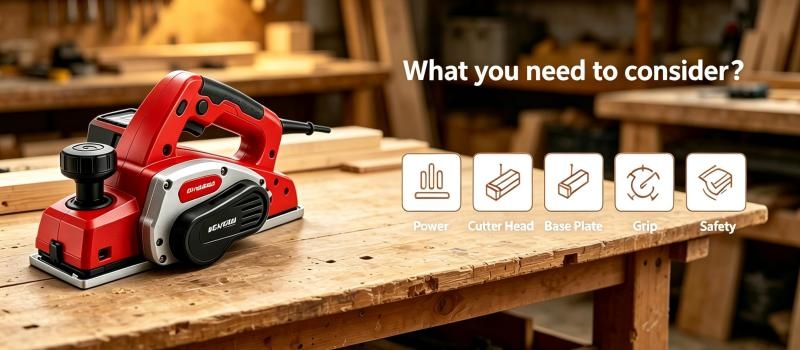
Choose the Best Electric Planer for Your Work
The best electric planer depends on how you intend to use it. Every woodworking project comes with different demands, whether you’re doing quick on-site door trimming, workshop edge shaping, or regular heavy wood removal. Picking the wrong model can lead to slow work, poor finish quality, or unnecessary spending. By matching the planer’s features to your common tasks, workspace, and budget, you can find a reliable tool that delivers clean results every time.
Best for DIY and Beginners: A lightweight corded or cordless handheld planer is usually enough for occasional home projects. Focus on simple depth adjustment, manageable weight, safety features, and affordable replacement blades. There is little reason to buy a heavy professional model if you only trim doors or repair furniture a few times a year.
Best for Door Trimming and Renovation: For door and renovation work, portability and control are particularly important. A cordless planer can make moving around an installation site easier, while precise depth adjustment helps you remove small amounts of material without taking too much off in one pass.
Best for Furniture and Cabinet Work: Furniture and cabinet work benefits from precise depth adjustment, good balance, a reliable edge guide, and sharp blades. In these applications, control is often more important than maximum cutting depth. A planer that lets you make consistent shallow passes can be more useful than a heavier, high-power model.
Best for Professional Jobsite Work: Professional users should prioritize durability, comfortable handling, reliable cutting performance, and easy access to replacement blades. Cordless models are convenient for mobile work, while corded planers remain useful when continuous power is available. The right choice depends on the type and duration of the work.
Common Mistakes to Avoid When Buying an Electric Planer
- One common mistake is picking an electric planer solely based on its high power rating. While extra power sounds appealing, it only delivers real benefits if your projects demand heavy stock removal. Overbuying power for simple light trimming is just a waste of money.
- Another frequent error is purchasing a heavy-duty, bulky model for basic renovation tasks. If you plan to trim multiple doors or work overhead, the added weight will quickly lead to fatigue and make precise cuts harder to maintain.
- Don’t overlook the quality of depth adjustment. A planer with accurate, consistent depth settings often performs better for fine finishing work than a unit that only boasts a larger maximum cutting depth.
- You should also factor in long-term running costs. Low upfront prices can be deceptive. Replacement blades, spare batteries, chargers, and after-sales support may turn a budget planer into a costly investment down the line.
- Lastly, avoid thinking a wider cutter width is always superior. A wider cutter reduces the number of passes needed for large boards, but compact electric planers offer better control when working on narrow edges and smaller woodworking projects.
Electric Planer Buying Checklist
Use this quick checklist to verify all key features before you pick your electric planer. Each point covers core specs you should not overlook when shopping for your tool.
| Feature | Why it matters |
| Power source | Determines portability and runtime |
| Cutting width | Controls coverage per pass |
| Cutting depth | Determines material removal |
| Depth adjustment | Controls precision |
| Motor type | Affects efficiency and maintenance |
| Blade type | Affects durability and cutting quality |
| Weight | Affects fatigue and control |
| Edge guide | Helps with straight edge work |
| Chip ejection | Improves visibility and convenience |
| Dust extraction | Makes cleanup easier |
| Battery platform | Important for cordless users |
| Replacement blades | Affects long-term cost |
| Warranty | Supports long-term ownership |
Conclusion
Choosing the best electric planer comes down to matching the tool to your actual work—not chasing the biggest motor or the widest cutterhead on the shelf. Start by deciding whether you need a handheld planer for on-site trimming and edge work or a benchtop thickness planer for milling boards in a workshop. Then balance power, cutting width, depth adjustment, blade type, weight, and corded versus cordless around how often and how hard you realistically plan to work. You can browse suitable models via our Tool store to find one that fits your needs. The right planer will feel balanced in your hands, hold its depth setting, and leave a clean surface without wearing you out. Get that match right, and the tool disappears into the work.
FAQ
Q: What size electric planer should I buy?
A: For most general handheld woodworking tasks, a planer around 3-1/4 inches wide is a practical choice. Go narrower for small edge work or wider if you regularly work with broader stock.
Q: Is a corded or cordless electric planer better?
A: Corded models are better for long, continuous work where power is always available. Cordless models are better for jobsite work, door installation, and situations where portability matters more than unlimited runtime.
Q: Is a brushless electric planer worth it?
A: A brushless planer can be worthwhile for frequent cordless use because brushless motors are generally more efficient and avoid carbon-brush wear. For occasional DIY work, a quality brushed model can still provide good value.
Q: What cutting depth should I use on an electric planer?
A: Use the shallowest depth that gets the job done, especially for finishing work. Several shallow passes are generally easier to control than one deep pass and can produce a smoother result.
Q: Can an electric planer trim a door?
A: Yes. Door and door-frame trimming is one of the common uses for handheld electric planers. Use a shallow depth setting and make controlled passes to avoid removing too much material.
Q: What is the difference between a handheld planer and a thickness planer?
A: A handheld planer is moved across the workpiece and is ideal for trimming, edge fitting, and small adjustments. A thickness planer feeds boards through a stationary machine and is designed to produce a consistent board thickness.
Q: Can an electric planer cut hardwood?
A: Yes, but you need to take shallow passes. Hardwood demands more power and sharp blades, and pushing too hard will bog the tool down and tear the grain. For frequent hardwood work, choose a model with enough motor power and carbide blades.