
Whether you are crafting custom cosplay armor, insulating your garage with rigid foam boards, or building an architectural diorama, one challenge always comes first: getting a clean cut. If you have ever tried slicing through thick blocks of foam with a standard kitchen or utility knife, you already know the frustration. You end up with jagged edges, uneven angles, and millions of tiny, static-cling foam crumbs scattered all over your workshop.
This common DIY headache leads many makers to wonder whether they should invest in a dedicated electric foam cutter or stick with a traditional manual knife. The truth is, neither tool is a universal winner—each is engineered for entirely different materials, project scales, and precision levels.
In this comprehensive guide, we break down how foam cutters and knives compare across performance, material compatibility, safety, and ease of use, helping you choose the absolute best tool for your next project.
- Foam Cutter vs. Knife: What’s the Difference?
- How Do Foam Cutters and Knives Perform on Different Foam Materials?
- Foam Cutter vs. Foam Knife: Which Gives You Better Cuts?
- Which Is Easier and Safer to Use?
- When Should You Choose a Foam Cutter or a Knife?
- Foam Cutter vs. Knife: Which One Is Right for You?
- Frequently Asked Questions About Foam Cutting
- Conclusion
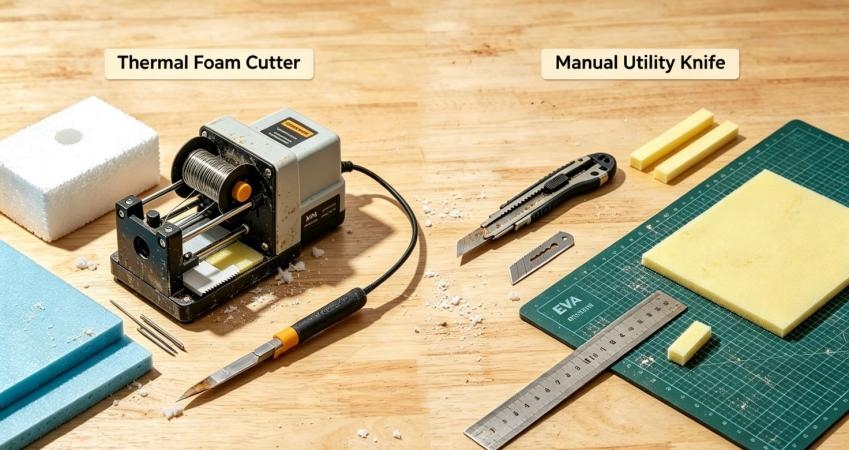
Foam Cutter vs. Knife: What’s the Difference?
When starting a crafting, upholstery, or DIY project involving foam, choosing the right cutting instrument changes everything. The core question for any maker is straightforward: Should you use a dedicated electric foam cutter or stick with a traditional knife? While a manual knife relies entirely on physical force and a sharp edge, a thermal foam cutter uses controlled heat or high-speed slicing to glide through materials effortlessly. The right choice depends on your project's thickness, precision needs, and how often you work with foam.
What Is a Foam Cutter?
A foam cutter, frequently referred to as a hot-wire cutter or thermal blade tool, is specifically engineered to melt or slice through cellular plastics like EPS, XPS, and polyurethane with minimal physical effort. Hot-wire systems use an electrically heated wire that parts the material cleanly, leaving behind a smooth, heat-sealed edge that prevents shedding. Handheld thermal wands and hot knives heat up rapidly to carve through thick blocks of insulation or craft foam without generating the frustrating static-cling dust typical of manual sawing.
- Pros: Smooth heat-sealed edges with zero loose crumbs, effortless gliding through thick blocks with no hand fatigue, and unmatched capability for complex curves and 3D shapes.
- Cons: Requires a power source, has a brief learning curve for temperature and speed control, and can release irritating plastic fumes or char materials like EVA foam.
What Is a Knife for Cutting Foam?
A foam cutting knife encompasses any manual blade used to slice material mechanically. This category ranges from standard utility knives and drywall saws to kitchen bread knives, long serrated upholstery blades, and electric carving knives with dual reciprocating blades. Instead of heat, these tools rely on sharp edges or aggressive serrations to tear and cut through the cellular structure of the foam via manual sawing or pressing motions, making them reliable, power-free staples for quick adjustments and straight lines.
- Pros: Highly affordable and widely accessible, offers immediate setup with zero electronics, and performs exceptionally well on thin sheets and dense rubbers like EVA foam.
- Cons: Requires significant manual force which leads to hand fatigue, generates annoying static foam dust and crumbs, and tends to tear or wander when cutting thick blocks.
Foam Cutter vs. Knife at a Glance
Now that you understand what each tool brings to the workshop, it helps to see how they stack up side by side. Reviewing their core differences in performance, edge finish, and budget can quickly narrow down the right option for your specific workspace and project goals.
| Feature | Foam Cutter (Thermal / Electric) | Foam Knife (Manual / Serrated) |
| Best For | Complex shapes, curves, and thick foam blocks | Straight cuts, thin sheets, and quick adjustments |
| Edge Finish | Smooth, heat-sealed edges with zero loose crumbs | Clean mechanical cut, though may require minor cleanup |
| Mess / Dust | None, as it melts the material cleanly away | Generates small foam crumbs and static dust |
| Ease of Use | Glides with zero physical pressure; steady hand needed | Requires manual force and a steady sawing motion |
| Cost | Mid to high tier | Budget-friendly and widely accessible |
How Do Foam Cutters and Knives Perform on Different Foam Materials?
Transitioning from general tool features to specific applications, how a cutting instrument performs depends heavily on the exact type of foam on your workbench. Whether you are crafting lightweight cosplay props, insulating a home studio, or building architectural models, matching your cutter to the material properties is the secret to achieving a professional finish without wasted effort or ruined stock.
Cutting EPS and Styrofoam
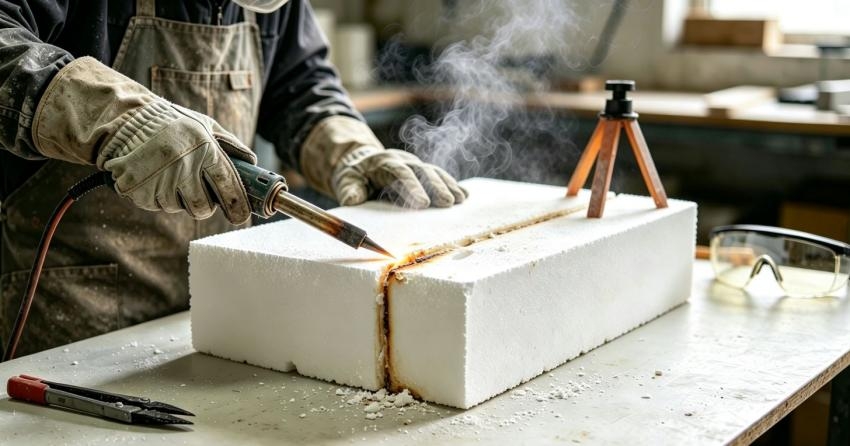
Expanded Polystyrene (EPS) and standard white Styrofoam are composed of thousands of tiny, fused plastic beads. When you attack EPS with a manual utility knife, the blade tends to catch on individual bead bonds, causing the material to fracture, flake, and shed millions of annoying static-cling crumbs that cling to everything in your workspace. A handheld hot knife foam cutter or electric hot-wire foam cutter completely transforms this process by melting the bead bonds on contact. The heated wire glides through EPS effortlessly, parting the material in one smooth motion while leaving behind a cleanly sealed edge. This thermal action entirely eliminates loose debris, making hot-wire tools the undisputed gold standard for working with Styrofoam and rigid packaging blocks.
Cutting XPS and Rigid Foam Board
Extruded Polystyrene (XPS) features a dense, closed-cell structure commonly used for home insulation, architectural layouts, and hobby craft bases. Thermal foam cutters slice through XPS smoothly, though because the material is denser than EPS, you will need a tool with adjustable temperature control to prevent melting an overly wide kerf or gap. Alternatively, a sharp utility knife or drywall saw can handle straight lines on thin XPS panels quite well. For thicker insulation boards, many contractors and DIYers rely on scoring both sides with a utility knife and snapping the board along a straightedge, though this method lacks the contouring flexibility required for complex shapes.
Cutting EVA Foam
EVA foam sits on the opposite end of the spectrum. As a dense, rubber-like material widely favored by cosplayers and makers for armor, props, and floor mats, EVA reacts terribly to thermal heat. Exposing EVA foam to a hot-wire cutter or thermal blade will cause it to char, release unpleasant or hazardous fumes, and leave behind a sticky, melted residue that ruins the aesthetic and structure of your prop. For EVA foam, manual blades are the only viable solution. A razor-sharp utility knife using fresh snap-off blades, paired with a sturdy metal straightedge, allows you to slice cleanly through dense rubber sheets. By making multiple firm passes rather than pressing too hard on the first try, you achieve precise 90-degree edges or clean bevels without any thermal damage.
Does Foam Thickness and Density Matter?
Material specifications dictate whether your tool choice will save you time or cause frustration. Low-density foams melt very rapidly under thermal heat, whereas high-density foams require a slower, steadier movement with a hot wire or multiple passes with a sharp mechanical blade. Thickness is equally critical. For thin sheets under one inch, reaching for a manual utility knife is usually faster and more convenient than setting up an electric cutter. However, once you scale up to blocks thicker than two to four inches, thermal foam cutters prevent the blade from wandering, bending, or angling sideways mid-cut, ensuring your vertical lines stay true all the way through the material.
Material Performance at a Glance
To help you quickly match the right instrument to your specific project supplies, the summary below breaks down how each tool performs across different foam types and densities:
| Foam Material | Best Tool Choice | Why It Works Best |
| EPS / Styrofoam | Thermal Foam Cutter | Melts bead bonds instantly, leaving smooth edges with zero loose crumbs or static dust. |
| XPS / Rigid Board | Both (Cutter for curves; Knife/Saw for boards) | Thermal cutters excel at contours, while utility knives or saws work well for straight score-and-snap lines. |
| EVA Foam | Manual Utility Knife | Heat chars the material and leaves sticky residue; sharp blades provide clean, precise cuts. |
| hickness / Density | Cutter for blocks; Knife for thin sheets | Thin sheets are faster with knives, while blocks over 2 inches require thermal cutters to prevent blade wandering. |
Foam Cutter vs. Foam Knife: Which Gives You Better Cuts?
Achieving clean, professional results comes down to how well a tool handles precision, geometry, and workflow. While both electric foam cutters and manual knives have their place in the workshop, they deliver noticeably different cut qualities depending on what you are trying to shape. Moving beyond basic material compatibility, we evaluate how both options perform across different geometries, examining edge finishes, straight lines, 3D contouring, and workflow efficiency.
Cutting Precision and Edge Quality
When it comes to the finish of your final piece, edge quality is often the deciding factor. A thermal foam cutter relies on heat to part the material, which naturally seals the edges of cellular plastics like Styrofoam and XPS. This eliminates annoying static flakes and leaves behind a clean, smooth surface ready for gluing or painting.
On the other hand, a manual knife relies entirely on mechanical slicing. Even with a brand-new razor blade, a knife can drag or tear delicate cell walls, occasionally leaving behind a slightly fuzzy or ragged edge that requires sanding. However, for dense rubbers like EVA foam, a knife wins out by avoiding the charred, melted residue that hot wires sometimes produce.
Straight Cuts
For long, linear cuts—such as trimming down a mattress topper, slicing insulation boards, or cutting straight architectural bases—a sharp utility knife or a long bread-style foam knife is remarkably efficient. Backed by a sturdy metal straightedge, a manual blade lets you apply firm, even pressure to achieve crisp, vertical edges without needing any warm-up time or power outlets. Thermal foam cutters can also handle straight lines, but they require a steady hand and a guide fence. If you move too slowly with a hot wire, you risk melting a wider gap than intended, whereas a knife maintains a razor-thin cutting path.
Curved and Intricate Cuts
If your project involves complex shapes, organic curves, or tight interior cutouts (common in cosplay armor, custom packaging inserts, and diorama landscapes), the electric foam cutter is peerless. Because hot-wire tools and specialized wand cutters offer a thin, heated profile, you can pivot and twist effortlessly through thick blocks to sculpt 3D contours. Attempting intricate curves with a manual knife is notoriously difficult and physically fatiguing. As you try to twist a rigid blade through thick foam, the knife tends to bind, wander off-angle, or leave uneven, stepped cuts that ruin the aesthetic of custom shapes.
Speed and Efficiency
Efficiency depends heavily on the scale of your task. For quick adjustments, trimming thin layers, or job-site cuts where setup time matters, picking up a utility knife is instantaneous and fast. However, when breaking down thick blocks of packaging foam or cutting multiple identical geometric shapes, a thermal foam cutter dramatically speeds up the workflow. It glides through material with virtually zero physical resistance, saving your hands and wrists from the repetitive strain of sawing back and forth through dense foam.
Which Is Easier and Safer to Use?
When choosing between a foam cutter and a knife, user-friendliness and safety are critical considerations—especially if you are spending hours in a workshop, garage, or craft room. Both tools come with distinct handling requirements and safety profiles that every maker should know before starting a project. Beyond understanding raw cutting performance, it is equally important to evaluate how comfortably a tool handles during extended projects and what safety precautions are required. To determine the safest and most intuitive option for any workspace, this section breaks down the learning curves, physical effort, and essential safety guidelines for both tool types.
Ease of Use and Learning Curve
A manual foam knife has virtually zero learning curve. Almost everyone knows how to use a utility knife, bread knife, or razor blade. You simply pick it up, place a straightedge, and slice. However, the physical effort required can be a major downside; cutting through thick or dense foam demands constant arm strength and repetitive sawing, which quickly leads to hand fatigue.
An electric foam cutter requires a brief adjustment period to master, particularly when learning how fast to move the hot wire or blade through the material. Once you get the hang of it, the tool requires almost zero physical pressure, letting the heat or high-speed vibration do the hard work for you. It saves your wrists and hands, making it much easier for long crafting sessions, though managing power cords takes a little getting used to.
Safety Considerations When Cutting Foam
Safety looks very different depending on which tool you choose. With manual knives, the primary hazard is the exposed, razor-sharp edge. Slips happen easily when pressing down hard on stubborn foam, leading to accidental cuts or gashes. Furthermore, manual cutting generates millions of tiny foam crumbs and static-charged dust particles that can easily irritate your eyes or be inhaled.
Thermal foam cutters introduce a completely different set of risks, primarily high temperatures and air quality. The hot wire or wand reaches extreme temperatures capable of causing severe burns instantly. Additionally, melting certain plastics—like EPS, XPS, or polyurethane—releases fumes that can irritate your respiratory system if you work in a poorly ventilated space.
How to Cut Foam Safely
Protecting yourself requires adopting a few standard workshop habits tailored to your tool of choice:
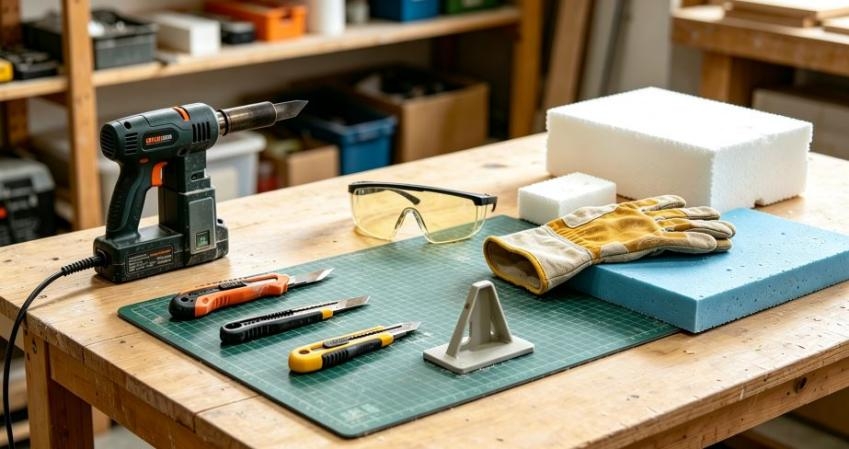
- For Manual Knives: Always use a self-retracting utility knife or keep blades safely stored when not in use. Cut away from your body, use a firm non-slip cutting mat, and wear protective work gloves if you are handling long, aggressive serrated blades.
- For Thermal Cutters: Always operate hot-wire tools in a well-ventilated room or outdoors to prevent breathing in plastic fumes. Never touch the active heating element, place the hot wand on a fire-resistant stand when resting, and unplug the unit immediately after use.
- Universal Gear: Regardless of whether you use heat or a blade, always wear safety glasses to protect your eyes from flying debris or unexpected snaps, and consider a basic dust mask if you are sawing or sanding dry foam.
When Should You Choose a Foam Cutter or a Knife?
Deciding between a dedicated thermal foam cutter and a manual knife ultimately comes down to the specifics of your project. By matching your material, budget, and design complexity to the right tool, you will save time, minimize frustration, and achieve a cleaner final result. Before diving into specific recommendations, taking a step back to evaluate individual workflows and overarching project goals will ensure the most cost-effective and practical choice for any workshop. To help weigh these options clearly, the following guidelines highlight the exact scenarios where each tool shines brightest.
Choose a Foam Cutter If You…
An electric or thermal foam cutter is your best investment when your project demands complex shaping and heavy-duty fabrication. You should choose a foam cutter if you are working on architectural dioramas, sculpting custom cosplay armor and props, or building 3D contours where smooth, organic curves are essential. It is also the ideal choice if you regularly break down thick blocks of packaging foam or insulation and want to avoid the messy static-cling dust and hand fatigue that comes with manual sawing.
Choose a Knife If You…
A manual knife or utility blade is the right tool for straightforward, low-volume tasks and materials that react poorly to heat. You should choose a knife if you are trimming thin sheets of EVA foam for cosplay crafts, slicing through low-density upholstery cushions, or making quick, straight adjustments on a job site. Knives are also the budget-friendly go-to option for occasional DIYers who do not want to invest in specialized electronics or manage power cords for a one-off task.
What Should You Look for in a Foam Cutter?
If you decide to upgrade to a thermal foam cutter, finding the right model depends on your typical workload. Look for a kit that offers interchangeable attachments—such as hot wires, engraving wands, and hot blades—so you can handle both deep block cuts and fine detail work. An electric foam board cutter with adjustable temperature control is another vital feature, allowing you to fine-tune the heat output to match different foam densities without scorching the material. Finally, prioritize ergonomic, lightweight handles and reliable safety stands to ensure comfort and accident-prevention during long crafting sessions.
Foam Cutter vs. Knife: Which One Is Right for You?
Choosing between a thermal foam cutter and a manual knife ultimately hinges on matching your tool to your specific crafting style, material choices, and project scope. Taking a moment to evaluate your typical workshop needs will ensure you invest your time and budget wisely. Before diving into specific recommendations, stepping back to analyze the core demands of upcoming builds will clarify which instrument provides the best long-term value. To help determine the most practical addition to any tool collection, the following breakdown compares performance across common fabrication tasks.
Quick Decision Guide
Figuring out the ideal tool starts with looking at what you build most often. If your workbench is regularly piled with thick blocks of EPS, XPS insulation boards, or complex 3D cosplay props that demand smooth curves and zero mess, a thermal foam cutter will quickly become your most trusted asset. It replaces hours of exhausting manual labor and tedious cleanup with seamless, hot-melt precision.
Conversely, if your projects primarily involve thin sheets of EVA foam, quick packaging adjustments, straight-line mattress trimming, or occasional weekend DIY fixes, a sharp utility knife or specialized manual foam blade is all you really need. It offers instant setup, zero electronics to worry about, and absolute control over materials that might otherwise char or produce toxic fumes under high heat.
Quick Reference: Choosing Your Tool
| Project Scenario | Recommended Tool | Core Advantage |
| hick Blocks & Insulation | Thermal Foam Cutter | Glides effortlessly through thick EPS and XPS without manual strain or wandering. |
| Complex 3D Contours & Curve | Thermal Foam Cutter | Pivots smoothly to shape organic forms and intricate details with zero debris. |
| Thin Sheets & EVA Foam | Manual Utility Knife | Delivers precise cuts on dense rubbers and thin layers without melting or charring. |
| Quick Fixes & Straight Edges | Manual Utility Knife | Provides instant, power-free setup for fast measurements and straightforward trimming. |
The Bottom Line
Neither tool is universally superior—they are simply built for entirely different jobs. Many experienced makers and hobbyists actually keep both on hand: a reliable utility knife for quick slicing and detailed trimming, alongside a versatile thermal cutter for heavy-duty shaping and clean contouring. By exploring the range of available foam‑cutting tools and understanding the distinct strengths, efficiency, and safety requirements of each, you can approach your next project with confidence and professional-grade results.
Frequently Asked Questions About Foam Cutting
To help you finalize your tool choice and workshop setup, here are answers to some of the most common questions makers and DIYers ask about cutting foam:
Q: Can a hot-wire foam cutter be used on EVA foam?
A: It is generally discouraged. EVA foam is a dense, rubber-like material that reacts poorly to high heat. Exposing it to a thermal cutter causes it to char, release unpleasant or toxic fumes, and leave behind a sticky, melted residue. A sharp manual utility knife paired with a metal straightedge is always the proper choice for EVA foam.
Q: How do I prevent a hot wire from bending or snapping?
A: Always allow the thermal tool to reach its full operating temperature before making contact with the foam, and let the heat glide through the material naturally. Forcing or rushing a cold or warm wire through dense foam puts excessive tension on the metal, causing it to distort or break.
Q: What is the best knife for cutting thick upholstery foam?
A: A long serrated bread knife, an electric kitchen carving knife, or a dedicated dual-bladed upholstery foam saw works best. These tools slice smoothly through thick, spongy polyurethane cushions without dragging, catching, or chewing up the soft cellular structure.
Q: How do I clean melted residue off a hot-wire cutter?
A: Always turn off and unplug the unit first, and let the wire or blade cool down completely. Once cool, gently wipe the element with a fine steel wool pad or a soft cloth slightly dampened with rubbing alcohol to remove accumulated plastic buildup.
Q: Do electric foam cutters produce hazardous fumes or smoke?
A: Yes, depending on the plastic. Melting materials like EPS, XPS, or polyurethane with thermal heat releases chemical fumes that can irritate your eyes, throat, and lungs. Always operate hot-wire cutters in a well-ventilated garage, workshop, or outdoors, and consider wearing a respirator mask during long projects.
Q: Can I use a regular kitchen knife to cut rigid insulation boards?
A: While you technically can use an old kitchen knife for a quick emergency fix, it is far from ideal. Rigid foam boards are surprisingly abrasive and will dull household blades instantly. A utility knife with fresh snap-off blades, a drywall saw, or a thermal cutting tool will save you time and effort while delivering a much cleaner edge.
Conclusion
Choosing between a thermal foam cutter and a manual knife doesn't have to be a guessing game. By understanding how each tool handles different materials—from EPS and XPS boards to dense EVA foam—you can avoid ruined pieces, hand fatigue, and frustrating cleanup. Whether you are sculpting intricate cosplay props, insulating a home studio, or trimming custom cushions, investing in the right tool transforms a tedious chore into a seamless creative process. Many dedicated makers ultimately keep both a hot-wire cutter and a razor-sharp utility knife in their workshop toolkit, ensuring they are always prepared for whatever project comes next. If you are looking for tools suitable for your project, you can also buy tools on tool.com.