
Choosing the right foam cutter is not simply a matter of picking the most powerful tool. Different foam materials respond differently to heat and mechanical cutting, and factors such as material type, thickness, density, cutting shape, and required precision can all affect the result. A cutter that works well for rigid EPS or XPS foam may not be the best choice for flexible materials such as EVA or PU foam. Using the wrong cutting method can lead to uneven edges, excessive melting, material deformation, or unnecessary effort. So, how do you choose the right foam cutter for your material?
This guide covers the key factors to consider, from foam type and cutting thickness to heat, power, precision, and safety. Whether you are working on packaging, insulation, crafts, model making, signage, or other foam-cutting applications, understanding these factors can help you select a tool that matches your specific requirements.
- Understand Your Foam Materials
- Choose the Right Type of Foam Cutter
- Match the Cutter to Foam Thickness, Heat and Power
- Consider Cutting Precision and Cutter Design
- Follow Essential Foam Cutting Safety Practices
- Foam Cutter Buying Checklist
- Frequently Asked Questions About Foam Cutters
- Conclusion
Understand Your Foam Materials
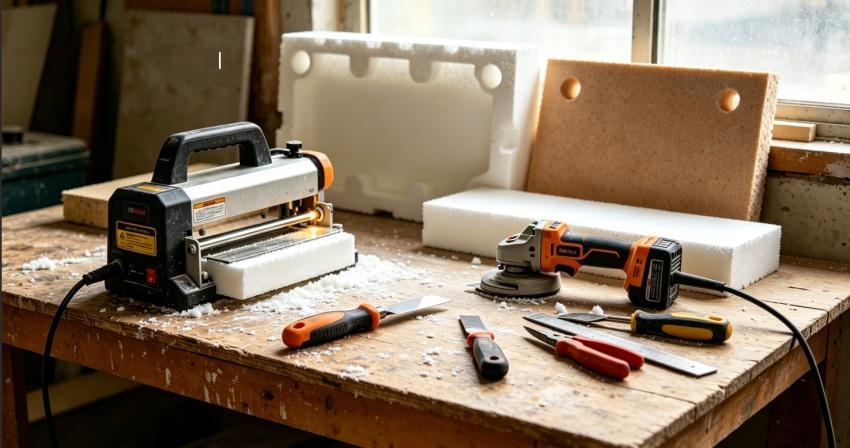
Before choosing your foam cutter, start with the material you need to cut. Foam is not a single type of material. Different foams vary in density, flexibility, cell structure, and thickness; these properties can significantly affect how they behave during cutting. Let’s break down the most common foam types and their cutting-related characteristics. If you are working on foam cutting projects, you can browse the page of portable foam cutters.
EPS Foam
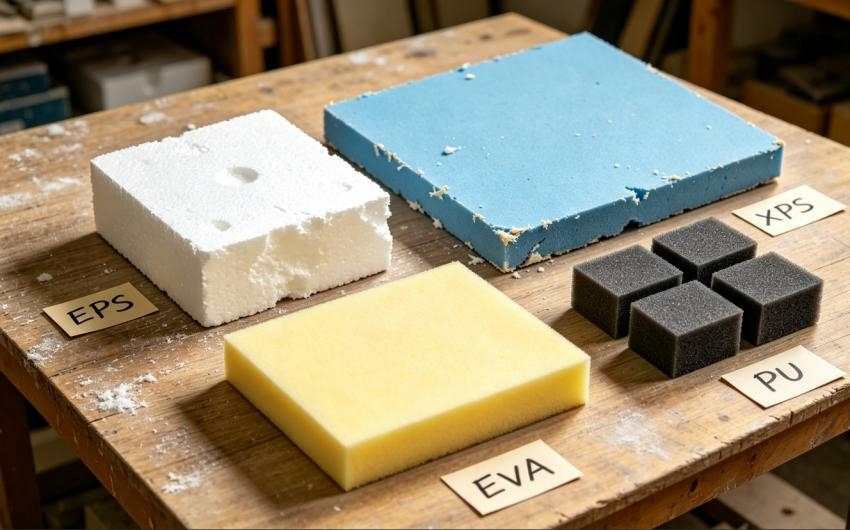
Expanded polystyrene (EPS), commonly known as Styrofoam, is a lightweight, rigid foam widely used for packaging, insulation, displays, and model making. Because EPS can be shaped with heat, a hot wire cutter is often a practical choice for producing clean straight or curved cuts with minimal physical effort.
XPS Foam
Extruded polystyrene (XPS) is denser and more uniform than EPS and is commonly used for insulation, architectural models, and construction applications. Depending on the thickness and required cut, XPS can be processed with a hot wire cutter or other suitable heated cutting tools. Temperature control is particularly important when working with rigid foam to avoid excessive melting.
EVA Foam
Ethylene-vinyl acetate (EVA) is a flexible, closed-cell foam commonly found in footwear, sports equipment, protective padding, crafts, and cosplay projects. Its flexibility makes blade design, temperature, and cutting speed important factors. A hot knife or other suitable foam cutting tool can be useful when clean edges and controlled shaping are required.
PU Foam
Polyurethane (PU) foam is commonly used for cushions, upholstery, mattresses, packaging, and other flexible applications. Unlike rigid foams such as EPS and XPS, PU foam is often better suited to mechanical cutting methods. A foam saw or electric cutting tool can make it easier to cut thicker sections efficiently while maintaining a consistent shape.
PE and EPE Foam
Polyethylene (PE) and expanded polyethylene (EPE) foams are lightweight, resilient materials frequently used for packaging, protective inserts, insulation, and cushioning. Their flexibility and resilience can make clean cutting more challenging with a standard blade, particularly for thicker sections. The appropriate cutting method depends on the foam's density, thickness, and intended application.
EPP Foam
Expanded polypropylene (EPP) is a lightweight, impact-resistant foam used in protective packaging, automotive components, sports products, and other applications where durability matters. Its relatively tough structure means the cutter should be selected according to the material's density and the required cutting accuracy rather than thickness alone.
Key Foam Properties to Check
You do not need to be a materials engineer to choose a suitable cutter. Start with these four properties:
- Density: Denser foam generally requires more controlled cutting than low-density foam.
- Cell structure: Open-cell and closed-cell foams can respond differently to heat, pressure, and mechanical cutting.
- Flexibility: Soft foam may compress or deform during cutting, affectingdimensional accuracy.
- Thickness: The thickness of the foam determines how much cutting capacity and control you need.
The same foam category can also vary by grade, density, and manufacturer. If you are unsure about the material, check its technical specifications or product datasheet before selecting a cutter. Once you know what type of foam you are working with, you can move on to the cutting method itself.
Choose the Right Type of Foam Cutter
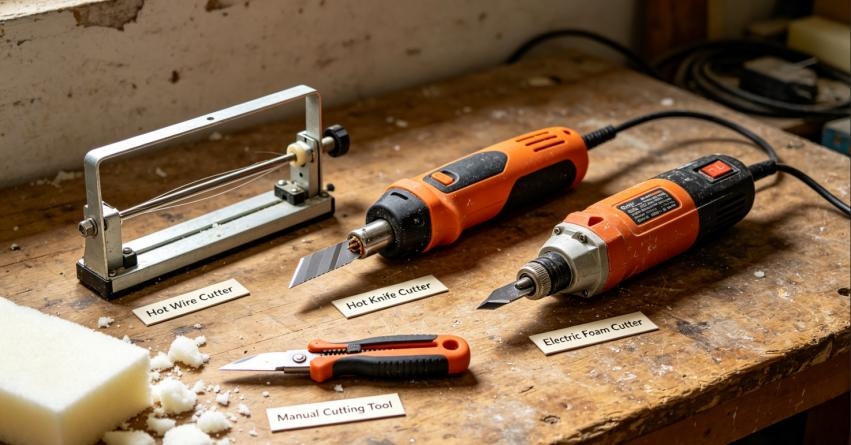
Working with foam comes with a wide range of material types and shaping goals. Some projects require smooth flowing curves, while others only need simple trimming or straight cuts. Foam cutter generally fall into two core categories: heat-based cutting and mechanical cutting. The best tool for you depends on several key factors: the foam material you are cutting, the shapes you plan to create, the thickness of your foam sheets, and how often you intend to use the cutter. The comparison table below gives you a quick overview of common foam cutter options.
| Cutter Type | Working Principle | Main Use | Core Notes |
| Hot Wire Foam Cutter | Melts foam with a heated thin wire | Curves & contours on rigid foam, model making, insulation | Low cutting resistance; not compatible with all foams |
| Hot Knife Foam Cutter | Cuts with a heated metal blade | Straight cuts, trimming, grooving, portable jobs | Adjustable temperature; fits foam, XPS, EPE and sponge |
| Electric Foam Cutter | Electrically heated cutting element | DIY to heavy-duty foam cutting | Performance depends on heating system, not just power |
| Manual Cutting Tools | Physical slicing, no heat or power | Occasional trimming of thin foam | Low cost; poor results for thick, dense or flexible foam |
Hot Wire Foam Cutters
Many model builders and insulation installers frequently work with rigid foam and require smooth, curved profiles that regular blades struggle to create. This is where hot wire foam cutters shine. When shaping complex contours, hot wire delivers cleaner, seamless edges than mechanical blades. One common mistake beginners make is using it on flexible foams, which may melt unevenly or release unwanted fumes. Always test on scrap foam before starting a full project to verify material compatibility.
Hot Knife Foam Cutters
If your projects involve straight-line trimming, grooving or on-site shaping, you may prefer a tool that operates more like a traditional knife. Hot knives are designed for this type of controlled cutting task. Handheld hot knife foam cutter brings great flexibility for site work. Temperature adjustment lets users match heat output to foam density. Keep in mind that blade length directly limits the maximum cutting depth for each task.
Electric Foam Cutters
Some foam cutting jobs demand higher heat output and stable continuous operation, beyond what basic handheld hot knives can offer. In these cases, electric foam cutters become a practical solution. Many shoppers only look at wattage when comparing electric cutters, but power rating alone cannot reflect real cutting performance. Consistent heating, temperature stability and rated working time matter more for long continuous cutting tasks. Most models support temperatures ranging from 120°C to 300°C for different foam materials.
Manual Cutting Tools
Some foam cutting jobs demand higher heat output and stable continuous operation, beyond what basic handheld hot knives can offer. In these cases, electric foam cutters become a practical solution. Many shoppers only look at wattage when comparing electric cutters, but power rating alone cannot reflect real cutting performance. Consistent heating, temperature stability and rated working time matter more for long continuous cutting tasks. Most models support temperatures ranging from 120°C to 300°C for different foam materials
How to Choose Between Them
Pick your cutter based on your project, not just the product name.
- If you mainly shape suitable rigid foam into curves or contours, a heated wire may be useful.
- If you need to trim, groove, or make controlled straight cuts, a heated blade may be more appropriate.
- For flexible or thicker materials, the cutter’s mechanical design and cutting capacity become increasingly important.
No single cutter works for every foam type. Always match your cutting tool to your foam material and intended application. If you are looking for dependable tools with adjustable temperature controls, you may browse available foam cutter options.
Match the Cutter to Foam Thickness, Heat and Power
Once you select the suitable foam cutter type for your project, your next step is to assess key technical specifications. Many buyers evaluate tools based on only one spec, which often results in poor cut quality. Cutting thickness, temperature control, power output and cutting speed are interdependent. You need to evaluate them as a complete set to achieve stable, clean foam cuts.
Cutting Thickness
Maximum cutting thickness is one of the easiest specifications to overlook. A cutter designed for thin foam sheets may not have enough blade length, cutting capacity, or thermal stability for a thick foam block. When comparing products, check the manufacturer's stated maximum cutting thickness rather than assuming that a higher power rating means the cutter can handle thicker material. For projects with thick foam blocks, an electric foam board cutter often delivers adequate blade length and thermal stability. If your application involves different foam thicknesses, leave some capacity above your normal working thickness rather than choosing a tool that is operating at its limit.
Temperature and Heat Control
For heated cutters, temperature control can have a major effect on the quality of the cut. Too little heat may increase resistance and make the cutter difficult to move through the material. Excessive heat can melt too much material, enlarge the cut, or affect the surface finish. Adjustable temperature is therefore more useful than simply having a high maximum temperature. It allows the operator to test the material and find a suitable setting. A good starting approach is to make a small test cut on scrap material before cutting the final piece. This is particularly useful when switching between foam types or densities.
Power
Power matters, but higher wattage does not automatically mean better cutting performance. A cutter's actual performance also depends on heating efficiency, blade or wire design, temperature control, material density, and cutting speed. For occasional DIY work, excessive power may add cost and unnecessary heat. For thicker materials or more demanding applications, sufficient power and stable heat can help maintain consistent cutting performance.
Cutting Speed
Cutting speed should be considered together with temperature and material thickness. Moving too quickly can increase resistance and produce an uneven cut. Moving too slowly with excessive heat can result in unnecessary melting. The ideal speed depends on the material and tool, so it is better to prioritize controlled movement and consistent results over simply trying to cut as quickly as possible.
Quick Parameter Checklist
Use this checklist to quickly verify all specs before purchasing or starting your foam cutting project:
- Verify the manufacturer’s rated cutting thickness and choose a model with extra capacity
- Prefer adjustable-temperature cutters for multi-material compatibility
- Assess power alongside heating efficiency, rather than relying solely on wattage
- Tune cutting speed to match foam thickness and temperature for smooth edges.
Consider Cutting Precision and Cutter Design
After evaluating core technical specifications such as cutting thickness, temperature and power, the next step is to examine the physical design of your foam cutter. Raw performance numbers cannot guarantee clean, repeatable cuts. The cutter’s build, handling and available accessories heavily influence your final cutting precision.
Straight Cuts vs. Curved Cuts
Think about the shapes you make most often. Straight cuts may benefit from a stable blade, cutting guide, or straightedge. Curved or detailed cuts require a cutter that is easier to maneuver and control. If your work involves both, look for a design that supports different cutting configurations rather than choosing solely based on maximum power.
Blade or Wire Stability
A stable cutting element helps maintain a consistent cutting path. For heated blades, check how securely the blade is held and whether replacement blades are available. For wire-based systems, consider wire tension and the overall stability of the cutting frame. A cutter that feels stable in your hand or on the work surface can make a noticeable difference when following a marked line.
Guides and Accessories
Accessories can be useful when repeatability matters.
Depending on the cutter, useful features may include:
- Cutting guides
- T-squares
- Grooving attachments
- Different blade lengths
- Adjustable supports
- Replacement blades or wires
These features are particularly useful for users who need to reproduce the same shape or dimension multiple times.
Portability
If you work on large sheets, construction sites, installations, or projects away from a workshop, portability may be more important than maximum power. A handheld cordless hot knife, for example, can be useful where access to a power outlet is limited. Some models are designed specifically for portable use and include rechargeable batteries and adjustable heat settings. For stationary or repeated work, however, a corded tool or a more stable cutting setup may provide better consistency.
Follow Essential Foam Cutting Safety Practices
Foam cutting involves either heat, moving cutting components, or both. Safe operation starts with following the manufacturer's instructions and understanding how your specific foam behaves.
Manage Heat Carefully
Hot wire and hot knife cutters can reach temperatures high enough to cause burns. Do not touch the blade, wire, or other heated components during or immediately after operation. Place the cutter on a stable, heat-resistant surface when it is not being used, and allow it to cool completely before changing blades or storing it.
Provide Adequate Ventilation
Heating some foam materials can produce fumes. Always check the material manufacturer's safety information and use adequate ventilation when using a heated cutting method. Do not assume that all foam materials behave the same way when heated. If the material specification does not clearly identify its suitability for thermal cutting, verify it before proceeding.
Protect Your Eyes and Hands
Safety glasses can help protect against debris, while appropriate protective gloves may reduce the risk of accidental contact with hot components. Gloves should not interfere with your ability to control the tool safely. For mechanical cutting methods, keep hands away from moving blades and maintain a stable workpiece.
Test Before the Main Cut
A small test cut can reveal problems before they affect the finished piece.
Use scrap material to check:
- Temperature
- Cutting speed
- Edge quality
- Material deformation
- Smoke or fumes
- Required cutting pressure
This simple step is especially useful when working with an unfamiliar foam or changing to a different density.
Follow Electrical and Operating Requirements
Always check your cutter’s voltage rating, power specs, duty cycle, and full operating instructions before you start cutting. Many electric foam hot knives are built for intermittent operation, not nonstop long‑hour use. Running them continuously beyond their designed duty cycle can overheat the blade and shorten the tool’s lifespan.
Never leave a heated cutter unattended while it’s powered on. Keep the whole tool well out of reach of children, and store it far from fabrics, foam scraps and any other flammable materials.
Foam Cutter Buying Checklist
This chapter turns everything we’ve covered into simple, practical shopping advice. You’ve learned about cutter specs, cutting precision and tool design in earlier sections. Now we’ll focus on how to pick the right foam cutter for your work or creative projects, so you can compare real products and skip options that won’t fit what you need.
One‑Step Selection by Foam Material and Project
The type of foam you use and the jobs you usually work on set the starting point for shopping. The table below quickly matches your material and task to the right style of cutter, helping you shortlist suitable tools.
| Foam Type | Main Application | Recommended Cutter Type |
| EPS / XPS Rigid Foam; | Curved shaping, contour modeling and insulation processing | Hot Wire Foam Cutter |
| PU / EVA / Sponge Soft Foam | Straight trimming, edge finishing and grooving | Hot Knife Foam Cutte |
| Thick & High-Density Foam | Deep cutting and long-hour continuous processing | Electric Foam Cutter |
| Thin Foam (Infrequent Use) | Casual trimming and simple DIY tasks | Manual Cutting Tool |
Picking the Right Product for Your Project
Once you know which cutter category fits your foam, it’s time to look at actual product models. You can use the precision and design tips from the last chapter to narrow down your choices — this is where you compare real tools, instead of just going through theory.
If you're shopping for a hot wire cutter for rigid foam, check how sturdy the frame and wire lock feel. For curved shaping work, pick something lightweight and easy to maneuver. If you want clean, repeated straight cuts, look for units that come with guide rails, rather than buying a basic tool and hunting for extra parts later.
When browsing hot knife options for soft foam cutting, pay attention to how well the blade stays secured and whether replacement blades are easy to source. For outdoor jobs and on-site trimming work, check out handheld hot knife foam cutter kit . Its cordless lithium battery and adjustable heat make it great for grooving and cleaning up edges.
If you often work with thick foam boards and need steady multi-level temperature control for long cutting sessions, take time to verify the rated cutting thickness. Always double-check the rated cutting thickness to leave enough margin for your foam pieces.
Anyone who only does simple trimming every now and then can stick with basic manual cutters. There’s no need to spend money on heated electric tools if you only work with foam occasionally.
Frequently Asked Questions About Foam Cutters
Q: What is the best foam cutter for EPS foam?
A: The right choice depends on the thickness, shape, and finish required. For applications where EPS needs to be shaped into straight or curved forms, a suitable heated cutting method can provide controlled cuts with less crumbling than a conventional blade. Always verify that the specific cutter is designed for the material and application.
Q: What is the best way to cut XPS foam?
A: XPS can be cut using different methods depending on its thickness and the required shape. For heated cutting, temperature control and a steady cutting speed are important because excessive heat can remove more material than intended.
Q: Can a hot knife cut EVA foam?
A: A suitable hot knife can be used for some EVA foam applications, but the appropriate temperature and blade configuration depend on the foam's density and thickness. Test the setting on scrap material before making the final cut.
Q: What type of foam cutter is best for thick foam?
A: For thick foam, look beyond power alone. Check the maximum cutting thickness, blade or wire length, temperature stability, and the tool's intended operating conditions. The best choice depends on whether the material is rigid or flexible and whether you need straight, curved, or detailed cuts.
Q: What is the difference between a hot wire cutter and a hot knife?
A: A hot wire cutter uses a heated wire, while a hot knife uses a heated blade. Hot wire systems can be useful for shaping suitable foam with curves and contours, while hot knives can provide a blade-like cutting action and may be useful for trimming, straight cuts, and grooving.
Q: Does higher wattage mean a better foam cutter?
Not necessarily. Power is only one part of cutting performance. Temperature control, heating efficiency, blade or wire design, material density, and cutting speed can all affect the result.
Conclusion
Choosing a foam cutter starts with the material, not the tool. Identify the type of foam you are working with, then consider its density, flexibility, and thickness. From there, choose a cutting method that fits the application and compare the specifications that matter most, including cutting capacity, temperature control, power, precision, and portability. For occasional DIY projects, a simple cutter may be enough. For repeated professional work, you may benefit from better temperature control, more cutting capacity, interchangeable components, or a design suited to longer operating periods.
Most importantly, do not assume that the most powerful or expensive cutter is automatically the right choice. The right tool is the one that matches your material, cutting requirements, working environment, and frequency of use.