
Choosing the right power saw is one of the most critical decisions for DIY enthusiasts, beginner woodworkers, and professional carpenters alike. Two of the most popular and essential cutting tools on the market are miter saws and circular saws. At first glance, they look similar and both cut wood, but their design, functionality, precision, and ideal use cases are entirely different.
A miter saw is built for accuracy, making it ideal for trim work, molding, furniture projects, and precise angled cuts. A circular saw focuses on versatility and portability, allowing you to cut lumber, plywood, and large materials almost anywhere. For most homeowners and beginners, a circular saw is the better first investment because it handles more types of projects. However, if your work involves finish carpentry or repeated precision cuts, a miter saw can save time and deliver cleaner results.
In this in-depth guide, we break down the core differences between miter saw vs circular saw, compare their pros and cons, explain their best applications, and help you determine exactly which tool deserves a spot in your workshop or tool belt.
- Quick comparison: Key Differences at a Glance
- What Is a Miter Saw? -Pros, Cons & Applications
- What Is a Circular Saw? -Pros, Cons & Applications
- Main Differences Between Miter Saw and Circular Saw
- Which One Should You Choose?
- Should You Own Both Saws?
- Can One Saw Replace the Other?
- Common Mistakes When Choosing Between Miter Saw and Circular Saw
- Frequently Asked Questions
- Final Verdict: Miter Saw vs Circular Saw – Which Is Better?
Quick comparison: Key Differences at a Glance
Miter saws and circular saws are both essential woodworking electric saws, but they serve different purposes. The right choice depends largely on your project type, precision needs, and workspace setup. To help you compare quickly, we’ve summarized their most important features in the table below. This overview lets you spot their core strengths and limitations at a single glance.
| feature | miter saw | circular Saw |
| Tool Type | Stationary / Benchtop Saw | Handheld Portable Saw |
| Primary Cuts | Precision crosscuts, miter cuts, bevel cuts | Straight cuts, rip cuts, long sheet cuts |
| portability | Low (bulky, fixed workspace required) | High (lightweight, job-site friendly) |
| cutting precision | Very High (repeatable professional accuracy) | Moderate (user-dependent accuracy) |
| learning curve | Easy, beginner-friendly | Moderate (requires steady hands) |
| price range | Mid-range to premium ($100–$800+) | Budget-friendly ($40–$300) |
| best for | Trim work, molding, flooring, angled joints | Framing, decking, plywood, rough construction cuts |
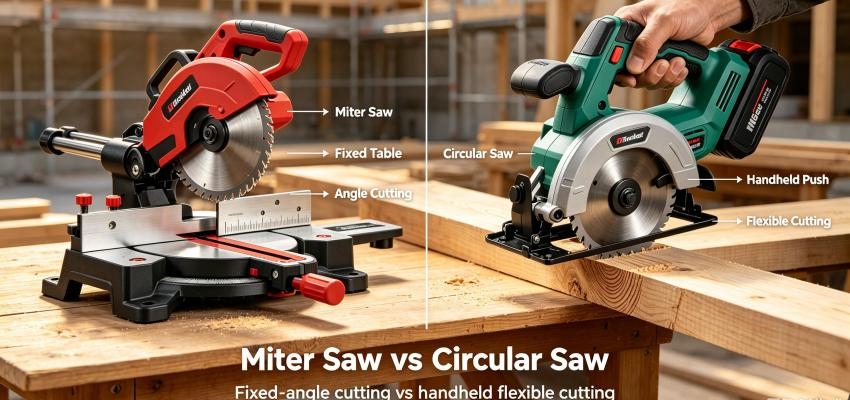
Overall, miter saws prioritize precision and clean finish cuts, while circular saws focus on portability and versatility for general construction work. This key tradeoff explains why neither tool can fully replace the other for woodworking and home DIY projects.
What Is a Miter Saw? -Pros, Cons & Applications
A miter saw is a stationary benchtop power tool designed specifically for accurate angled and cross cuts. Unlike handheld saws, you bring the workpiece to the miter saw instead of moving the tool across the material. It features a fixed base, adjustable fence, and pivoting blade head that locks into preset common angles, eliminating guesswork for consistent results.
There are three common types of miter saws: standard miter saws, compound miter saws, and sliding compound miter saws. Sliding models offer wider cutting capacity for broader boards, making them the most versatile option for serious DIYers and professionals.
Key Pros of a Miter Saw
- Superior Precision: A miter saw is one of the best tools for accurate finish work. The fence system and angle stops make it easier to achieve consistent results.
- Repeatable cuts: Once you set the angle and fence, you can produce dozens of identical cuts in minutes, ideal for repetitive trim and molding projects.
- Beginner-friendly operation: The fixed design removes most user error, so new woodworkers can achieve professional-grade results with minimal practice.
- Multi-angle capability: Effortlessly creates miter, bevel, and compound angles for picture frames, crown molding, and custom furniture joints.
Enhanced safety: The downward blade motion and clamped workpiece reduce kickback risks compared to handheld saws.
Key Cons of a Miter Saw
- Limited portability: Bulky and heavy, miter saws are designed for fixed workshop setups and are not suitable for frequent job-site transport.
- Cannot Make Rip Cuts: Miter saws only cut across the wood grain (crosscuts) and cannot make long lengthwise rip cuts on lumber or sheet goods.
- Space requirements: They need dedicated bench space and a clear surrounding area to handle long boards during cutting.
- Higher entry cost: Quality miter saws cost more than basic circular saws, creating a higher budget barrier for casual DIYers.
Common Miter Saw Projects
Miter saws specialize in finish and detail woodworking tasks. Top uses include baseboard installation, crown molding trimming, hardwood flooring cuts, window and door casing, picture frame building, furniture angled joints, and small precision wood crafts. If your project relies on clean, uniform angled cuts, a miter saw is the ideal tool.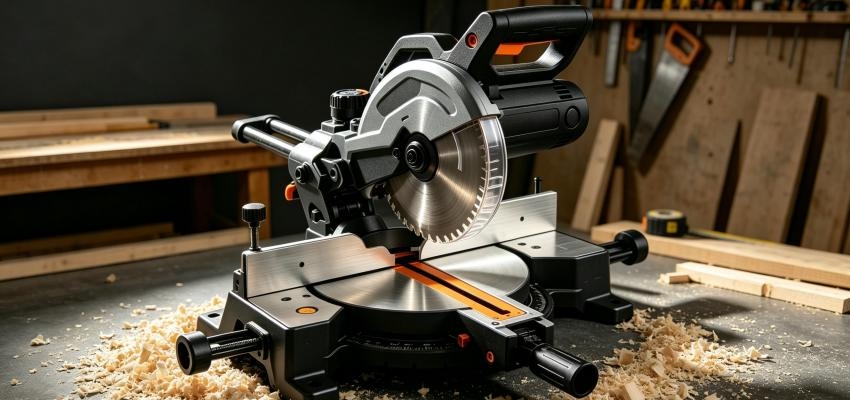
What Is a Circular Saw? -Pros, Cons & Applications
A circular saw is a lightweight, handheld power saw built for maximum versatility and portability. It features a fast-spinning round blade, adjustable cutting depth, and a flat base plate that glides across workpiece surfaces. Available in corded and cordless battery-powered models, it is the go-to workhorse for construction, rough cutting, and on-site woodworking tasks. Unlike miter saws, circular saws let users move the tool freely over stationary wood. This flexibility makes them perfect for cutting large materials that cannot be moved to a fixed benchtop saw.
Key Pros of a Circular Saw
- Ultimate portability: Compact and lightweight enough to carry to job sites, backyards, or remote work locations with no fixed setup required.
- Super versatile cutting: Handles straight crosscuts, long rip cuts, and custom depth cuts on lumber, plywood, OSB, and most sheet materials.
- Budget-friendly: Basic high-quality circular saws are affordable for all skill levels, making them the perfect starter saw for new DIYers.
- Works with large materials: Easily cuts full-size plywood sheets, long deck boards, and framing lumber that won’t fit on miter saw tables.
- Fast rough cutting: Ideal for quick, efficient cuts during framing, demolition, and general construction work.
Key Cons of a Circular Saw
- Lower precision for fine work: Cuts rely entirely on steady hand control, making perfect uniform angles and clean finish cuts difficult.
- Moderate learning curve: New users often struggle with crooked cuts, blade wobble, and kickback without proper technique.
- Limited repeatability: No fixed angle locks or fence system, so matching identical angle cuts consistently is challenging.
- Higher safety risks: Handheld operation increases the chances of kickback, slipping, and accidental cuts if not used correctly.
Common Circular Saw Projects
Circular saws dominate rough construction and general DIY work. Popular projects include house framing, deck building, fence construction, plywood sheet breakdown, rough lumber trimming, outdoor wood projects, and on-site quick modifications. It is the best all-around saw for general cutting needs.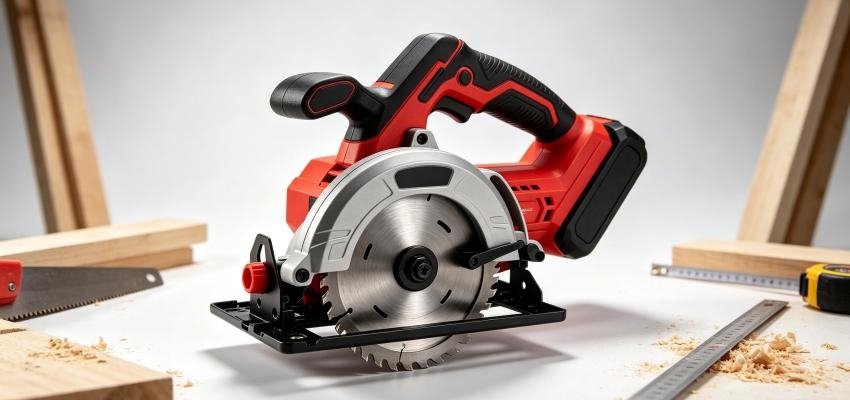
Main Differences Between Miter Saw and Circular Saw
Cutting Precision & Cut Types
The biggest gap between the two tools lies in cut precision and specialty cut types. Miter saws are engineered for accuracy-first finish work. Their fixed fence and preset angle stops deliver flawless crosscuts, miter cuts, and bevel cuts every time, which is essential for trim and molding where imperfect joints stand out visibly.
Circular saws excel at functional straight cuts and lengthwise rip cuts that miter saws cannot perform. However, they lack fixed-angle guidance, so precise angled cuts for finish work are inconsistent and difficult to replicate. For rough structural cuts, circular saw precision is more than sufficient.
Portability & Workspace Requirements
Miter saws are stationary tools that demand a dedicated workshop bench and clear surrounding space. While some compact models offer limited mobility, they are never designed for frequent transport or outdoor job-site use. They are a permanent workshop fixture rather than a portable tool.
Circular saws win entirely in portability. Weighing just a few pounds and compact enough for any toolbox, they are built for on-the-go work. They require zero dedicated workspace and can be used anywhere with a flat surface to support wood.
Versatility & Project Flexibility
Miter saws have narrow but specialized versatility. They cannot replace circular saws for rough or long cuts, but they outperform every portable saw for precision finish work. Their value lies in specialized accuracy rather than general flexibility.
For overall versatility, the circular saw takes the lead. It handles nearly every basic wood cut required for structural construction and general DIY projects. You can rip long boards, break down large sheet goods, and make custom depth cuts for endless project types.
Safety & Ease of Use for Beginners
Miter saws are far safer and easier for new woodworkers. The fixed tool design, clamped workpiece support, and downward blade movement minimize user error and kickback risks. Even total beginners can produce clean, professional cuts safely with minimal training.
Circular saws require proper grip, steady hands, and awareness of kickback zones. New users often struggle with uneven cuts and safety hazards, making them slightly more intimidating for first-time tool owners.
Price & Value for Money
Miter saws require a larger upfront investment. Basic standard miter saws start around $100–$250, while high-precision sliding compound miter saws for professional work cost $300–$800+. Their value shines exclusively for finish-focused projects rather than general use.
Circular saws offer superior entry-level value. Budget models ($40–$120) provide excellent functionality for casual DIYers, making them the most cost-effective first power saw purchase. Mid-tier circular saws ($120–$300) deliver enough performance for most homeowner projects.
Which One Should You Choose?
Choose a Miter Saw If…
- Your projects focus on finish carpentry, trim installation, baseboards, and crown molding
- You need consistent, repeatable precision angle cuts for furniture or crafts
- You have a fixed workshop with dedicated bench space
- Cut accuracy and clean, finished results are your top priority
- You regularly complete multiple identical angled cuts for renovation work
Choose a Circular Saw If…
- You tackle structural projects like framing, decks, and fences
- You work on job sites or need a fully portable cutting tool
- You are a beginner on a tight budget, building your first tool collection
- You frequently cut large plywood sheets and long lumber boards
- You need an all-purpose saw for general, everyday woodworking tasks
Should You Own Both Saws?
Serious DIYers, home renovators, and professional carpenters benefit most from owning both tools. A circular saw handles all rough cutting, sheet breakdown, and on-site work, while a miter saw manages all precision finish and angle cuts. This combination eliminates tool limitations and lets you complete every stage of a woodworking or renovation project from start to finish with professional results. For beginners, start with a circular saw for maximum versatility, then add a miter saw as your project skills and budget grow.
Can One Saw Replace the Other?
This is one of the most frequently asked questions by first-time tool shoppers, and the short answer is no. A circular saw can make rough straight cuts and basic makeshift angle cuts, but it cannot replicate the consistent, repeatable precision of a miter saw for crown molding, baseboards, and picture frame joints. You can get close, but gaps and uneven edges will show on finished trim work.
On the flip side, a miter saw cannot replace a circular saw. It cannot rip long lumber, cut full plywood sheets, or travel easily to outdoor job sites. If your project involves framing, decking, or sheet material breakdown, a miter saw alone will not get the job done. For most new DIYers: buy a circular saw first. Upgrade to a miter saw later, only when you regularly tackle finish trim jobs.
Common Mistakes When Choosing Between Miter Saw and Circular Saw
- Using a circular saw for fine trim work: Attempting crown molding or baseboard cuts with a circular saw leads to uneven joints, gaps, and unprofessional finished results.
- Buying a miter saw for job-site work: Miter saw bulk and fixed design make them impractical for outdoor or remote construction projects.
- Overlooking workspace limits: Many new users purchase miter saws without measuring workshop space, leading to cramped, unsafe cutting setups.
- Expecting miter saws to cut sheet goods: Miter saws cannot handle full-size plywood or long rip cuts, leaving major project gaps for unprepared users.
Frequently Asked Questions
Q: Can a circular saw replace a miter saw?
A: No. A circular saw can make basic straight and rough angle cuts, but it cannot replicate the consistent precision, repeatability, and clean finish of a miter saw’s angled cuts. It cannot replace a miter saw for trim, molding, or fine woodworking projects.
Q: Is a miter saw worth it for beginners?
A: Yes, if your projects involve finishing work, angled joints, or repetitive precision cuts. Miter saws are incredibly beginner-friendly and produce professional results with minimal effort, making them a worthwhile investment for trim-focused DIYers.
Q: Which saw is better for straight cuts?
A: The circular saw is superior for long, straight rip cuts and large sheet material cuts. Miter saws only excel at short, precise crosscuts and cannot make lengthwise straight rip cuts on lumber.
Q: Do I need both a miter saw and a circular saw?
A: Casual DIYers can start with just a circular saw. However, anyone who completes full home renovations, finish carpentry, or serious woodworking will greatly benefit from owning both tools for full project versatility.
Q: Which saw is safer for new users?
A: Miter saws are significantly safer for beginners. Their fixed structure, stable workpiece support, and downward cutting motion reduce kickback and user error risks far more than handheld circular saws.
Final Verdict: Miter Saw vs Circular Saw – Which Is Better?
Choosing between a miter saw and a circular saw ultimately depends on your project goals, workspace, and budget. The circular saw is the ultimate starter tool: affordable, portable, and endlessly versatile for all rough construction, framing, and general DIY cutting tasks. It’s the best first saw for every new woodworker and homeowner. The miter saw is a specialized precision tool built exclusively for finish carpentry and angled cut work. If you regularly install trim, build furniture with angled joints, or want flawless professional finish results, a miter saw is an essential upgrade.
For maximum workshop capability, pair a portable circular saw for rough work with a stationary miter saw for precision finish cuts. This powerful combination covers every possible woodworking cut you’ll need for any home DIY or professional project. Are you still struggling to decide which tool to choose? Buy tools from Tool.com, which has an experienced professional team and cost-effective products. You can find more types of saws. Wish you could find the tool you desire.