
Choosing the right circular saw size can make your woodworking and home improvement projects much easier. Many beginners focus on brand, price, or motor power, but the blade size is one of the most important factors that determines what the tool can actually do.
So, what size circular saw do you need? For most homeowners and DIY users, a 7.25-inch circular saw is the best all-around choice. It provides enough cutting depth for common construction materials while still being versatile for everyday projects. A 6.5-inch circular saw is better for users who want a lighter and easier-to-control tool, while larger models are mainly designed for professional applications involving thick lumber. The right circular saw size depends on your projects, materials, and how often you plan to use the tool. This guide explains the most common circular saw sizes and helps you choose the best option for your needs.
Quick Answer: What Size Circular Saw Should You Buy?
Different circular saw sizes are built to handle different types of work. Smaller models feel lighter and simpler to control for quick, light cuts around the home. Larger saws add extra cutting depth, letting you slice through thicker lumber in one pass. Your ideal pick depends on what materials you usually cut and how much power you really need. Use this quick reference table to find the best blade size for your projects at a glance.
| Circular Saw Size | Best For | Recommended User |
| 5.5-inch | Small repairs, trim work, thin materials | Occasional DIY users |
| 6.5-inch | Furniture, plywood, home projects | Beginners and homeowners |
| 7.25-inch | Remodeling, framing, general construction | Most users |
| 8.25-inch | Thick lumber and heavy-duty cutting | Professionals |
If you mainly work on small home projects, a 6.5-inch circular saw is usually enough. It is lightweight, comfortable to use, and handles many common materials. If you want one saw that can handle almost everything, a 7.25-inch circular saw is the better long-term choice. It offers the cutting depth and flexibility needed for a wider range of projects.
Why Does Circular Saw Size Matter?
Circular saw size refers to the diameter of its cutting blade. Even a small change in blade diameter can shift how well the tool cuts, how comfortable it feels in your hands, and its overall performance for your projects. Every other feature works around this core measurement, so understanding it helps you avoid picking a saw that does not match your needs.
Blade Size Determines Cutting Depth
The biggest difference between circular saw sizes is cutting depth. A larger blade can cut through thicker materials in a single pass. This makes larger saws useful for framing lumber, deck boards, and heavy woodworking projects. Smaller blades have less cutting capacity, but they offer better control and easier handling. For many DIY projects, having a lighter saw can be more valuable than having maximum cutting depth. The goal is to choose a blade size that matches the materials you usually cut.
Size Affects Weight and Control
Circular saw size also affects how comfortable the tool feels during use. Compact models are easier to carry and control. They create less fatigue when working for long periods, which is especially helpful for beginners. Larger circular saws provide more cutting power, but they also add weight. For professional construction work, the extra capability is often worth it. For occasional home projects, a smaller saw may feel more practical.
The Right Size Improves Safety and Accuracy
A circular saw that is too small may struggle with thicker materials. A saw that is too large may feel difficult to control during simple tasks. Choosing the correct size helps you make cleaner cuts, work more comfortably, and reduce unnecessary strain on the tool. The biggest saw is not always the best saw. The best choice is the one that fits your typical projects.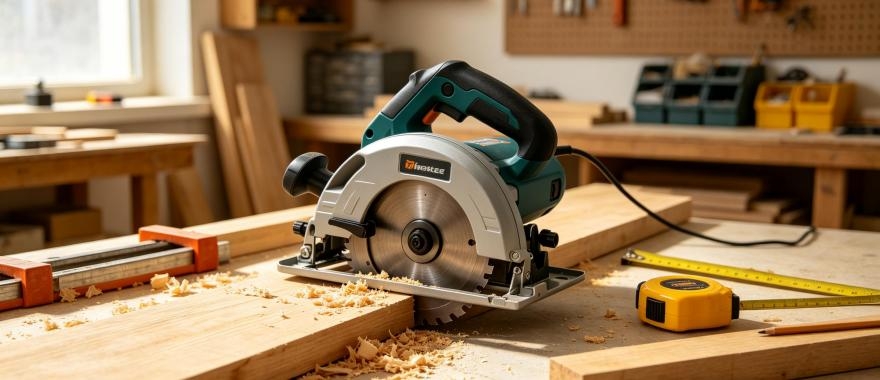
Standard Circular Saw Sizes Explained
The mainstream sizes of circular saws in both home and construction markets are limited to only a few. Each size has its own unique advantages and limitations for different cutting operations. This article will introduce the common specifications, including cutting depth and applicable scenarios. This concise explanation can help you select the most suitable saw blade size for your project.
5.5-Inch Circular Saw: Best for Small DIY Projects
A 5.5-inch circular saw is one of the most compact options available. Its main advantage is portability. This size works well for light cutting tasks such as trim work, small repairs, thin plywood, and simple craft projects. Because it is lightweight, beginners often find it easier to handle than larger models. However, the smaller blade limits cutting depth. It is not the best choice for construction projects that involve thick lumber or repeated heavy cutting. A 5.5-inch circular saw is convenient for occasional DIY work, but many homeowners eventually need more cutting capacity as their projects become larger.
6.5-Inch Circular Saw: Best Choice for Beginners
The 6.5-inch circular saw is one of the most popular sizes among homeowners, especially in cordless models. Its popularity comes from its balance between portability and performance. It is light enough for comfortable handling while still providing enough power for many everyday projects. A 6.5-inch circular saw works well for furniture building, plywood cutting, shelving, flooring projects, and general home improvements. Many beginners prefer this size because it feels easier to control. The lighter design reduces fatigue and makes it easier to achieve accurate cuts.
The main limitation is cutting depth. While it can handle many common materials, it does not provide the same flexibility as a full-size 7.25-inch model. For homeowners who value comfort and convenience, a 6.5-inch circular saw is an excellent choice. If you want to learn more about 6.5-inch circular saws, you can check out our circular saw product list. Here you will find detailed specifications.
7.25-Inch Circular Saw: The Best All-Around Option
The 7.25-inch circular saw is considered the standard size for most serious DIY users and professional contractors. This size offers the best balance between cutting ability, versatility, and availability. It has enough depth to handle common construction materials while remaining practical for everyday use.
A 7.25-inch circular saw is suitable for projects such as remodeling, deck building, fence installation, framing, and general woodworking. Another advantage is blade availability. Because this is the most common circular saw size, users can easily find blades designed for different materials, including plywood, framing lumber, and finish cuts. The only disadvantage is weight. Compared with a 6.5-inch model, a 7.25-inch saw feels heavier during extended use. However, for most homeowners, the additional cutting capacity makes it the better investment.
8.25-Inch Circular Saw: For Heavy-Duty Applications
An 8.25-inch circular saw is designed for users who need additional cutting depth and power. This size is mainly used for heavy-duty work involving thick lumber, large materials, and demanding construction tasks. For professional contractors who regularly work with oversized materials, the extra capacity can be valuable. For most homeowners, however, an 8.25-inch saw is unnecessary. A 7.25-inch model can handle the majority of residential projects without the extra weight and cost.
6.5 vs 7.25 Circular Saw: Which One Should You Choose?
The comparison between a 6.5-inch and 7.25-inch circular saw is one of the most common buying decisions for first-time shoppers. These two sizes sit close in capability, so many DIYers struggle to pick the right one for their needs. Let’s break down their key differences in the table below.
| Feature | 6.5-inch Circular Saw | 7.25-inch Circular Saw |
| Weight | Lighter, easy to carry | Heavier for extended use |
| Straight cut (90°) | Cuts through standard 2x4 | Cuts through 2x4 and 2x6 |
| Bevel cut (45°) | Cannot fully cut a 2x4 | Fully cuts a 2x4 |
| Best fit | Casual DIY, furniture, plywood | Framing, decks, all-around home builds |
A 6.5-inch circular saw is the better choice if you want a lightweight tool that is easy to carry and control. It is especially suitable for casual DIY users who mainly cut plywood, boards, and household materials. A 7.25-inch circular saw is the better option if you want maximum flexibility. It can handle smaller projects while also giving you the ability to take on larger construction tasks later.
For someone buying their first circular saw and wanting a tool that can last for years, the 7.25-inch size is usually the safer choice. The size of this specification on Tool.com comes in two styles: one is 6.6A (SKU: T-MCS-714) and the other is 6.8A (SKU: T-MCS-185). You can choose the tool that best suits your needs, making your work more efficient.
Cordless vs. Corded Circular Saw: Does Size Matter?
The power source you choose also influences which circular saw size works best for your needs. Cordless circular saws are widely loved since they let you move freely without tangled cords. They work seamlessly outdoors and are perfect for fast, impromptu cutting jobs. For homeowners, a 6.5-inch cordless circular saw is frequently the top pick, blending lightweight portability with enough cutting power to handle most everyday DIY tasks. If you want professional-grade cutting performance, opt for the 7.25-inch cordless version instead.
Corded circular saws stay a favorite among professional tradespeople, thanks to their steady, uninterrupted power during long work sessions. These saws are commonly matched with larger blades to tackle tough, high-demand construction projects.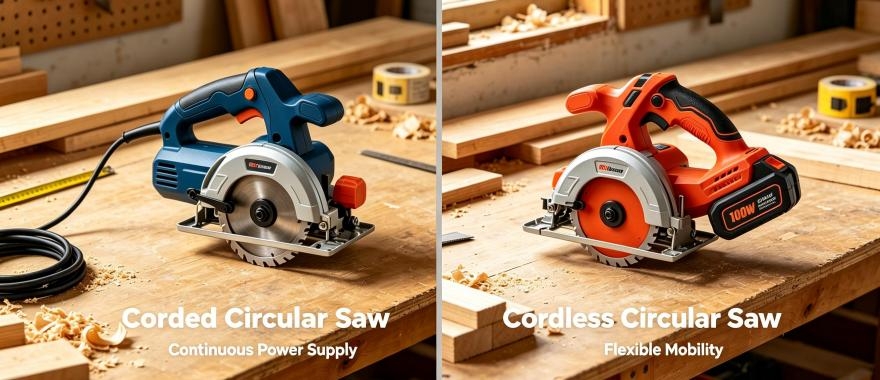
Key Considerations When Picking a Circular Saw
Common Mistakes Beginners Make
Many new shoppers get tripped up by simple mistakes.
- Buying the largest saw available without considering weight. Big saws are tiring for casual use.
- Ignoring bevel cutting limits. A saw may cut a 2x4 straight, yet fail when angled to 45 degrees.
- Focusing only on motor power and ignoring blade size. Motor power cannot fix insufficient cutting depth.
- Buying compact saws for heavy construction work. Undersized saws bind easily and create safety risks.
Factors to Consider Before Buying a Circular Saw
- Blade size is critical, yet it is not the only feature that shapes your saw’s real-world performance. Motor power impacts how smoothly the tool slices through dense, tough materials. A strong motor holds a steady cutting speed even when working with thick hardwood and prevents stalling under load.
- Blade quality also plays a big role. Choosing a blade matched to your material delivers cleaner cuts and helps your saw operate more efficiently for specific jobs, whether you are cutting plywood, framing lumber, or trim.
- Bevel capacity is another key detail to check. If you regularly create angled cuts for projects like crown molding or rafters, a saw with a wide, reliable bevel adjustment gives you much greater flexibility.
Frequently Asked Questions
Q: What is the most useful circular saw size?
A: For most users, a 7.25-inch circular saw is the most useful size because it handles the widest range of projects.
Q: Is a 6.5-inch circular saw powerful enough?
A: Yes. A 6.5-inch circular saw is powerful enough for most DIY projects, including plywood, furniture, and basic home repairs.
Q: Can a 6.5-inch circular saw cut a 2x4?
A: Yes. A 6.5-inch circular saw can usually cut through a standard 2x4 at a 90-degree angle.
Q: What size circular saw do professionals use?
A: Many professionals use 7.25-inch circular saws because they provide a good balance of power, cutting depth, and versatility.
Q: Is a bigger circular saw always better?
A: No. Larger saws provide deeper cuts but also add weight. The best size depends on your projects.
Q: Can I swap blades between different circular saw sizes?
A: No. Each saw uses a blade made for its exact diameter. Blades for a 6.5-inch saw will not fit a 7.25-inch saw.
Q: What size circular saw for cutting plywood?
A: A 6.5-inch circular saw works great for plywood. If you also plan framing work, upgrade to a 7.25-inch model.
Q: Do I need an 8.25-inch circular saw for deck building?
A: No. A standard 7.25-inch circular saw handles nearly all deck-building work. Save 8.25-inch saws for thick timber beams.
Conclusion: What Size Circular Saw Should You Buy?
For most homeowners, the 7.25-inch circular saw is the best overall choice. It provides enough cutting depth for common construction materials while remaining versatile for everyday projects. Choose a 6.5-inch circular saw if you want a lightweight tool for simple DIY work and prefer easier handling. Choose an 8.25-inch or larger model only if you regularly work with thick materials or professional construction projects.
Choosing the appropriate size of circular saw will help you achieve cleaner cuts, a more comfortable working experience, and complete your projects with better results. If you want to purchase tools, welcome and have a look at Tool.com. There are various high-quality products available for you to choose from.