
This troubleshooting guide is written for welders, fabricators and maintenance technicians operating portable and benchtop chamfering machines. Precision edge bevelling and reliable weld prep form critical steps in modern metal fabrication. For shops across the US, UK and Australia, chamfer quality directly impacts weld strength, assembly tolerances and final part performance. Chamfering machines are built for heavy-duty shift work, yet continuous operation, repeated cutting cycles and neglected routine maintenance slowly degrade performance, spoil edge finish and trigger unplanned downtime.
Permanent mechanical damage rarely causes breakdowns. Most shop floor issues stem from incorrect setup, worn cutting inserts or skipped daily upkeep. Nearly all common faults can be diagnosed and fixed on-site without specialist technicians, so teams can get production back online and cut costly delays. Breakdowns are not always tied to poor maintenance. Mismatched equipment for your shop’s workload is another frequent culprit. If you are sourcing weld prep tools sized for your production demands, browse our metal chamfering machine.
Safety Preparations & Quick Symptom Diagnosis
Complete all safety checks before inspecting, cleaning or troubleshooting the machine. Chamfering tools run high-speed rotary blades paired with high-torque motors, and sharp metal chips create real hazards during service work. Skipping safety steps raises injury risk and can cause secondary damage to your equipment.
Follow these OSHA-compliant shop safety rules for every maintenance task:
- Cut all power and apply lockout/tagout procedures
- Wait for rotating components to come to a full stop before inspection
- Wear required PPE: safety glasses, cut-resistant gloves and hearing protection
- Remove workpieces and clear metal chips from the work zone
- Never touch internal moving assemblies during examination
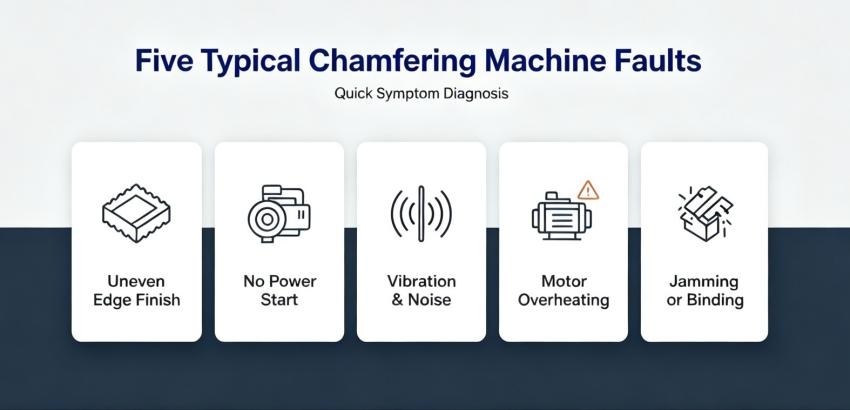
Once safety steps are finished, a fast visual scan sorts machine symptoms quickly. Every typical chamfering fault leaves clear visible clues, letting operators pinpoint problems without unnecessary disassembly. This simple diagnostic method saves precious time during busy production runs.
- Poor edge finish points to worn blades or unstable workpiece clamping.
- Machine no-power state indicates a circuit fault or activated thermal lock.
- Vibration and strange noise suggest loose fasteners or bearing wear.
- Motor overheating comes from overload operation or blocked ventilation.
- Machine jamming occurs due to built-up chips or excessive cutting depth.
Common Chamfering Machine Faults and Step-by-Step Solutions
Use the symptom checklist above to narrow down the fault, then work through these practical repair workflows. Six recurring problems account for most chamfering machine downtime in commercial fabrication shops. They affect both portable and benchtop edge prep tools.
Each section below lists observable symptoms, root cause breakdowns, field-tested repair steps and simple preventive guidance. All fixes work for on-site use and require no specialty tools or advanced technical training. Resolve these faults quickly to keep weld prep consistent and maintain throughput during busy fabrication seasons.
Uneven and Jagged Chamfer Edges
Rough, jagged chamfer edges rank as the most common quality defect during batch cutting. Variable bevel depths create inconsistent weld gaps, weaken joint integrity and force time-consuming rework that slows the whole production line.
Symptoms: Variable bevel depth, rough jagged edges, inconsistent weld prep surfaces.
Root Causes: Worn cutting blades, loosely fitted blades, unstable workpiece clamping, improper feed speed, uneven machine placement.
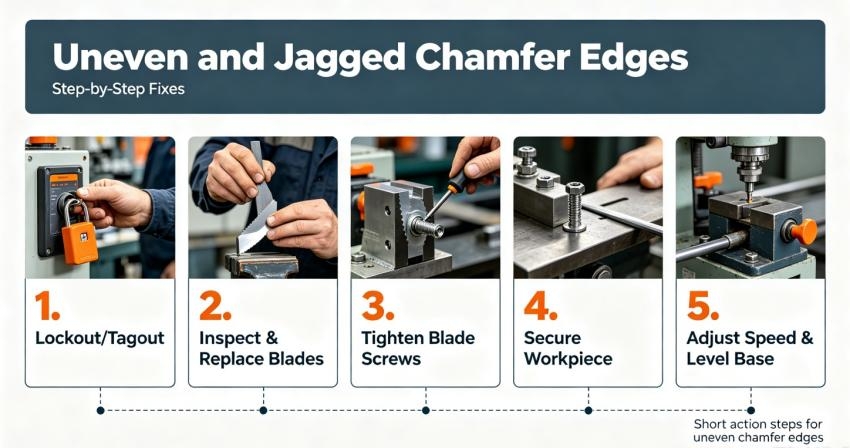
Step-by-Step Fixes
- Power off the machine and complete lockout/tagout.
- Check blades for dullness, chipping or scratches; replace worn cutters.
- Retighten blade mounting screws to ensure balanced installation.
- Secure the workpiece firmly to stop micro-shifting while cutting.
- Adjust feed speed, and level the machine base if it sits crooked.
Common Misjudgment: Operators often suspect broken hardware, but unstable clamping usually causes poor edge quality.
Prevention Tips: Check blade sharpness before starting every batch, and double-check fixture tightness before cutting.
Machine Fails to Start With No Power Response
A machine that refuses to start halts production instantly. Most of these issues come from power protection systems rather than broken mechanical parts. Long continuous runs, unstable power supply and overheating events frequently stop modern chamfering equipment from powering up.
Symptoms: No motor sound, unlit power indicator, machine completely unresponsive.
Root Causes: Tripped circuit breaker, loose power connections, damaged cords, faulty switch, or active thermal overload lock.
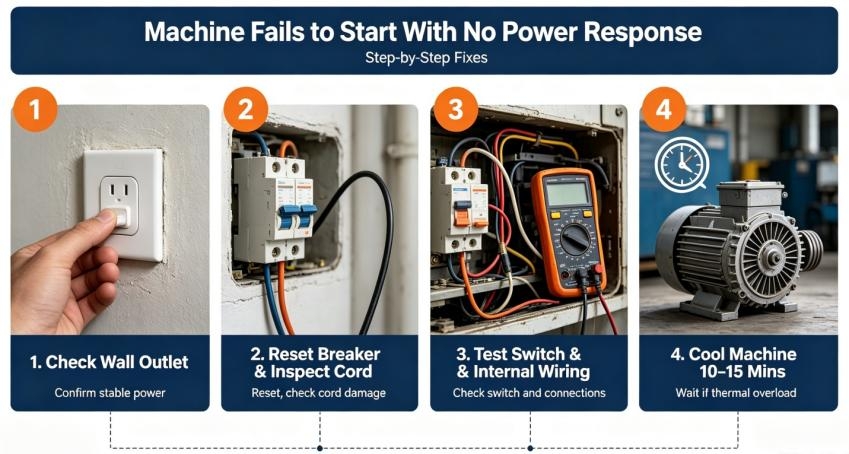
Step-by-Step Fixes
- Confirm the wall outlet supplies stable power.
- Reset the circuit breaker and examine the power cord for damage.
- Test the power switch and internal wiring connections.
- Let the machine cool for 10–15 minutes if thermal protection triggered.
Prevention Tips: Do not run machines continuously past their rated duty cycles, and inspect cables on a regular schedule.
Excessive Vibration and Abnormal Noise
Vibration and grinding sounds act as early warning signs of loose assemblies or wearing components. Left unattended, these issues eat away at machining precision, ruin edge finish and eventually trigger catastrophic mechanical failure that demands expensive replacement parts.
Symptoms: Heavy shaking, rattling, grinding metal noise during operation.
Root Causes: Loose housing bolts, worn bearings, unbalanced cutter assembly, trapped metal chips.
Step-by-Step Fixes
- Shut the machine down and apply lockout/tagout
- Tighten all base and housing fasteners.
- Clear chips trapped inside the cutter chamber.
- Inspect bearings and swap out worn units.
- Reinstall and rebalance the cutter set.
Prevention Tips: For heavy-duty use, tighten bolts and clear internal chips every month.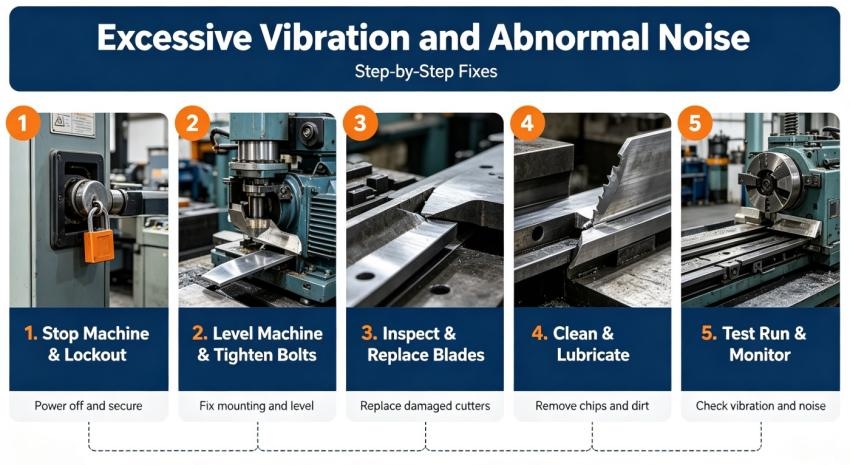
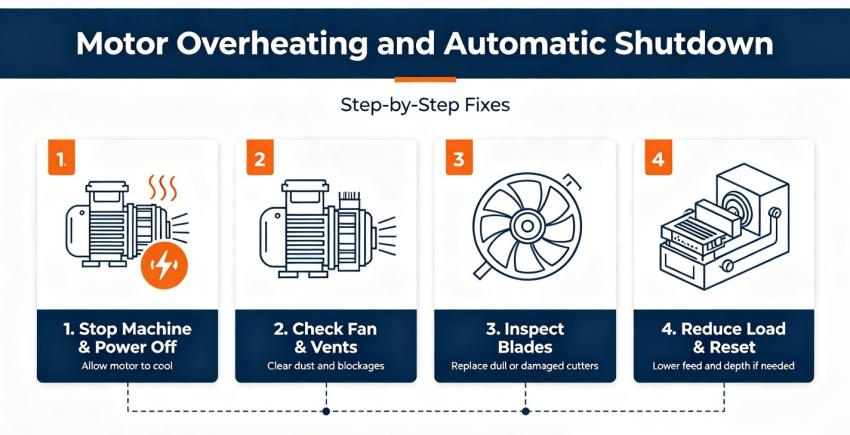
Motor Overheating and Automatic Shutdown
Thermal shutdown is a built-in safety feature that prevents permanent motor burnout. Shops running high-volume production often hit this fault when machines operate nonstop beyond their rated duty cycles. Overloading, blocked airflow and aggressive cutting settings make motor temperatures spike rapidly.
Symptoms: Hot machine housing, burning odor, automatic intermittent shutdown.
Root Causes: Over-deep single cutting depth, nonstop operation, blocked ventilation, aging motor windings.
Step-by-Step Fixes
- Stop cutting right away and power off the unit.
- Clear dust and metal chips blocking ventilation slots.
- Reduce single-pass cutting depth to lighten the motor load.
- Use intermittent operation cycles to let heat escape.
Prevention Tips: Never exceed the machine’s rated workload, and keep vents free of debris.
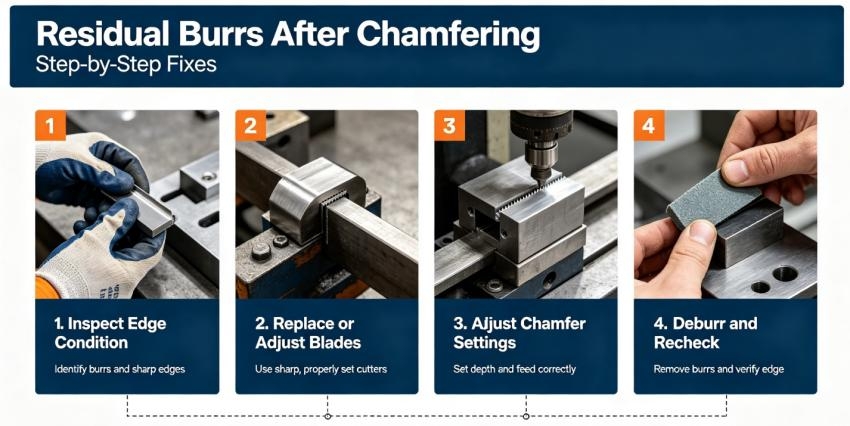
Residual Burrs After Chamfering
Leftover edge burrs create serious weld-prep defects. They hurt sealing performance, surface flatness and part alignment. Even tiny burrs can lead to misalignment and weld failure for precision metal work. Most burr problems stem from minor setup errors, not hardware damage.
Symptoms: Tiny metal burrs remain on edges after processing.
Root Causes: Dull blades, excessive feed speed, insufficient cutting depth, weak clamping force.
Step-by-Step Fixes
Replace dull blades with sharp cutting tools.
Slow the feed rate to fully trim the edge.
Slightly increase chamfer depth to remove extra edge material completely.
Tighten workpiece clamping to hold parts steady.
Prevention Tips: Swap consumable blades once edge quality starts to drop off.
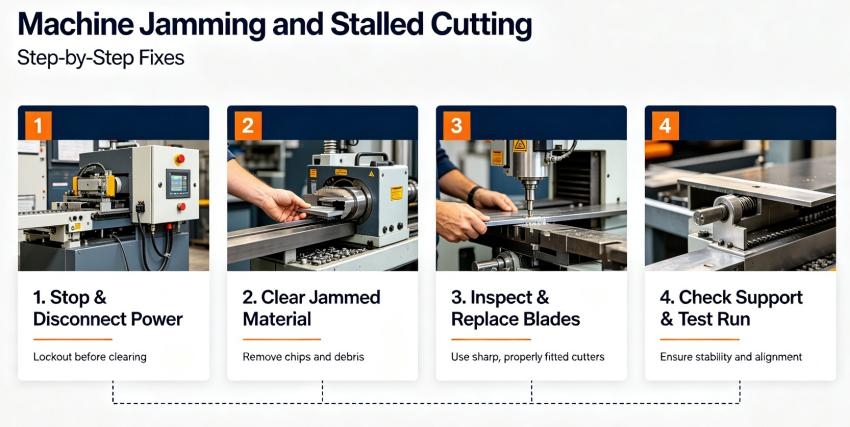
Machine Jamming and Stalled Cutting
Mid-cut jams bring continuous production to a halt. Improper jam clearing can scratch blades, deform workpieces and strain the motor. Follow the correct troubleshooting workflow to limit secondary damage and material waste.
Symptoms: Sudden stop, locked workpiece, motor jittering.
Root Causes: Overly deep cutting depth, high cutting resistance on hard materials, built-up chip blockage.
Step-by-Step Fixes
- Cut power before clearing stuck material.
- Remove packed metal chips from inside the cutter cavity.
- Use a reduced cutting depth for alloy and hardened steel workpieces.
- Check for workpiece warping, which creates friction and binding.
Prevention Tips: Use multiple shallow cutting passes instead of one deep cut when machining hard materials.
Troubleshooting Reference Table and Common Operator Mistakes
A large proportion of recurring machining faults are not caused by broken machine parts, but come from habitual improper operation by frontline operators. Even high-grade industrial machine tools will suffer accelerated wear and performance deterioration if subjected to careless daily operation. Timely identification and correction of these typical operator mistakes can greatly reduce unplanned downtime, stabilize product quality and improve overall production efficiency. The table below summarizes typical abnormal symptoms encountered in chamfering work, paired with corresponding rapid troubleshooting solutions for on-site staff.
Quick-reference table:
| Symptom | Quick Fix |
| Uneven and jagged chamfer edges | Replace dull cutters; secure workpiece clamping; adjust feed speed |
| Machine fails to start | Inspect power supply, cords, breaker and thermal protection |
| Excessive vibration and loud noise | Tighten bolts, clear debris, inspect and replace worn bearings |
| Motor overheats quickly | Reduce cutting load, clean vents, avoid continuous overload operation |
| Residual burrs on workpiece edges | Install sharp blades and tune feed & depth settings |
| Machine jams during operation | Clear chip blockage and reduce single cutting depth |
Many recurring faults stem from poor operating habits rather than physical machine defects. Even premium industrial equipment will degrade quickly with careless daily operation. Fixing these common user errors drastically cuts unplanned downtime.
- Setting excessively deep single-pass cuts
- Running batch production with dull blades
- Skipping chip cleanup at the end of every shift
- Operating beyond the machine’s duty cycle
Careful operation alone cannot compensate for under-sized equipment. Undersized tools still vibrate, overheat and jam often. Our catalog covers portable deburring chamfering machin options all the way to semi-automatic chamfering machine for plate and pipe processing.
Preventive Maintenance and Professional Service Guidelines
Troubleshooting resolves faults after they appear. Planned maintenance stops failures before they develop. Regular upkeep protects equipment reliability and keeps production stable. It extends machine service life and preserves cutting precision. This maintenance schedule fits shift-based fabrication shops across the US, UK and Australia.
- After every shift: Clear all metal chips; visually inspect blade condition
- Weekly: Tighten all fixture bolts; verify clamping stability
- Monthly: Lubricate all moving mechanical parts
Routine maintenance handles most minor faults, but some issues demand professional support. Severe electrical or structural failures carry significant safety risks. Running damaged equipment can cause permanent hardware failure and injury. Shut down power and stop troubleshooting immediately if any of these issues show up:
- Visible smoke, burning smell or circuit damage
- Severe motor burnout and repeated thermal shutdown
- Damaged internal transmission or dislocated bearings
- Faults persist after completing all troubleshooting steps
Final Thoughts and Equipment Upgrade Advice
The main takeaway from these common faults is simple: most chamfering machine failures are predictable and avoidable. Standardized safety workflows, disciplined operation and consistent preventive maintenance help fabrication shops maintain reliable weld prep quality, preserve output and cut avoidable downtime over long production cycles.
If the same faults keep happening despite correct operation and regular servicing, your current equipment may no longer match shop scale, material requirements or daily workload. When repair bills and production stoppages eat into profits, upgrading edge prep hardware delivers better long-term operational stability. Browse our range of chamfering machine tools built for metal fabrication shops of all sizes.